An Economics Sūtra

Professor Jayati Ghosh of the Centre for Economics Studies and Planning (CESP) of the Jawaharlal Nehru University has been very appreciative of the new book by our colleague G. Omkarnath of the School of Economics (as well as the Centre for the Study of Social Exclusion and Inclusive Policy), Economics: A Primer for India, recently brought out by Orient Blackswan. In a review in Frontline she says: This book should be required reading not just for the average person who wants to know more about how the economy and economic policies affects her own life, but also for media persons, government officials and legislators who determine economic policy, and even those regularly engaged in pursuing the profession in different ways. This may be a sad commentary on the state of public knowledge about economics. But the unfortunate truth of that statement shows how important it is for books like this one to have very wide readership and dissemination.

The fact of the matter is that there are few books that are written with sufficiently clarity in most fields, and especially on matters in the social sciences, where examples and instances from a local context can make the immediate connection. Prof. Omkarnath’s book is therefore quite unusual. The review has this more to say: … a new book by G. Omkarnath, Economics: A Primer for India (Orient Blackswan, Hyderabad, 2012) comes as a welcome addition. It is usually an act of great courage to write an introductory book on anything, and it is probably even more courageous to do so for a subject like economics. This book is nothing if not ambitious: it attempts “to bridge the gulf between the real world and introductory economics”, by introducing the subject through the medium of the Indian economy.

Given the grand nature of this task, the author has done a surprisingly good job, presenting the basic ideas of the economic structure of society and of change through time in a logical, clear and consistent manner. Omkarnath concisely discusses issues of production, distribution and growth; of market functioning and how it can be socially embedded; of the significance of macroeconomic variables like savings and investment and how they are measured; of various government policies and their effects on economies, including both state intervention and liberalization; of the challenges of economic diversification and industrialization in affecting both productive structures and employment; of the significance of petty production as well as the persistence of informality; and other issues directly relevant to the Indian economy.

There was a formal release at the University a few weeks ago, in collaboration with the publishers, Orient Blackswan. As the blurb on their website says, “Economics: A Primer for India is tailor-made for foundation courses in undergraduate programmes. Its pedagogic standpoint is based on two convictions. First, a foundation course need not invoke formal economic theory which is a contested terrain, especially at the present time. Second, such a course should be grounded on the empirical reality of the economy in which students live.

Context. As I remarked in an earlier post, some things are better taught with local references, and keeping the local backgrounds in mind.

Jayati Ghosh adds: Another significant feature of the book is its recognition of distributive issues – of how different economic processes and policies have different distributive outcomes, and that nothing is “neutral” in that sense. This enables a better understanding of the political dynamics that are closely associated with economics, within national economies and well as in international economic relations.

Obviously, in a book that attempts to deal with so many important concepts and to cover such a large ground in a relatively short space, there can be quibbles about the weight given to different ideas or about the degree of explanation provided for particular concepts or processes. But these are really no more than quibbles, because the overall result is an impressive one.

We need many more such books: local reference points are a great help in effectively internalizing universal subjects, and their value in pedagogy cannot be underestimated.

Inspiration Transfer

We had an unusual treat last Sunday, 11 November. Professor Rudolph A Marcus of the California Institute of Technology, Pasadena, Nobel Laureate in Chemistry (1992) was conferred the degree of Doctor of Science (honoris causa) of the University of Hyderabad.

Marcus, a theoretical chemist, was awarded the prize in 1992 for work that he essentially carried out in the 1950’s, on an explanation of how electrons are transferred from one species to another. Electron transfer is, arguably, the simplest form of a chemical reaction, characterised by the fact that no “bonds are made or broken”. Because charges move around though, there is considerable reorganization of the environment. As has been gradually recognized over the years, electron transfer plays an important role in phenomena ranging from photosynthesis to corrosion. It is not an exaggeration to state, as has often been done, that without it life cannot exist.

The event on Sunday was structured around a formal scientific talk entitled Electron Transfer Reaction Theory in Chemistry – from the Isotopic Exchange Reactions of the 1940s and 1950s to the Modern Solar Energy Conversion Era (see the abstract below). In a discursive introduction to the history of the field, Marcus explained the various different experiments that were necessary to validate the theory and just why the gap between the original theory and the award was so long.The talk was riveting, and not just because Marcus is a Nobelist: the vibrancy and enthusiasm in the delivery belied the speaker’s 89 years. He still teaches and guides students, he finds himself getting interested in current experiments, and is always out to test his theories of which there are several. From the time of his Ph D, which dates to 1946 or thereabouts, to now, it has very much been a life in science and a life of science…

But the true value of his presence came through in his subsequent interaction with students both outside the auditorium (see the picture above) as well as in the Conversation with Rudy Marcus, a free-flowing exchange when anyone could (and did) ask him questions on any aspect of his work and life. As a colleague wrote to me the next day: Two hours with Rudy was like a two semester course!

There was much to learn from him- mainly his passion for science and his approach, that combined a deep appreciation of mathematics with a respect for experiments, and the knowledge that theory cannot be applied if it is not “simple” to do so. And it was difficult not to be enthused- he has been an inspiration to generations of theoretical chemists !- by his continuing curiosity, his enthusiasm, and his intensity.
In his long career, starting at the Brooklyn Polytechnic, then at the University of Illinois at Urbana-Champaign, and now at the California Institute of Technology, Rudy has taught generations of students, though he has not had a very large research group- four or five students and a couple of postdocs most of the time. The problems he has attacked typically focus on experimentally observable effects. Speaking earlier in Bangalore, on the need for research that solved practical problems, Rudy stressed the importance of universities in enabling the creative process, namely the freedom to think. I have not found it said better or more economically: “In an university, you will be subjected to a regimen of methodological thinking, intellectual labour and structured intellectual activity. At the end of this, one earns cognitive freedom. Such freedom cannot be claimed as a right.
He has used this freedom rather well.
____________________________________________________________________________________

Continue reading “Inspiration Transfer”

The h-index and all that

The UoH has benefited greatly in the past few years by the Department of Science and Technology’s PURSE (PROMOTION OF UNIVERSITY RESEARCH AND SCIENTIFIC EXCELLENCE) programme.

What was also unusual about how the grant was given to the 14 Universities first chosen was that it was based on the h-indexa recently introduced scientometric tool that has now gone viral. For those not familiar with it, the h-index of an academic is a number such that of her or his scholarly papers has been cited or quoted (formally, i.e. in a peer reviewed journal) at least h times. First introduced by Jorge Hirsch, the h-index (which has inspired any number of similar indices) captures both the longevity as well as the contribution of contemporary academic lives. On average, that is. A person who has written only 1 scientific paper that was cited once would have an h-index of 1. So would a person who wrote only 1 paper but had 1000 citations, say. Although the index cannot decrease with time, the largest indices are typically associated with the famous and influential- Nobel laureates typically have indices between 60 and 100 (with the all time high being around 120 or so).

A related measure in the scholarly publishing arena is the impact factor of a journal which measures the average numbers of citations to recent articles in it. Discussing that could take up another post in itself, but the connection with the h-index is clear. Publishing in high impact factor journals is generally good for your h-index. Of course, doing great work is even better.

The DST decided to use the productivity and citability of the scholarly output of a university by calculating the h-index of the institution, namely aggregating papers by university (rather than by author). The hope is that this would reflect the carrying capacity of the institution to support research in a range of disciplines, and would therefore reflect the extent of the scholarly base.

By that token we did very well.  Three Universities were classified as A class, Delhi, Panjab, and UoH, with indices above 50. Give the huge disparity is sizes its pretty clear that in general we punch significantly above our weight.

Anyhow, the PURSE grant (parenthetically one should note that the DST has a way with acronyms, and PURSE is just one in a list that includes FIST, BOYSCAST & INSPIRE…) was used to support research in the University, and somewhat narrowly, just science research. One can make the argument that it is the entire academic climate of an institution that matters. Perhaps when we get the second phase of the grant, PURSE-2, we can have a wider discussion on it and enlarge the beneficiaries as well.

Which brings me to the real point of this post, that many colleagues are doing particularly well on the matter of research, both in terms of its volume as well as its significance, and the PURSE award is just one recognition of that. So many have been elected to professional bodies, others are invited time and again to advise on issues related to research and academics. And several have got the India Citation Award organised by Thomson-Reuters in this as well as previous years. Some of the highest cited published work in the country- and thus some of the most influential ideas- have come out of UoH. By any yardstick, this is very impressive for so young an institution. Our collective thanks to all who contributed to this- You know who you are!

One way to continue that, to keep up the good work so to speak, would be to keep our standards high! Publishing in high impact journals, or in high quality journals that set a significant bar is one way.  Doing work that is important is another. But staying active, not settling for less, and having academic longevity…  That would probably be the best way of all…

Gender (In)Sensitivity

In the past few months we have, to put it mildly, been going through a difficult time on the matter of campus security. There can be a fine line that runs between the need to respect the privacy of individuals and the duty of ensuring the security of us all. This is something that a campus as large and as diverse as ours can only hope to learn slowly.

That said, the incidents threw up the not entirely surprising fact that our campus is quite insensitive on matters relating to gender. The scale of the problems have helped to highlight just how inappropriate it is that in this day and age we can be quite so clueless as to how to deal with gender issues on a campus that is as educated as ours… It is not that we don’t have committees such as CASH (the Committee Against Sexual Harassment), but many of the incidents are difficult to bring up. And there is the daily subjection to mild and even self-unaware forms of insensitive behaviour that one gets inured to… But when it deals with matters of security, it is quite another matter.

I therefore requested a colleague to investigate the reality of this, to respond to specific complaints,  and some of the suggestions that emanated are given below. These suggestions have been made following a number of interviews with students, faculty, staff, security, and they have, for the most part, been accepted by the administration, with a view to change the existing environment.

The first thing that was pointed out is that the issue affects all sections of our community: students, staff, and faculty. And “gender sensitization” is needed in all sectors as well, since the overall atmosphere is created by all. On a given day, the campus has anywhere between 10 and 15 thousand inhabitants, and it is a challenge to anyone to provide a safe atmosphere for all. The first recommendation is that

  • The campus needs a resourceful, committed, engaged, alert, approachable and gender sensitive Security Officer who is knowledgeable about the complexities of the present context and thus can assess the problems that emerge in a community that has approximately 6000 to 15000 people at a given point of time in the day (including employees residing outside, private personnel selling services and workers and construction work labourers) in its precincts.This university is in campus where the dominant age group is from 17 to 25. In addition to providing formal knowledge, University campuses also offer students with a possibility to engage, experience and learn to live with difference of all kinds-social, cultural and sexual. The philosophy of any security system should be based on the principles of engaging with stakeholders in terms of freedom and responsibility.

Since security persons are those that are most responsible for creating a safe environment, it is further necessary that

  • Security personnel both permanent and temporary have to be given training regarding gender sensitivity. This training can be similar to the training given to the police by the Central Government and the State Governments. The administration should make this a requirement and part of its contract with the private security company. (Asmita, the Resource Centre for Women, Hyderabad has such programmes.)

A related suggestion that should not be so difficult to implement is that

  • Fifty per cent of the security staff has to be women and they should also be present at all the gates. Additionally they should be available at night time when there is an incident involving women. Furthermore, students may be asked to volunteer with security personnel for joint patrolling of the campus.

But we need to be open about this:

  • A gender sensitive successful security plan can be implemented only when there is continuous communication, dialogue and coordination between various stakeholders (students, teaching and non-teaching employees and their families, those selling private services etc. and security personnel) and the providers (Security personnel, Engineering dept, Water and sanitation dep., and hostel administration). The University should ensure that such a plan is put in practice.

The main need, though, is for the creation of an environment:

  • Gender sensitivity and the creation of enabling non-hostile culture for women needs to be the goal of the University administration. It should ensure that all security personnel together with other teaching and non-teaching employees and students understand what constitutes a hostile environment for women in terms of speech, bodily stances and conduct.

The message could not be louder or clearer: We need to act, and with some urgency. 

There are however two not entirely unrelated issues that we should focus on, as some of the comments on this post indicate. (a) Security needs enhancement in general. (b) Awareness on gender issues needs improvement all around.

The implicit assumption here is that security staff who are more gender sensitive will provide better security. And that is a testable theory…

Convocation with Benefits

The fourteenth convocation of the University (held like last year, on October 1) was academically very satisfying. Having Romila Thapar as chief guest was a privilege and we were particularly happy to have awarded honorary doctorates to a number of distinguished personalities for their contributions to academics and to public life.

What was special- as a colleague pointed out- was that the prolonged presence of three academic stalwarts on the campus was a big shot in the arm for all of us! Having these sources of inspiration, being able to see them and talk to them- what can be better!

Mahasweta Devi, activist, writer, and spokesperson for India’s tribes was awarded the D. Litt. (h. c.). At the convocation her speech was brief, but later in the afternoon she came to the School of Humanities where she interacted with students and faculty. And Gadar. The Hindu reported:

Renowned writer and social activist Mahasweta Devi termed Adivasis as “the most civilised people” to whom Indian forests, rivers and mountains owe their survival. She praised their egalitarian social structure where nobody is greater than anybody, and where social evils such as dowry do not exist. Addressing students at the University of Hyderabad here on Monday, she attributed whatever natural balance left to survive in India to the presence of Adivasis.

M. S. Narasimhan, D. Sc. (h. c.) is a man of few words and much mathematics. He made time to meet and talk with our integrated masters and mathematics students, and has promised to come back to spend a longer period of time with us. Much of his work has been done in India, and he spoke feelingly of the importance of context, and the improving conditions that make it increasingly possible to produce quality work in the country. He should know. He was one of the first members of the TIFR School of Mathematics.

Other degrees that were awarded were D. Litt. (h. c.) to Bh. Krishnamurti (posthumously), to Krishna Sobti the noted Hindi writer, and to the economist Joseph Stiglitz in absentia.

The D. Sc. (h. c.) was awarded in absentia to C. S. Seshadri, the mathematician who could not be with us owing to poor health, but he will hopefully come to the University in the not too distant future, as will the Chemistry Nobelist, Rudy Marcus who is planning to be here in November.

A real treat was provided by convocation speaker and chief guest, Romila Thapar, who had “an interaction” with the students and staff on October 3. As one commentator put it, the programme was a most enjoyable one, especially for the students of social sciences. They will remember and cherish it for ever. Another message I got on FB said: It was wonderful to hear Prof. Romila Thapar at our University… Her talk was as powerful as her writings are, and we students all benefited from it.

In her Convocation address (the text of which is up on the University website) she had been generous in her appreciation of the University. Her talk was hard hitting, brave, and blunt: It isn’t often that Universities invite an academic or an intellectual to be the Chief Guest. The preference is for politicians, bureaucrats, or cinema celebrities.

I hope that this is a tradition we can keep at the UoH, that our Chief Guests will be academic superstars.

Pressing Needs

When three major international academic publishers take a photocopy shop located in the Delhi School of Economics to court over copyright infringement issues, it does seem a trifle excessive, using a sledgehammer to swat a fly. But it is more than breeze in a teacup- the issues are germane to a wider audience, and that includes us.

The facts, such as they are, are simple enough. On the D’School campus, the Rameshwari Photocopy services provides ‘xeroxed’ course material, and that includes chapters from books, articles, notes, what have you. In the strictest sense of the phrase, there probably is copyright infringement. But this has been going on ever since photocopy machines became easily available, and generations of students will testify to the absolutely crucial role that photocopied material has played in their education, augmenting (or even bypassing!) taught material. Not to mention research…

But this post is not just about the controversy- Lawrence Liang has written very forcefully on it, as has Sudhanwa Deshpande, in response to a poorly argued opinion piece in The Hindu a few days ago, all of which is worth a read. And all also skirt around a somewhat more serious issue, that of academic publishing in India, particularly that of book and textbook publishing.

There are any number of reasons why it is absolutely necessary to used photocopied material when studying for a degree in India. The scarcity (and the high cost!) of books, the paucity of textbook copies in even the best libraries, the poor availability of journals… The list goes on. However there are two other reasons that any good student would need (rather than choose) to photocopy material, particularly from books.

1. Most textbooks written in India (and I mean most in the sense of the majority of) are of very poor quality. They tend to be extensively plagiarized and frequently are written by people who do not really seem to know the subject at all. There is an infamous series of books by an author, Sa*sh, who has written on essentially every topic in undergraduate and graduate physics. This versatility is not just impressive, it is impossible. Needless to say, all the books are unreadable cut and paste trash, even if they are much better than even worse tripe that other less ‘well-known’ authors are capable, of churning out.

Most of these books are also poorly produced- a step away from pulp, even when new!- and seem to be just money making vehicles. Given the large numbers we need to educate, this is a double tragedy.

2. Even well-known Indian scholars prefer to publish with publishers outside India. This is not just in journals (it is well known that selection committees ask candidates how many publications they have in international journals and how many in Indian ones) but also with respect to books. OUP, CUP, Sage, Harvard, Duke… All these publishers are typically seen as preferred and prestigious destinations for manuscripts. And since all these publishers will have Indian editions, the Indian market is not totally ignored, but still the books tend to cost a bit more than they would have, had the primary publication been with an Indian publisher.

To be sure there are good reasons for this, and one can understand an author’s position to some extent. The royalties with an international publisher sometimes work out to be more lucrative. On the matter of distribution, again the international publishers score, so that visibility, both at home and abroad is not compromised. A more serious reason is that the books tend to get better critiques and better reviews, so an author finds his or her work being taken more seriously. For the most part, that is.

But a given, as a consequence, is that most Indian students do not have access to high quality textbooks that are produced and published in India in most subjects. Many international publishers do have Indian editions, but the number of local authors who write good textbooks that are first published here? Rare.

There are exceptions, of course, but these only seem to reinforce the rule. Many of the boutique presses in India tend to have high production value, but they also are tied into co-publication with University presses abroad for their financial models.

Which brings me to the final point of this post: Why has the University Press culture in India died out so decisively? There was a time- when the world was younger- that textbooks from Andhra University Press or Madras University Press, for instance, were treasures. Bhagavantam and Venkatarayudu’s Theory of groups and its application to physical problems for instance. Most of these presses are now gone, but even if extant, for the most part they seem to churn out the most mundane bulletins and reports. The exceptions are few like the Calcutta University Press. Or that of the MS University in Vadodara, which has recently brought out the Gopinathasaptasali  for their Oriental Institute. But even their other activities are more along the usual lines- the printing of question papers, under conditions of very high level of secrecy, for the University Examination, Senate Proceedings, Minutes of the Syndicate Meetings, details of Establishment, Annual Accounts, Budget Estimates, Questionnaires, Magazines, Pamphlets, Certificates, General Forms, Prospectus, Admission forms, Examination forms, Letter heads, Receipt Books, and different kinds of job works of the different Faculties and Institutions of the University,  the University Diary, University Calendar and other publications. Is that all a University Press is set up for?

It’s time to change that now. What we need urgently is a University Press in India that will produce high quality books in both print and electronic form, written by academics with serious concern for pedagogy in the local context.

Why a University Press? Although one cannot guarantee it, we need a publisher who is not entirely governed by sales and one who can support purely academic imperatives. One who is not afraid to take a chance on a book because of poor markets, or because it ruffles some feathers… Or worse.

There is enough reason to have a local emphasis. Not every subject is context free, and although π  will always be irrational and will always be further away no matter where one is, some things are better taught with local references, and keeping the local backgrounds in mind. Furthermore, for many of the subjects that are taught here, some global international benchmark textbook is simply not available.

The fact of the matter is that there are remarkably few academics in the country who give serious thought to the production of serious textbooks in virtually any subject. At the tertiary level, the problem is worse than it is at the primary and secondary levels, for which there are excellent books- the NCERT series, for instance. But college and postgraduate books? The shelves are bare.

This deserves a longer discussion, so more on this, and on a reachable pipe-dream, the Golden Threshold Press, in a subsequent post…

Keeping one's Temper

Of the several meanings of the word temper when used as a noun, here are eight that I picked up from the Free Dictionary:

tem·per, n.

  1. A state of mind or emotions; disposition: an even temper.
  2. Calmness of mind or emotions; composure: lose one’s temper.
  3. A tendency to become easily angry or irritable: a quick temper.
  4. An outburst of rage: a fit of temper.
  5. A characteristic general quality; tone: heroes who exemplified the medieval temper; the politicized temper of the 1930s.
  6. The condition of being tempered.
  7. The degree of hardness and elasticity of a metal, chiefly steel, achieved by tempering.
  8. A modifying substance or agent added to something else.
  9. [Archaic] A middle course between extremes; a mean.

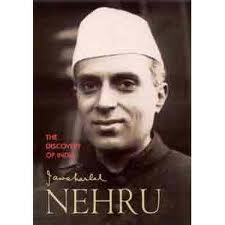
The fifth in the list is what Jawaharlal Nehru had in mind when he defined scientific temper  in his  Discovery of India (1946), as “a way of life, a process of thinking, a method of acting and associating with our fellow men“.

The immediate reason for writing about this is a letter I recieved from NISCAIR, the National Institute of Science Communication and Information Resources, approaching us (the University) to endorse the Palampur Statement, a resolution adopted at the International Conference on Science Communication for Scientific Temper in January 2012.

That scientific temper has not much, per se, to do with science or science communication is (or should be) self-evident so it is a little unusual that NISCAIR should be the only organization that is taking initiative in this matter. Several years ago, I was asked to speak at the release of the National Book Trust’s Angels, Devils and Science: A Collection of Articles on Scientific Temper by  Pushpa Bhargava and Chandana Chakrabarti, both prominent residents of Hyderabad. Prof. Bhargava, founder Director of CCMB and member of the National Knowledge Commission is an indefatigable spokesman for the scientific approach in all aspects of life, and with Chandana Chakrabarti, he has written a number of articles in the popular press, many of which are collected in that book.

The blurb that one can read on the NBT’s website says ” India is one of the ten most scientifically and technologically advanced countries in the world. Interestingly, it is also the only country where commitment to scientific temper is enshrined in the Constitution as a duty of its citizens. Juxtaposing the advancement in modern science with serious lack of scientific temper, the articles in the book make a plea that many superstitious beliefs still prevalent in society are founded on unscientific grounds. Arguing for the urgent need to promote scientific temper as a social asset, the book discusses the importance of scientific temper and its role in the country’s socio-economic as well as scientific & technological advancement. The book is a major contribution in understanding the importance of science and scientific temper.”

So given the importance,  what is the Palampur Statement? Its a fairly long and comprehensive document that delves into, among other things, the changing world order, the current state of science and technology, the spread of fundamentalism, and so on. It has to be read- even cursorily would be enough- to get a true sense of its potential impact in our lives. One fragment that summarizes the main gist of it goes: the thought structure of a common citizen is constituted by scientific as well as extra-scientific spaces. These two mutually exclusive spaces co-exist peacefully. Act of invocation of one or the other is a function of social, political or cultural calling. Those who consider spreading Scientific Temper as their fundamental duty must aim at enlarging the scientific spaces.

And it concludes: We call upon the people of India to be the vanguard of the scientific temper. This is a statement I endorse.

Anandibai's Quilt

On the third floor of the Kelkar Museum in Pune, in the corner of the room where articles of clothing are displayed, is a quilt. Presented to the museum by ‘Wrangler’ Paranjape, this quilt is possibly the only physical article known to have been in the possession of the remarkable Anandibai Joshee (1865-87).

The image on the right is from a photograph I took a few years ago when a friend told me about its existence. The description provided at the display says that the quilt was a community effort by Anandibai’s friends to mark her return to India. As one can see, it contains scraps of cloth that must have formed part of everyday objects and clothing- it was difficult to not be moved- one irregular piece has mirrorwork , while another contains the name of her husband, embroidered in what must surely be her hand. I have not been able to find much about this in what has been written about Anandibai’s life, both in the popular press as well as in scholarly journals. As things go, maybe quilts are not that important.

But as one of the first Indian woman to be trained in western science, her story is iconic and inspirational, and in its own way as remarkable and as tragic as that of Ramanujan. She was the first Indian woman to get a medical degree, in the Women’s Medical College of Pennsylvania. Upon her return to India where she hoped to practice, she died of tuberculosis at the age of 22.

Commenting on her life, the sociologist Meera Kosambi writes: Anandibai Joshee was a true pioneer…. she was the first Indian woman to qualify as a medical doctor. She was also the first Maharashtrian woman to leave these shores for higher studies abroad, at the young age of eighteen.

In March 1886, when she received an American medical degree, she was barely twenty-one — an astonishing achievement in an era that refused even simple literacy to most Indian women! Anandibai chose a medical career because she wanted to serve other women who had inadequate health care. She defended this choice publicly and against heavy odds. Her personal life, too, was a continuous struggle on many fronts. Given the dramatic and eventful nature of her life, it is difficult to believe that she died so tragically young, just before her twenty- second birthday. [She was] an intelligent woman who was dispassionately perceptive of herself and her society — one who had independent views on contemporary gender issues. She was fearless in pointing out the obstacles to women’s education in India, and yet was firmly anchored to an Indian cultural and nationalistic identity. Anandibai was not merely India’s first woman doctor: she was also a feminist and a nationalist at a time when women were a rarity in the public sphere. And though she was not a scientist in the proper sense of the term, Anandibai wrote and researched in the field of public health/ epidemiology while still a medical student.

As has often been underscored, there are multiple identities that each of us carries, and Anandibai’s life, short though it was, was a patchwork quilt, not unlike that with which this post begins. Married young, she learned to read and write, not just Marathi, but 6 other languages including English. She she had a child at the age of 14 and upon losing that child due to inadequate healthcare, she decided to become a doctor. A letter written by her in 1883 gives a glimpse into her determination and strength of character. It is not unlike letters that reach similar offices even today…

Dear Sir, she says, I beg to ask, if upon any terms pecuniarily consistent with my means, I may be allowed to enter the Women’s Medical College of Pa. for a thorough course of study. I have with me seventy dollars, and my husband expects to send me twenty dollars per month less the cost of sending.

I was eighteen years of age last March.

I am not quoting the entire letter which can be seen in the archives of Drexel University, in their collection on Women Physicians, but the arguments she makes find an echo even today!

Though I may not meet in all points, the requirements for entering College, I trust that as my case is exceptional and peculiar your people will be merciful & obliging. My health is good, and this, with that determination which has brought me to your country against the combined opposition of my friends & caste ought to go along way towards helping me to carry out the purpose for which I came i.e. is to render to my poor suffering country women the true medical aid they so sadly stand in need of, and which they would rather die for than accept at the hands of a male physician. The voice of humanity is with me and I must not fail. My soul is moved to help the many who cannot help themselves and I feel sure that the God who has me in his care will influence the many that can and should share in this good work to lend me such aid and assistance as I may need. I ask nothing for myself, individually, but all that is necessary to fit me for my work. I humbly crave at the door of your College, or any other that shall give me admittance.

I’ve included a piece on Anandibai’s in Lilavati’s Daughters, a collection of essays on and by women scientists that I co-edited some years ago. Her story while sad and complex is compelling, and a perpetual testimony to the value of higher education, and to the importance of a higher cause.

A very special milestone

19/07/12. On this day, for the first time in the history of the Department of Economics at the University of Hyderabad (and possibly a first in the University), a visually challenged candidate, Ms. B. Madhuri Smitha, successfully defended her Ph. D. thesis in Economics. One of her two thesis supervisors, Dr Naresh K Sharma (the other is Dr B Kamaiah) writes:

Though denied of the great faculty of vision (Ms. Madhuri Smitha has total loss of vision) by nature, she is well endowed, by the same nature’s benevolence, with abundant intelligence and a will to achieve her own targets. Incidentally, this first feat (in Economics at HCU) by a visually challenged person, is achieved by a women candidate. In addition to her own great perseverance and hard work, she was supported with equally great dedication by her mother in this work and also backing of her father. She has completed her Ph. D. work while working as a faculty member at the Koti Women’s College ( a constituent college of OU).

It is always humbling to see such courage and determination, and always an inspiration. Thank you, Dr Smitha, and from the entire University community, our heartiest congratulations and best wishes!

Her graduation photograph is on Facebook.

… very Heaven!

My Independence Day speech, 2012:

Members of the University family, students, faculty, officers, staff, colleagues. Greeting on the occasion of our 66th Independence Day.

Every year this day we look to a new year of our Independence with renewed hope. Hope for a better future for our children and ourselves.

During the last few days, seeing the physical beauty of our campus- its greenery and its lakes- I have repeatedly been drawn to a fragment of a poem by Wordsworth, written at the time of the French Revolution- a time of hope and expectations. The poem captures the idealism of a time, and one that is good to recall today, particularly given the large number of young people here.

Oh! pleasant exercise of hope and joy!
For mighty were the auxiliars which then stood
Upon our side, we who were strong in love!
Bliss was it in that dawn to be alive,
But to be young was very heaven! Oh! times,
In which the meagre, stale, forbidding ways
Of custom, law, and statute, took at once
The attraction of a country in romance!

Our freedom has brought us huge possibilities, but it has also come with a huge responsibilities. And huge challenges. One responsibility that I am especially sensitive to comes from our privileged position on a campus of such beauty, in a University where the major part of ones day is devoted to intellectual pursuit. We are blessed to be in this learning environment, blessed that we can enjoy the several freedoms we have. Blessed, one can say, to be allowed to do the things that we care so deeply about.

But with this privilege comes responsibility, in particular, the responsibility to contribute at the highest level that we can. As members of the University family, we represent a vanishingly small fraction of the population of this country that has this privilege. The privilege of being educated, of having the resources that we do, of being able to think what we can, how we can, and when we can. The investment that our country has made in us, both implicitly and explicitly is tremendous, and the hope they have that we will deliver is also ever present, and something we need to acknowledge. The country has invested in itself by investing in us, it has invested in its future by investing in us now. The important thing is that we do the very best that we can to keep the faith, and that we strive to deliver our very best- in any field of intellectual endeavour.

This is not always easy. We live, regrettably, in interesting times. Each day brings new and unexpected challenges, particularly on matters that relate to governance and policy. The past year has seen our fortunes fluctuate, especially on matters relating to funding. The economic downturn has meant that the funds that will be made available through the UGC for the 12th plan will not match the promises that were made, but nevertheless it should be possible for the University to consolidate, to improve the infrastructure and to strengthen our various academic programs. The lower funding levels, though, come with the need for sacrifice. Well, if not quite sacrifice, this comes with the need for fiscal discipline and a leanness in spending. We have to make our funds stretch to help us reach the goals of excellence that we aim for, we need to spend wisely, and to use our grants well.

While new infrastructure will slowly become available, it is also true that what we have built up over the last 40 or so years is now in sore need of maintenance. It is our collective responsibility to ensure that the facilities that have been developed be kept functional. Likewise this campus of ours- blessed are we that live here, but more blessed are those who can preserve it! I have, over the past year, been particularly sensitive to matters relating to the environment, to water, and to the campus fauna and flora. With the Hyderabad Metro Rail, we have undertaken a massive tree plantation drive, and with the GHMC, an ambitious plan to improve the water bodies on campus, to increase their number as well as their carrying capacity. This will, I hope, serve us well in the future. Similarly, our recent drives to clear the campus, manage the waste and build a sustainable program for its ongoing maintenance are in this same direction. It needs all of sections of the University to participate, and I look forward to your contributions in this endeavor.

This campus is ours. Ours to enjoy, ours to nurture, ours to nourish. We need to know it well- this is the only way in which we can know well what it needs. Walking through it- as we did earlier this year, and will do again this afternoon- is one way. Caring about it and caring for it, is another. Beyond the slogan, “Mana Campus, Mana Hridayam” we need to develop a sense of ownership of this campus.

Our university- while being central- is also an integral part of our local environment. I have often stressed that we are not just a University of Hyderabad, we are a University for Hyderabad… I hope that we will see more efforts in the coming year to integrate us in the city. Our campus radio station is a year old today- this is a very important way in which we reach out to the communities that sustain us, and an important way in which we can give back to those that sustain us. But there are other ways in which we can and should integrate. We need to have more engagement with the city, with issues that are current and relevant, with discussion and debate. Some of our campus events have been shared with the city, music, theatre, lectures, but we need more.

Let me close with reiterating what I said last year, that we need to carve out a set of freedoms for ourselves. In particular, we need to hold dear to the freedom to excel. Too often, we perform to the levels set by others and achieve goals set by governments. As academics, we know that the best standards are internal, set by the disciplines themselves. We need the freedom to pursue such ideals, without fear or favour, without interference from anybody else. Be Excellent!

Once again my greetings on the occasion of Independence Day to all of you. Jai Hind!