Radical Visitor

RadicalIndiaGraphic

Karoline Pershell is Assistant Professor of Mathematics, University of Tennessee at Martin. She is spending a semester with us at the University as a Fulbright-Nehru Teaching Scholar. After coming across her blog, Radical India (its a math joke, see the image on the right) I thought I would request her to do a guest post on this blog, to tell us about her experience at the UoH. She was kind enough to respond positively (Thanks, Karoline!), and here is her post, titled

Hearty Thanks.

UntitledWhen I applied for the Fulbright-Nehru Teaching Scholar position in the summer of 2011, I had never considered where in India I would be placed. With so many universities and IIT’s in the country, it was serendipitous that my online searches from the other side of the globe showed me the Mathematics Training and Talent Search Programme, with the founding organizer at the University of Hyderabad. A few email exchanges later, and I told the US consulate that I would like to go to U of H. I arrived on December 28, began classes on January 2, and it has been an exciting semester!

Based on student comments, I think I have demanded a lot from them on a daily and weekly basis, but my students in the Integrated Masters of Science program have risen to the challenge! I am impressed by their questions, by their participation, by their enthusiasm for the material in class, and excitement for their studies outside of class.

Untitled 2My students have made my time here extremely rewarding. Through them I have learned about Indian culture, Hinduism, holidays, festivals, customs and even visited some of their homes.  I have learned about their career ambitions and attempted to help in whatever way I can, by passing along opportunities or just encouraging their passions.

I have taken advantage of so many (too many??) things UoH offers, like plays and festivals, lectures and conferences, and sports! (Yeah…I didn’t know what a wicket was when I came here. Silly Americans.) I have traveled outside of Hyderabad as well, in an attempt to get to know a little more about India (Jaipur, Delhi, Agra and Kochi), while spreading the love of math. (See photos of doing math on an elephant… )

Untitled 3It was strange to find myself amongst a group of all Americans at a recent conference in Kochi for the Fulbright-Nehru scholars, researchers and students who are in South and Central Asia. I greatly enjoyed hearing about the work that Fulbrighters across the subcontinent are pursuing and excited that I am lumped together with such amazing people.

Besides sharing research, I believe many Fulbrighters used this time with other Americans to commiserate, to look at someone from your own culture and have the person validate that you have had a rough go during the year, as travel always requires compromises.

However, I can’t complain.

Everything has run so smoothly for me since before I arrived that I assumed other Fulbrighters were having similar experiences. I had taken for granted the incredible work that Professor Kumaresan (Dean of the School of Mathematics and Statistics at the University of Hyderabad) and Prof KPN Murthy (Director of the Center for Integrated Studies) have done.

From my health to my living arrangements, from my transportation to my course load, Prof Kumaresan has brought me to Hyderabad as his guest and given me the autonomy to run my course as I deem appropriate. Profs Kumaresan and Murthy are passionate about the students learning to problem solve for themselves (as opposed to regurgitate on exams). I think I convinced the mathematics chair that I feel the same way, and as such he had enough faith in me to: teach a required course for the majors; adjust the grading scale to place emphasis on the homework and outlines (things which are necessary to learning the material, but often are not given any allotment in the grading scheme); and to require daily writing from the students.

Like Kumaresan, I believe we need to teach the students to think, and that may mean stepping back and showing them how to teach themselves. As my semester is winding down, I realize how far from the norm my class is, and appreciate the opportunity that the Department of Mathematics and the Center for Integrated Studies is giving me to share my passion with the students, and expose the students to possibly a different teaching style.

Untitled 4Finally, I would like to highly recommend the University of Hyderabad as a location for future Fulbright placement. The opportunities at the university for a professor to teach or do research are probably similar to other universities throughout India, but the level of assistance, respect and freedom in the classroom that is given to professors far exceeds that of anything I have heard from other Fulbrighters.

Being dropped alone in a foreign country can be daunting (see sign of poisonous snakes on campus), but the reception I have received in Hyderabad has made me feel at home.
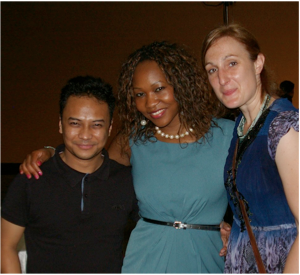
Untitled 5

Thank you for this opportunity and I hope that I have given back to UoH at least a fraction of all that UoH has given me.

Cheers,

Karoline

PS: Please notice that I am a Fulbright-Nehru Scholar: the exchange goes both ways! Please consider applying for a Fulbright-Nehru position for Indian citizens at http://www.usief.org.in 

REPUTAT10N

THE
The big news for us in the past few days is of course that we are No. 10 in the Times Higher Education World Reputation Rankings of Academic Institutions in India. Just so that it is clear as to what this means, I went to the THE website and learned that this ranking is from data compiled by Thomson Reuters. The ranking is based on responses from around 16,300 leading peer-reviewed academics from across the world who were asked to nominate no more than 15 of the best institutions in their field of expertise.

39% of responses were from the Americas, 26% from Europe, 25% from Asia Pacific and 12%  from the Middle East, North Africa and Central Asia; 18% of the respondents were from the physical sciences, 21.3% from engineering and technology, 22.1% from the social sciences, 15.4% from clinical subjects, 12.7% from life sciences and 10.5% from the arts and humanities.

UntitledWho were the other 9 in the top 10? IISc, five of the IITs (Bombay, Kanpur, Delhi, Madras, Kharagpur). AIIMS. Along with us, the other universities are Delhi and Aligarh. One can critique methodology, analysis and inference all one wants, but still its nice to be up there in the list, although most of the others in the top 10 are so different from the UoH, one wonders about the nature of the ranking…  Reputation is such a tenuous (and ephemeral) thing, and as Iago realized, so valuable.

And value it, we do. What we seem to do with much less felicity, though, is to ask the right questions (as the THE people seem to have!) and when (or if) asked, our answers are often wanting…  I had actually started on this post a while ago, sparked by some concern on the poor flow of information on campus, almost as if we have an informal DADT (Don’t Ask, Don’t Tell!) policy on all issues. But that’s really for another post.

Which finally brings me to what makes a ranking that is based on the opinion that other academics have of us.  In no specific order, this would probably have to include

  • Research papers, which is where most others read about our work
  • Books that our faculty and students publish
  • Seminars and Conferences, where they may have participated…
  • Scholars on campus, who they have heard of
  • Alumni, our best ambassadors
  • Visitors to our campus who talk about us…

There doubtless are many other factors, of course, but like I said it’s good to be on the short list… And it also gives us an idea of what we need to work on to get higher up there…

March 5: A Date with the UGC Task Force on Gender

equalThere will be a discussion with members of UGC Task Force on Gender on Gender Issues on our campus on Tuesday 5th March in the Auditorium of the School of Humanities at 10:30 am. The terms of reference of the Task Force is broad. Apart from issues of safety and security, the Committee is interested in knowing the space that women (students, faculty and employees) have in the academic and non-academic life of the university community. Some themes around which the discussion may be centered are

  • Around CASH (its scope, its activities, accounts of its functioning by the members and the complainants)
  • Women’s hostels (facilities, safety, security, lighting, timings, toilets, discrimination, restrictions etc.)
  • Transport (within and from the University for students at different levels)
  • Students groups and if they take up any issues concerning women students
  • Issues of caste, ethnicity, region and religion – how do they effect women’s mobility, mobilization on the campuses.
  • Women students and student politics – ability to participate, adequacy of representation,
  • Issues of class 4 women employees and their access to grievance redressal
  • Issues related to health care facilities – presence of a trained gynaecologist in the health centre, adequate care and medicines.
  • Moral policing by groups/individuals on the campuses
  • Academic equality: the academic space accessible to women, relationship between colleagues, students, supervisor-student and so on…
  • Individual and group experiences of women on campus

The UGC would highly value written representations on all the above issues individually or
by a group. Anonymous representations are also accepted.

Paint Pray Run (@ the UoH)

UntitledRUN!: The Hyderabad Runners, arguably “the best running club in India” will have the  4th Edition of their Club Run on Sunday 17th February, 2013. This edition of the Club Run includes 10K, 21K and 3K segments.

HR have been promoting running in the cities of Hyderabad and Secunderabad with the aim of making running the most preferred form of fitness and leisure activity. This run begins and ends in the University campus and will include road and a bit of trail run. The route will be identified by route markers.

There will be aid-stations at every 2 kms providing runners with water, electrolytes, fruits and first aid. Since it is a Sunday, there is likely to be low traffic, but you should be careful in running.

To register, go online and fill the online registration form. Spot registration on race day will be allowed.If you have any  queries, you can contact the members of the registration committee via email at any time, Ajay Reddy  – ajyrds@gmail.com and  Sunil Menon – sumeno@microsoft.com

Date: 17th February, 2013
Time (Half Marathon): 6.15 AM.
Time (10K): 7 AM.
Time (3K): 7.15 AM.

Starting Point: University of Hyderabad, Gachibowli, Hyderabad. Collect your bibs on Sunday 17th, @ the race venue at The University of Hyderabad from: 5:00am to 5:45am.

This is the First of the UoH Half Marathons… Which means, of course, that I’m hoping that that this will be an Annual feature. Perhaps even a Full Marathon in time to come?? Enjoy!

SARASWATI-Goddess-of-Wisdom-&-the-Arts-Ravi-Varma

PRAY!: Today is Saraswati Puja, a festival that carries much meaning for any University. Learning provides the only true liberation, and that is a lesson worth remembering.

images

PAINT!: The Sarojini Naidu School, in collaboration with the IndiraGandhi Rashtriya Manav Sangrahalaya in Bhopal are organizing a 10 day workshop of Tribal Paintings- some great painters have come to our campus and will conduct a workshop with the Fine Arts Department. And also paint some of our public spaces… Come visit the S Radhakrishnan Lecture Hall Complex next week, and the S N School anytime between now and the 24th…

Gang aft agley

imgresRecent events, more of a personal nature than public, brought Robert Burns’ To a Mouse to mind. The University lives, as it were, from plan to plan, and like those best-laid schemes o’ mice an’ men in the poem, they don’t always work out quite as one wanted. The plan above should really be Plan with the capital P, referring to the Five Year Plans that are overseen by the Planning Commission. We are now into the twelfth (XII) of the Plans that started on April 1, 2012, the date being quite a cruel joke on all of us.

The UoH did well in the XI Plan. Well, in this context, is really in the money that was granted to the University via the UGC and other funding agencies, the total being about Rs. 210 Cr, and one should also count the additional grant that came as a result of the OBC expansion, Rs. 154 Cr. This really enabled the University to dream big, building new hostels, new buildings, new major equipment, new infrastructure, and so on, and the results are there for all to see.

UntitledFor the XIIth Plan, the UGC and the MHRD initially asked us to dream even bigger, and keeping the then rate of growth of the Indian economy in mind, the Central Universities were asked to project plans that were three or five times the grant we got in the XIth Plan. That’s serious! But that was also at a time when the body politic seemed robust and secure, and also not in a state of limbo as it has seemed to be in the recent past…

Anyhow, we rose to the call and made a XII Plan Proposal that was commensurate with these ambitions. Big plans. But now, when it has come to the implementation stage, there have been subtle (and not so subtle) indications that the budget allocations will be nowhere near as generous as they (or anyone) had hoped… The economy has not been so good, there are massive cuts, everyone is suffering, one “reason” after the other. But more to the point, ten months after the so-called start of the new Plan, we still have no clear idea of what the UoH has been allotted, not in terms of money, not in terms of positions, and not in terms of programmes.

Untitled 3The fact of the matter is, a five year plan period does not really make much sense anymore, least of all for the higher education sector. The world changes too fast in five years, and so do priorities. And five years is not a natural timescale on which anything particular happens in the world of academe, so why quantize it that way? There is no logic to it, and the fact is that by the end of every sacred Plan Period there is always unspent money. (And that accounts for something like Rs 65 Cr out of the 210 that we got in the entire Plan, which comes to nearly one third of the total amount!) I think it would serve us far better if we made proposals for shorter periods – it would help us project our needs better, it would help us to adapt to changing scenarios, and it would help the University to stay competitive instead of locking us into a firm commitment that may eventually evolve into something unrealistic over five years…

One plans and plans, and plans so… and then! Being at a University should prepare one for such uncertainty though. As it happens, I find myself admiring Burns more with the passing years, and seeing through his eyes and words, more of the universality of the human condition. The next stanza of the poem captures perfectly the angst of the moment,

Still thou art blest, compar’d wi’ me
The present only toucheth thee:
But, Och! I backward cast my e’e. On
prospects drear! An’ forward, tho’
I canna see,
I guess an’ fear!

So what’s Gang aft agley? Och, the sorry fate of the best-laid plans of mice and men…

UoHTube

Untitled

Over the past year(s) we have had several  “Distinguished Lectures” at the University- namely special lectures by eminent scholars that we hope will address a range of issues that are of general interest. In reverse order, these have been

  • Veena Das, Politics of the Urban Poor. 11/1/13
  • Joseph Stiglitz, Macro Economics in crisis: An agenda for rejuvenating the discipline. 4/1/13
  • William Dalrymple, The Return of a King: Battle for Afghanistan (1839-43). 10/12/12
  • Michael Berry,  The maggot in the apple: peaceful coexistence of incompatible theories. 18/10/12
  • K Srinath Reddy, Public Health Needs An ‘All of Society’ Approach. 17/9/12
  • Vasudha Dalmia,  Nature, Science, and Civilization: Agyeya’s Anti-city Novel (1952). 30/8/12
  • Walter Russell Mead, America’s Sticky Power. 7/8/12
  • Maria Cristina Marcuzzo, Re-embracing Keynes Scholars, Admirers and Sceptics in the Aftermath of the Crisis.  9/3/12
  • Andrew ShengThe Seven Distortions of the Global Economy. 25/1/12
  • David Hume, Macrophage Colony-Stimulating Factor and the Control of Macrophage Differentiation. 10/1/12
  • Mriganka Sur, Brains, Minds and Machines. 6/1/12.
  • Herbert Gleiter, Can Poly/ Nano-glasses open the way to an age of Glassy Materials? 15/11/11
  • Barbara Harriss-White, Capitalism and Common Man. 11/11/11
  • David Shulman, A South Indian Concept of Nature: Notes from Telugu Kavya. 8/8/11
  • Girish S. Agarwal,  Quantum Interference between Independent Photons. 4/8/11
  • Yu Yongding, China’s Development Strategy over the Past Three Decades. 28/7/11
  • Palagummi Sainath,  The Media: Another Kind of Convergence. 20/7/11
  • V. S. Ramachandran, Neurology: from molecules to metaphor. 19/7/11

Untitled 2

In addition to these, there have been any number of lectures by equally distinguished persons- Rudy Marcus, Mahasweta Devi, Romila Thapar, M S Narasimhan… many others.

A new initiative to share this bounty with the public has led us to put several of these lectures onto YouTube. The most recent three of the above lectures, as well as the speech by Rudy Marcus are all on YouTube, and we have a photoblog as well! All courtesy our recent S N School graduates Gautami and Manikrishna. And the PRO, Ashish Jacob…

Enjoy, and please also let your friends know! The special lectures of the UoH are now available for all. Here are the links. Veena Das, Joseph Stiglitz, William Dalrymple, and Rudy Marcus. There will be more as time goes on… So mark the blog space, and you can always search for Untitled 3. Thats large!

Is Life Elsewhere?

At its best a University is meant to prepare one for a life in the real world. LIFE in the outside world, so to speak. But, and not as Milan Kundera put it in his brilliantly titled novel, life is also not really elsewhere, even if the University provides only a transitory environment for most. I’ve been mulling over this post for a while now, these thoughts prompted by a number of things that happen from time to time on the campus.

And in the classroom. I was mildly (to put it mildly) irritated some months ago when two students asked for permission to miss a class since it clashed with an entrance or qualifying examination for some other institution. Like there was a destination that was demonstrably more important than here, which was just a stepping stone in any case… which more than kind of devalued the present in favour of an imagined future.  But maybe I was being unnecessarily touchy.

The issue continues to bother me though- why do many of our students, and typically the more promising ones, not consider the UoH as a serious destination for research. Better facilities elsewhere is one reason, of course, but there is something more to it. Over the years I have seen a variety of students who intend to pursue further studies choose destinations that are almost surely not as good, and also seen them exchange the familiar for the alien, exchange the possibility of good mentorship for the probably indifferent…  But then, I have also seen them perform well enough later, so this is also somewhat of a sense of regret of “what might have been”.

Nevertheless, the question of why Indians seem to do better abroad is one that has been asked often enough, and reasons range from the obvious to the banal. A typical one being that “India’s biggest problem is its mindset. India still views itself as a third world country or less harshly, a “developing” one.”  Comparing our (presumed) national characteristics with those of others is an old practice: Rabindranath Tagore, for instance, when talking of the Japanese aesthetic felt that in Japan, there was a certain sense of order, discipline and unruffledness he missed in India, where people wore themselves out with disorder, effusiveness and over-reaction [as cited in K G Subramanyan’s article on RT and modern Indian Art].

So is there something more to it than better facilities and infrastructure that attracts the aspiring student to more developed (or richer) countries? Is life elsewhere? A colleague recently wrote (and I am extracting from his mail) on what the main differences were. This was about the attitudes of people to the following principles of life:

  1. Ethics, as basic principles.
  2. Integrity.
  3. Responsibility.
  4. The respect for Laws and Regulations.
  5. The respect from majority of citizens by right.
  6. The love for work.
  7. The effort to save and invest.
  8. The will to be productive.
  9. Punctuality.

The differences, that analysis asserts, arise essentially from the proportion of the population that actually follows these principles and not from some other national characteristic, intrinsic superiority or natural advantages that these nations might possess.

Surely these principles are neither so profound to enunciate, nor are they that difficult to follow in a society. And yet…

The New Year, and Campus Walk 2013

Let me start with Good wishes to All for the coming year!
Untitled

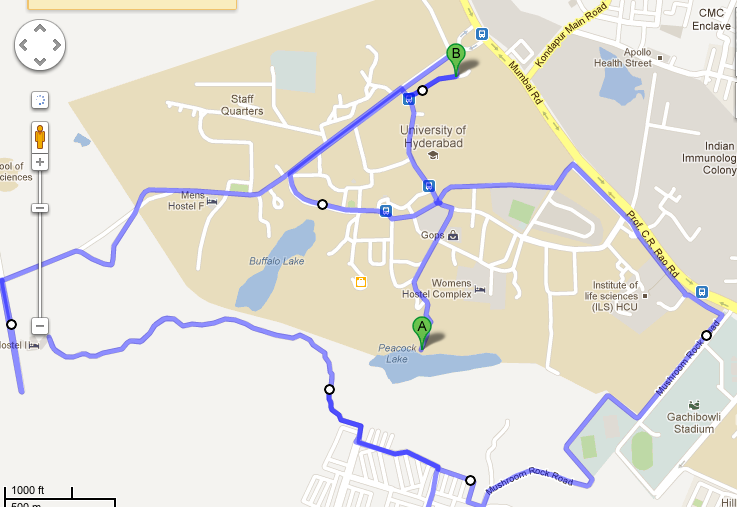
This New Year’s walk is dedicated to Nirbhaya and is being coordinated by our University’s  NSS.  The suggestion is to go clockwise (seeing it from above, that is) around the campus perimeter. Starting at the Admin building, we will go via the Health Centre to the small gate, CMSD, through the woods, along the wall to the Mushroom rock, to the TNGO colony… coming back via the South Campus. Here is a poorly edited map of the route, cobbled together with the help of Google Maps. We start at B and end at A.

UntitledI look forward to seeing you on the 1st. We start at 2:00 pm (for any updates, watch this space).

EEE: Earlier Entrance Exams

UntitledToday the student enrollment at the University of Hyderabad stands at a little under 5000. Over the past year or so, I have been discussing with the faculty in various departments as to how we can increase this number. One thing is clear- there are no quick-fixes: its going to take effort on all our parts, and that includes the students who are already here as well.

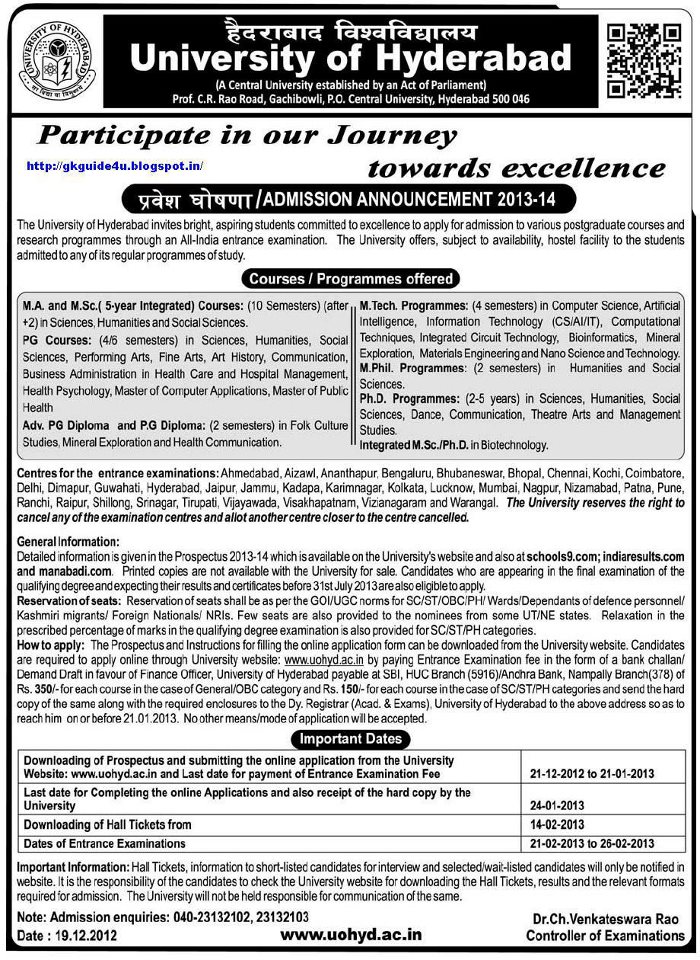
One such effort is to prepone our entrance examination schedule, shifting the entire written examination process to the month of February. Admissions for the year 2013 will therefore have their entrance exams in FEBRUARY 2013.

Reputations are as much built by word of mouth recommendations as they are by high impact publications. And word-of-mouth endorsements come in bulk from students either literally or by example. Anyhow, we need to cover several bases, and so there will be a press conference (my first, by the way) on Tuesday the 18th of December, at the Hotel NKM’s Grand (in Khairatabad) at noon.

All our entrance exams will be held between 21 and 26 February 2013. Tell all of those who may be interested. And even those who may not. And apropos of that, the India Education Review and the online magazine Digital Learning carry interviews with me, a small effort to get some more visibility for the UoH…

The reports, in the Times of India, The Hindu Business Line, The New Indian Express, The Hindu, INN, Full Hyderabad, Education One India and Zimbio.

Share the links, spread the word!

230339_186304748174634_1751772121_n

Recognizing Excellence, 2012

Several colleagues have been recognized for their research excellence in the past year, and here is a sampling of what I was able to  collect to present at the Court and Executive Council meetings this month. And just a bit beyond…

RamacharyMost recently, Dr D B Ramachary, a synthetic organic chemist in our School of Chemistry has been named this year’s B M Birla prize awardee. The B M Birla prizes are awarded to young Indian scientists, below the age of 40 years, who have made outstanding original contributions in their fields. The objective is to encourage uncompromising excellence and to recognise the contributions of such scientists while encouraging others to achieve even higher standards of excellence. The prestigious awards have been instituted by the B M Birla Science Centre, Hyderabad, which is a premier institution for the dissemination of science in the country. 

ramabrahmamThe Gupta Prize was established by  M. M. Gupta, Chairman of the Gupta Group in Eluru, to promote Literature, Science, Arts, other intellectual pursuits and Humanitarian services and to honour distinguished persons or Institutions in these fields. Prof. Bethavolu Ramabrahmam of the Department of Telugu is this year’s awardee. He is in distinguished company-  earlier awardees include  M.S. Subbulakshmi, Dr. M. S. Swaminathan,  and Dr. C. Rangarajan. Prof. Ramabrahmam is also the Chair of the Centre for Classical Telugu, and has done exemplary work in publishing classical texts with modern commentary.

Vadali V. S. S. SrikanthDibakar DasKBhanuSankaraRaoIn the School of Engineering Science and Technology, Dr Dibakar Das has been elected Fellow of the Indian Institute of Ceramics, Dr Srikanth has been named this year’s INAE Young Engineer, and Prof. Bhanu Shankar Rao (who retired from the service of the University recently)  has been named the Metallurgist of the year by Indian Institute of Metals.

apparao_p

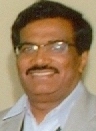
Prof. P Appa Rao of the Department of Plant Sciences in the School of Life Sciences has been elected to the National Academy of Agricultural Sciences. NAAS, established in 1990, is among the youngest of the Science Academies of India. It owes its origin to the vision of the late Dr. B. P. Pal, FRS. The Academy focuses on the broad field of agricultural sciences including crop husbandry, animal husbandry, fisheries, agro-forestry and interface between agriculture and agro-industry.

usha_pic_ezg_1Dr. Usha Raman of the Department of Communication in the  Sarojini Naidu School has just been given an International Research Collaboration Award from the University of Sydney, to work with a group at the School of Public Health and the George Institute for Global Health, specifically, to provide inputs on qualitative methodologies in health research. This is a competitive award which funds a senior academic to come spend 8 weeks at the host institution and interact with early career researchers. 

Congratulations all around!