Teachers Day

443398a-i1.0Greetings on the occasion of Teachers Day–  to the teachers of the University, and to our many, many teachers outside the University…

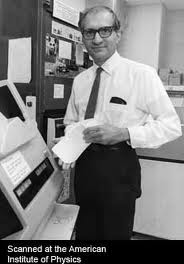
The UoH has always been known for the many great teachers who have been here from the first days, Gurbaksh Singh onwards. I’m lucky that I also had the opportunity to learn from some of them when I was a student at IIT Kanpur, and knew some of them in later years as well.  We have a good reason to recall Sarvepalli Radhakrishnan not just today but most working days, given the name of our Lecture Hall Complex, and the photograph of his above, an uncharacteristically informal one, also has a nice connection to the UoH.

A colleague writes on FB, “To all my teachers for all that I am today and to all my students from who I learn everyday, Happy Teacher’s Day!”. How true, and said so well- its a day to celebrate both teaching and learning!

Déjà vu

I’ve been having something of a writer’s block these past couple of weeks. Partly due to a sense of ennui as the blog enters its third year and I feel that the issues I want to discuss often border on the same old same old… But I must recall Larkin again- the there and that of been there done that are no longer where they were or what they were, and so its best to begin afresh. With a request for your indulgence if it seems like some of this has been said before.

For reasons that are too obvious to mention, I have been worrying a lot about our campus these past few weeks. Since the rains have been good to us, it is a corollary that the campus is very green, but it also becomes painfully evident that we need to constantly maintain it. Pruning, clearing, cleaning, culling… And picking up litter- there seems to be no spot on the campus that is free of plastic or paper waste. There are some simple and straightforward rules, banal enough to not be worth reiterating, but it seems they must.  Respect nature. Don’t litter. And don’t expose yourself to danger.

42I recall a conversation I had with Meenakshi Mukherjee, at one time on the faculty of the Department of English at the UoH. She was a good friend during the many years when we both were at the JNU- as it happened we moved there at roughly the same time. One day when I met her at Ganga Dhaba, apropos of nothing particular (more than usual that is) she said to me, you know, our campuses are the new colonies. Explaining herself, she added, it is like we academics create an enclave that is removed from the rest of the country, where different rules apply.

I have often thought about what she said, not just this but many other things (she introduced me to the poetry of Agha Shahid Ali, for one. And encouraged me in my misguided efforts to learn Portuguese for another: learning a language is a very pure skill, she told me, but I’m still not sure what she meant…).

I feel that she was essentially right in her perception that a university campus is a special place and a special space, but also that in such enclaves there is a lot of privilege, and it is all too easy for us to slip into a colonial mentality.

imagesThis post is not just about littering or preserving the (physical) environment, it is also about the more general question of how we behave on the campus. For instance, there is a lot of helmet-less driving of two wheelers on campus. Seeing three students on a two-wheeler is not that uncommon. Some of the driving tends to be rather rash, and a positive danger, not just to others but to the driver as well.  The traffic rules that apply elsewhere should apply here as well… Similarly, in public spaces Smoking is a No-No and Consumption of Alcohol is a BIGGER No-No.

images-1

There are the laws that apply in the country, and then the special rules of the campus itself, and both need to be respected. This is not to interfere with personal choices, but there are laws that apply to educational establishments, and infringement of these draws some very unwelcome attention as we have seen in the past weeks.

The campus is always under threat, it seems. We have many well-wishers and much to be grateful for. But there are also others who are not slow to sit on judgement, others who are quite happy to show up all our weaknesses. Preserving and protecting the campus space is a full-time job, and its a job for all of us. It is a huge responsibility that we all have, to keep this place as one where generations of students can come to learn, and generations can use the freedom and the opportunities that this space offers to grow and develop.

Aneesur Rahman Day

downloadThe computational physicist Aneesur Rahman was born in Hyderabad on 24 August 1927. Widely known for his seminal contributions to the field- he is often termed the “father of molecular dynamics”- Rahman was a pioneer in the area of computer simulations- his 1964 study of liquid argon started a field that has grown from strength to strength. By 1970, for example, there were 34 papers on the subject in the Physical Review journals alone that were on molecular dynamics, and in 2012, this number had grown to 2751!

The UoH will celebrate this coming Saturday, 24 August 2013, as Aneesur Rahman Day, at ACRHEM, bringing together researchers from all over the country who work in the area of molecular simulations to discuss their work, share their research.

Rahman died in 1987 after a career that took him from Osmania University, Hyderabad to the Tata Institute of Fundamental Research in Mumbai, to Argonne National Laboratories in the US where he worked for 25 years. He then moved to the University of Minnesota where he was Professor of Physics and a Fellow of the Supercomputer Centre. His education had been at the Universities of Cambridge and Louvain (where he got his Ph. D. in 1953).

UntitledOur colleague Professor Kalidas Sen of the School of Chemistry was kind enough to share some details of Rahman’s life and work from where I got the above information, and also learned of the few papers that he published from Osmania, a composite image of which is on the left (taken from Prof. Sen’s presentation).

The American Physical Society now annually awards the Aneesur Rahman Prize for outstanding achievement in computational research. I hope that each year, the Anees Rahman Day will similarly bring outstanding researchers who use molecular dynamics simulations in their work to our campus,  to celebrate the life and contributions of this great Hyderabadi!

The convenor for this year’s meeting is Dr G Vaitheeswaran (write to him for any information) and the announcement and programme is downloadable from the (new) What’s up? UoH site.

I Day, 2013

The country’s 67’th, my third, and the Kendriya Vidyalaya, University of Hyderabad’s first. Some excerpts from my speech today:

UntitledMembers of the UoH Family, Let me start by first conveying my warm wishes and greetings on the occasion of the 66th anniversary of our nation’s Independence.

Today we are- as we have been for the past many years- living in interesting times. We appear to be in a state of perpetual flux, with the scenario changing frequently in dimensions that are political, economic, and with consequences of an immediate, as well as of a long-ranging nature.

Combining independence with responsibility has been a challenge not just for our campus, but metaphorically, for our nation as well. The day of independence that we celebrate or mark each year, brought the nation the responsibility of forging a modern state, one where all citizens could aspire to a life that was better, because it was free, and because we had self-determination and self-governance, swaraj. In the nearly seven decades that have passed, it is clear that we have tried hard and that we have made great strides, but it is also clear that we have far to go on so many fronts.

This is the third time I have stood here to speak on this occasion, and since last year there have been many changes that we have seen happening around us. As anticipated, the XII plan grant has not been as generous as we had wanted, but there have been rays of hope and promise on many fronts. The University has had a preeminent position in the country with respect to its commitment to excellence in research and teaching. Having seen it intimately these past years, I know that the foundation is very solid, and the base is a strong one. In the past month, in recognition of the fact that twice the UGC has declared us to be a University with the potential for excellence, we are now designated simply as University of Excellence. This is not to say that all the potential has been realized- we more than others are acutely aware of the many miles we have to traverse and the many goals we need to score- but still, we are I believe, a University with the Promise of Excellence. This appellation comes with a heavy responsibility, and that is the responsibility to continue to deliver in the future, as we have in the past, good students, good programs, and good, solid research.

Our faculty and students have been recognized nationally and internationally- this year’s Amartya Sen award, the SCOPUS young scientist award, the Child and Adolescent Mental Health Award, the B M Birla Award, several KVRSS awards, AP State Football championship… the list is a long one.

Similarly, many individual disciplines have been recognized for their excellence as well. PURSE, the programme of the DST for Promotion of University Research and Scientific Excellence will shortly enter its second phase, our Centre for Research and Education in Biology and Biotechnology or CREBB, similarly, is up for renewal and extension. A crucial and significant new addition to the University is the School of Education that has been granted recently by the UGC. I believe that with the addition of this important discipline, we will be able to make progress in a crucial dimension, the marriage of instruction with technology. I see that in the coming years we will be able to reach out to larger and larger numbers of our fellow citizens in the country and thereby fulfill the responsibility that we all share, namely of educating the bulk of the country to create a modern state.

Our concerns are many. As I have mentioned on earlier occasions, we are blessed to occupy this campus, this environment, this land. Our efforts to secure the land for the future of the University and for the purposes of education are still on: that road is a long and tortuous one, strewn with unexpected hurdles, but it is one that we are firmly committed to. For this purpose, we now have a detailed master plan for the campus.

Our commitment to the environment extends to the preservation of the biodiversity, of the varied habitats, of the fauna and flora, the lakes the rocks. One achievement that attracted considerable national attention is our action of using the roof of the Library for harvesting solar power and making this building almost self-sufficient and independent of the state electricity power supply. This coming year we will do more, and while we reduce our expenditure on power, we will also contribute to building a greener campus. And a more sensitive campus as well. The Ministry for Social Empowerment has responded positively to our disability audit, and our request to make all our buildings accessible to disabled students, and in the first instance they have funded us to do so for sixteen of the main academic buildings. Our lakes remain a source of concern, and our efforts to clean them, deepen them, and improve the ground water resources in this part of the city are also always afoot. Similarly, our campus has been invaded by the subabool tree species in a manner that is harming the native flora of this part of the Telangana region. These need careful culling and replacement, and we will undertake to do this shortly.

Within the University administration there have been many attempts to streamline procedures, and one effort that promises to serve us well is the decision to advance the entrance exams, and to make the admissions more transparent. The intake this year exceeds that of last year, and many more students have been able to apply for the several courses that we offer, although it is also true that the process needs further fine tuning.

But above all, if there is one thing that I would wish for us, it is for an increased self-confidence. We are a good, solid university, and we offer a quality of education that is difficult to come by, facilities that are well above what can be found elsewhere, superb teachers and a cohort of students that is second to none. And yet, there is a strange diffidence that permeates our functioning, something that is difficult to fathom. We are very good by any set of standards, except perhaps by our own. And this, while it should help us to reach even higher levels, appears to pull us back and hampers our own growth, both physical and intellectual. The responsibility of independence, of autonomy, is one that cannot be taken too lightly. Of late the University has been portrayed in somewhat negative light in the press and media, and I believe undeservedly so. The onus of making ours a University of Excellence is a shared one, shared by all sections of our campus community, staff, students, faculty alike. Each has a role to play, and each has one’s own sphere of operation. I urge all of you to play your roles with utmost seriousness- losing sight of our ultimate goals causes us to drift, and ultimately lets us all down. We need to change this, and now more than ever, we need to be the change we wish to see.

But this shswiftould happen gradually, with deliberation, and with debate. And with wide participation so that each voice can be heard. To adapt something that I said recently in a related context, if we are to bring about lasting change in education and research in our University, there really is no alternative to slow and sustained effort. The race, such as it is, is not always to the swift. It is to those that persevere.

Jai Hind!

Welcome! and Welcome Back!

The start of an academic year is a good time- things seem fresh, even if we have been here before, and its a time for new beginnings. The rains have really washed things clean, and the whole environment looks and feels special. So before anything, welcome to all the new students, and welcome back to all the returning students! The campus has not been the same without you… Begin afresh, afresh, afresh.

And what better way to start than with the announcement of the Chancellor’s Awards. From this year onwards, the University has instituted five awards for younger faculty, for teaching and research. Nominations will be invited later this year, and the awards will be announced at the convocation in October by the Chancellor, Prof. Hanumantha Rao. This is one small way in which to recognize excellence, and all of us will have a say, both the students as well as other colleagues.

There is a group of happy campers who have been setting up some new resources for the campus. These are in development, so no criticism please, at least not just yet, but here is a list.

UntitledThere are way too many gaps, but we also need volunteers to put up the information. Write in and offer to help if you can.

  • The University needs a place to engage in discussion, and soon we will have a Connect UoH site, where all can post comments, raise issues, get information, and so on…
  • A job portal, both on G-HAN, as well as more specific to the University.

Untitled1

And, starting along with the semester, the conference season gets going as well! Perspectives in Nonlinear Dynamics, is a meeting that we are organizing along with the TIFR, Hyderabad, from 15 to 18 July. This edition of PNLD is the fourth in a series, and the aim of the meeting (that is being held in the Science Complex) is to focus on the open issues in nonlinear science and to identify the directions in which the field is developing. The themes that are being explored at the conference include Chaos, Nonlinear Phenomena in Engineering Sciences and Applications, Nonlinear Phenomena in Biological and Medical Sciences,Synchronization, Bifurcations, Time-delay systems, Extreme events, and so on. All are welcome!

G-HAN, जी हाँ !

The city of Hyderabad is home to many academic institutions- and an amazingly diverse set at that. No fewer than three Central Universities- apart from the UoH, there are MANUU and EFLU (the only other city with more is Delhi that has DU, JNU, JMI and IGNOU), and several state universities- OU, Telugu University, technical universities BITS Pilani, JNTUIIT and IIIT, several CSIR laboratories, several defence laboratories, NALSAR, the Indian School of Business, the Administrative Staff College of India… The list is long and very very varied.

Navigating through the academic landscape can be hard. Admittedly most of us don’t need to do it often, but if one did want to know where one could study a specific topic or degree, there is no easy way to get the information. Some time ago, when then Human Resources Minister of State, Dr. D Purandeswari visited our campus she asked many heads of institutions to come together to discuss, among other things, how we could network. It was quite an eye-opener, both  as to what expertise there was in the city, and how little mutual information was shared.

And how little resources could be shared. For a brief while, there was some talk of the “meta university” concept, some sort of virtual coming together of academic institutions in cyberspace. But like all virtual enterprises, that too evaporated- one of the biggest difficulties in making things like this a reality seems to be economics- it is just impossible to do this on a nonexistent budget.

Nevertheless, we thought that it would be possible to go part of the way, and this is GHAN, the Greater Hyderabad Academic Network. This is a website where we have brought together information on all the academic institutions that are located in the city of Hyderabad. This is interpreted somewhat generously to include as many as we can, even if distances between the outermost entities are nearly 100 km.

Untitled

To begin with, G-HAN is a collection of introductory information pertaining to all organizations devoted to various aspects of higher education and research.  Given the fact that these are scattered in the Greater Hyderabad area, forming several clusters, this site is an attempt to give the visitor a quick introduction to,

  1. where an institution is located
  2. what it is about, and
  3. what expertise is represented there…

As of now, there are about 100 institutions listed on this site, but this is just the beginning since we have started with the governmental (both central and state) and semi-governmental sectors. There is a FaceBook page for GHAN as well. We hope to be inclusive and therefore we will be adding privately funded institutes and laboratories. If you have suggestions of what more should be there, please write in to the GHAN Team at ghan @uohyd.ac.in.

One small step, but hopefully a useful one,  जी हाँ !

PS: Read the Indian Express story about GHAN-

My hovercraft is full of eels: నా హోవర్ఁక్రాఫ్ఠ్ అంతా ఈలు చేపలతో నిండిపోయింది

UntitledIn 1971 or thereabouts, with what now seems to have been considerable prescience, I purchased a copy of the modestly priced “Telugu without a Tutor” by H. R. Rao (Sahitya Siromani, Etc.) from Higginbotham’s bookstore in Madras. My aim at that time, if I recall correctly, was to learn enough Telugu to appreciate some of the more common carnatic music compositions. That never came to pass, and for 40 years the book languished, unread.

I brought it with me to Hyderabad when I came here two years ago, but it still is something that I only dip into, since the book was written in another age when there were rupees and annas, and when the pace of life was very different. There is a charm to it, of course, and I can now easily find my way around the Aden dockyard, should I be surrounded by Telugu speaking lascars… It does not have the infamous నా postillion పిడుగుపాటుకు చెయ్యబడింది phrase, but there are similar gems on many pages. 

eelsIn recent weeks I have taken to learning some conversational Telugu, and my progress is hastened by having a tutor, a conscientious one at that. Each day I struggle with adi and idi,  the specious similarity with Tamil and my decaying language module that confuses nenu baagunnaanu with genki desu. Hopefully in some time I will be able to understand,  and to an extent, be understood, but I think that with passing years, learning languages gets more and more difficult. 

And then there is the seductiveness of technology. Searching for some phrases the other day, I came across the Omniglot site which lists the very useful translation of “My hovercraft is full of eels”:  నా హోవర్ఁక్రాఫ్ఠ్ అంతా ఈలు చేపలతో నిండిపోయింది (naa hoavarkraapht aṅthaa eelu chaepalathoa niṅdipoayiṅdhi). Ah! to live in a Monty Python universe where this was a common enough occurrence….

The Four Year Transform

UntitledThis post has been a while in the mulling, and several news items in yesterday’s newspaper (The Hindu, 11 May 2013) that seem to be of considerable importance as far as we are concerned has prompted me to write.

One item focussed on the comment of the Visitor, the President of India, who said at the convocation of the Babasaheb Bhimrao Ambedkar University in Lucknow,  that he was unhappy with the education given by Central Universities. His drawing attention to the quality of the education, the employability of the graduates is germane, and since he comes hierarchically at the top of the pyramid of all Central Universities, it is necessary for us to take cognizance of the comment. The report adds, editorially, that higher education must be made affordable for students, especially from economically weak background. It should be brought closer to the population by innovative techniques and knowledge-sharing.

logo_duThe need for innovation seems to be at the heart of a second news item, on Delhi University’s ambitious four-year undergraduate programme that is apparently now a reality with the Executive Council on Thursday approving all the courses, examination schemes and amendments to university ordinances that are required to introduce the new structure from this July onwards. July 2013, that is. This move has also prompted a number of academics and organizations to ask the Visitor’s intervention in this matter, since DU’s decision to implement a four-year undergraduate programme has far ranging consequences.

The central issue is the nature of undergraduate education in India, its form and shape in the near future. Since this has quite obviously an impact on the nature of graduate education, on employment and employability, there is a need for all of us to be engaged in the debate, and not just leave it either to politics or to the powers that be, no matter where they be or what they are.

As is quite well known, the four year format is the norm in the US, and the merits of a flexible curriculum in the US university system as a whole is well documented. Having the youth enter the workforce at the age of 22 or 23 is also desirable, so a degree that would enable the majority to get jobs at this age would be quite welcome. However, the US system has its own internal consistencies, its own system of checks and balances that have been worked out over a long period.

Even in the Indian context, the four year undergraduate programme is not new- the various academies of science have a Science Education Panel that has this structure as an explicit recommendation, and indeed the Indian Institute of Science in Bangalore has started a four year programme in the sciences last year. However, the numbers involved are, at the moment, small, and what is offered is a B. Sc. (Honours) degree.

A third news item on the same day, reported that the Government “would not interfere in the Delhi University’s decision to introduce a four-year undergraduate course, but would look into the concerns expressed by some sections. Any decision on deferring the programme by a year would be taken by the University, which was an autonomous institution, it clarified.

My concerns are less about the nature of the four year programme at Delhi University, and the voices of doom that assure “chaos and academic disaster” at Delhi University if this is implemented from July 2013, and more about what it means to the rest of the country. There have been many op-eds in the papers recently that are specific to the DU experiment, as well as many other blog comments and it is clear that the overall curriculum is not as well thought-out as it might have been. There have been as many voices on the side of change and that is really an internal debate.

When a large and influential university such as DU- and as Indian universities go Delhi University is one of the largest (about 4.5 lakh students) and very very influential- makes such a fundamental change in the structure of it’s undergraduate programme, the MHRD, and more importantly, the University Grants Commission, should be concerned. Very concerned.

There are many ways in which this affects all of us in general, and the UoH in particular. DU students will not get the B. A., B. Sc., B. Com. (or their Honours variants). Instead, the exit options that are being chosen for the Delhi University students is at the end of the second year is that of an Associate Baccalaureate, at the end of the third year, a Baccalaureate, and after four years, a Baccalaureate with Honours in his/her major discipline subject or a B.Tech. degree.

When the Minister for HRD says that “We should not be seen as dictating to them or questioning their wisdom. If they feel comfortable to go ahead, we do not want to come in the way,” one wonders why this coyness? Why not question the wisdom? And is the comfort really as widespread as it is made out? When the Government is so deeply involved in the functioning of Universities-  most notably by the manner in which funds are given, or to the point, not given in time- why should the HRD ministry not comment on what is surely one of the more revolutionary moves that has been proposed in the Indian University system? Especially one that appears to be as hastily implemented as this.

It is not about university autonomy and whether the Delhi University academic and executive councils have followed procedures while endorsing the programme. As the President has remarked, for the majority, a University education is really about employability, and the various degrees that DU has put on the platter do not appear to offer any advantage over what exists now, while it does promise to increase the costs of a degree by at least 33%, if not more. And the cost of additional infrastructure (that does not exist in most colleges as of now) is another factor that should be viewed in the context of the low funding that most colleges have in the first place.  It is therefore inexplicable why the UGC, which certifies all degrees, has not entered the debate so far.
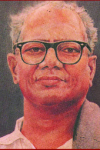
1b1191eb-3f2b-4684-8c22-ac91119e67fc_170x255The change in the school educational system from the 11 year pattern to an 10+2 pattern was an equally momentous one, and while it was generally good for education all around, one system that did not benefit from it was the network of polytechnic institutions in the country, which remain to this day a poor option for those that pass Class 10. I mentioned this in my talk at the Sundarayya Vignana Kendram,  at the recent Centenary Celebrations India Today: Looking Back, Looking Forward conference when I had to speak in a session on Science and Education, and was asked specifically to focus on Science, Education and Research: Problems and Prospects. I mentioned that this has resulted in very poor inputs into the industrial and manufacturing sector. Similarly, the introduction of new and poorly conceived degrees should be viewed with some concern, and the employability of persons with two years of college seems, at this time, to be in considerable doubt.

This also impacts two issues that affect us more. The mobility of students has been viewed in recent times as highly desirable and indeed necessary from a purely academic point of view. This move by DU will make it very difficult for their students to move to another university for their subsequent degrees. At the UoH we have greatly benefited by having DU undergraduates enter our Masters programmes. Where the Bac. (Hons) or B. Tech. are going to fit in our system is a moot question. And would they come? And vice versa, when our Masters’ students go to DU, where do they fit in? And even later, will we employ them? Will they employ our graduates?

DominoMore to the point, what does this say for undergraduate education in the country as a whole? It is not generally feasible to have parallel systems that are radically different when the numbers involved are so huge. (The business schools are, on this scale, minuscule, and it hardly matters if one institution offers certificates and another offers diplomas- in the end, they both offer brand names and enable very lucrative jobs.) The move by DU will naturally affect all other universities directly or indirectly. Our own five year Integrated Master’s programs are continually being reviewed, and one question that we have been asking is whether there could (or should) be an exit after the third or the fourth year. Maybe it is time to factor in the ongoing changes in the rest of the country into our own discussion as well.
Water, water

Drop of water
As the summer hits us, newspaper headlines such as “Hyderabad’s twin sagars left to dry and disappear” have become all too common. The campus water situation is alarming, and it really needs everyone’s attention. I got a mail recently from a concerned student who had an earnest plea:  Please make our wardens and their supporting staff realize their duties.

DSCN3671DSCN3672K Hostel, for instance. Water fills the tank, and then overflows throughout the night, and here are pictures taken at various times to document the fact… As the student says, “You are intelligent enough to calculate the amount of water wasted. Please increase your efforts to bring the university members from their research laboratories or offices to see our daily issues more closely.”

save-waterWardens. Staff. Students… This is our problem, our campus, and it should be our common concern.

Please act! Don’t just watch a tap drip! Like the logo from a conservation advocacy site says, Every drop counts…

Ku·dos UoH

Amartya_Sen_132590_1325902eThere has long been a need for a major award in the social sciences, something to parallel the Shanti Swarup Bhatnagar awards in the sciences, and finally the ICSSR (the Indian Council of Social Science Research) has stepped in and instituted the Amartya Sen Award for Any citizen of India/Overseas citizen of India (OCI)/Person of Indian Origin (PIO) below the age of 55 years, engaged in research and who has made outstanding contribution–theoretical and/or empirical–towards the advancement of knowledge in any field of social sciences, is eligible for the award.” The naming of the awards after Prof. Amartya Sen, Nobel laureate in Economics, is in itself another recognition of the exceptional contributions that Prof. Sen has made to the social sciences in India and up to ten awards will be given each year. These awards were announced by Kapil Sibal, then Minister for Human Resource Development, as part of a five-point agenda to rejuvenate social science in India crucial for sound policy decisions. “Unless we are able to lift the quality of research in India in social sciences, we will not be able to get the kind of data which are fundamental for policy makers to take decisions.”

Vamsi_head_200pxIt is therefore a distinct pleasure that one of the first set of awardees is our colleague Vakulabharanam Vamsicharan, Associate Professor in the School of Economics. Vamsi earned his Ph D in economics from UMass in 2004, and has been at UoH since 2007. His research interests center around the nature and changing dynamics of inequality in the contemporary economies of India and China,  on globalization and agrarian change in India, and consumption and wealth inequality during the period of economic reforms in India and China.

KalpanaKannabiran__1342015eOur alumna, Kalpana Kannabiran, Director of the Council for Social Development in Hyderabad is another of the awardees.   A founder member of the Asmita Resource Centre for Women, Kalpana has worked on rights of indigenous communities and with community based disability rights groups in rural areas. Her work has focussed on understanding the social foundations of non-discrimination, violence against women, and questions of constitutionalism and social justice in India. Kalpana’s MA in Sociology was from UoH, and her Ph D from JNU.

(The University of Hyderabad connection to the awards is stronger- another of the awardees, Surinder Jodhka, Professor of Sociology at JNU, started his career here at UoH, and Amartya Sen is the one recipient of an honorary doctorate from our University who has not yet visited our campus to pick up the degree … )

Untitled-1But this is not all. In the Centre for Health Psychology, Thomas Kishore has been  selected for the Child and Adolescent Mental Health Award given by the Indian Association of Clinical Psychologists (IACP).

thomas-kishore-madhavaramA Ph D from the Central Institute of Psychiatry, Ranchi, Kishore was at the National Institute of Mental Health, Kolkata prior to his joining the UoH a couple of years ago. The award is given to the Fellows of the Association who have contributed to the field of Child and Adolescent Mental health in India and will be presented at the next National Annual Conference of the IACP.

Great news to get as the academic year 2012-13 closes. Bravo all!