You talkin' to me?

Many years ago I managed to persuade a Romanian taxi driver in New York city  to let me drive his cab for a couple of blocks (I had helped him change a flat tyre, so I figure he was feeling kindly). It was strangely exhilarating, even if it was mainly along an empty stretch of a street in Harlem- the powerful brakes, the low centre of gravity, the idea of it all… But I digress.

nyc_taxiThat incident flashed through my mind (and de Niro fans will know why) some months ago when I saw the op-ed about Central University Vice Chancellors in The Hindu, Wanted: intellectual leaders, not CEOs by Apoorv Anand and Satish Deshpande of Delhi University. Trying to see it as a commentary on the system, and to not take it personally is even more of a challenge. Especially when the references seem so direct, and even though no names were mentioned. I guess if the shoe fits…

Anand and Deshpande start with a multiple choice question: Who or what is a Vice Chancellor today?

  1. The CEO of an academic corporation.
  2. An academic or bureaucrat with political connections.
  3. A person selected by accident, error or compromise.
  4. An intellectual leader.

but they don’t give a fifth (and more correct) choice, namely
5. Possibly all of the above, at least in bits and parts..

As Mark Twain said, those that respect the law and love sausage should watch neither being made. The same holds for the processes that bring about VCs in our country. Or any other position of some complexity for that matter.

There is a lot of what Anand and Deshpande say that one agrees with, and much that one can disagree with, even on purely academic terms. Boats are intrinsically sinkable, but only when they are on water, if there are leaks, and even then not always. So too, universities. If they have to function, there is always the danger that in some ways they will do so poorly.

With the two and a half years’ experience that I have had (and that has been more educational than some of my previous years in academe) it seems to me that some of the discomfort that is expressed is tied into the multiplicity of expectations that we have of our University system. It is not just a place where you get quality education that prepares you for jobs in the real world. Our Central universities are expected to play other roles as well. So is there a simple answer to the question “What is an Indian University for?” The multiplicity of goals that we, as a nation, seek to achieve through our educational institutions makes this a germane question, particularly as the answers themselves have evolved over the years.

Here is an incomplete answer: in addition to (tertiary) education, our universities are also sites of knowledge creation and knowledge preservation. They are arenas of skills development and vocational training. Being nationally funded, they need to assure wide and deep access, across geographical and social strata so as to be agents of social transformation, enabling social change. Helping people to cross barriers, both economic and social is one aim, but in addition, we also seek to make India a society with the sense of “scientific temper”. All this is done in the foreground of a globalizing (but still very feudal) society with a deep fissures and shallow pockets, so that there is a perpetual shortfall of public (or for that matter private) investment in what is very clearly both a public and a private good.

sailor-who-fell-from-grace-with-sea-mishima-yukio-paperback-cover-artAnd a VC’s job is to make all this happen smoothly while transforming the office itself in the same way as the country has been changing? In comparison, Rumpelstiltskin‘s skill seems a trivial one.

This post in not in defence of the indefensible. The slow and painstaking methods of intellectual leadership that Anand and Deshpande recognize as a requirement of being a successful VC is undeniable, but this is only one of the components… To focus on this- not that they are unaware of the other aspects- is to oversimplify the whole process. A complex system has complex demands, and to quote Mishima in closing, one is perpetually striving to make some sense out of the chaos of existence

The Second Law

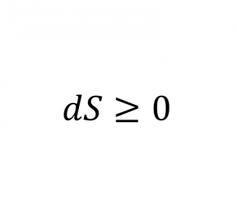
chaosThe Second Law of Thermodynamics, namely the general principle that the entropy of the universe increases, seems to apply to institutions as well as to the more restricted type of system it was first formulated for. The entropy is a measure of disorder in a system, so the second law may be reworded to say that the disorder in a system, in general, increases with time. (And conversely, this also helps to determine what is the ‘arrow of time‘ – the more disorder, almost inevitably the later in time.)

In recent weeks I have been thinking of the appropriateness of this concept outside the narrow realm of machines and engines where it was first developed. Going through some websites, I came across the following discussion, which asserts that “associated with the entropy production is the loss of ability to do work.” How valid, in general, though of course the context in which the statement was first made was quite different. And also, an “increase in overall disorder is therefore spontaneous. If the volume and energy of a system are constant, then every change to the system increases the entropy.” Change energy to UGC funding, and system to campus, and you can see that that statement still rings true!

imagesThe impending NAAC visit provides one focus for such thoughts. Although the campus has undergone quite a transformation, it has taken the concerted efforts of a large number of people, our NAAC team, the Engineering and Estate sections, among others, to bring back a semblance of orderliness on the campus. A huge amount of physical energy has gone into actually reducing the disorder on our campus- the repainted buildings are looking good, the roads are cleaner, the undergrowth has been cleared away- all in all, there is a freshness that is evident. Thanks to them all!

I don’t know what rating we will get since that depends not just on how we look but more on what we are, and the next few days will give us a chance to put forward our very best. But it is true that regardless of the NAAC visit outcome, it is getting increasingly difficult for the University to cope with the reduced funding and the consequent increase in entropy- be it on the matter of upkeep of our infrastructure, or the inability to meet the increasing demands of a larger and evolving community.

We have to look beyond the NAAC visit, even though it is very important that we take full cognizance of it. Occasions like this give us an opportunity to revisit if and why we are a University of Excellence, and what we really need to do to earn our spurs each day. In projecting the best in ourselves- and there is clearly a lot that is very good- we also recognize those parts that could be better, and indeed, should be better.

But in any case, whose University is it anyway?  It is ours, and it is pretty much up to us as to where we take it in the years to come. Any change that has to come has to come from within the system if it is to be lasting. That is, of course, one of the ways in which we might be able to fight the Second Law, but more importantly, that is the only way in which we can become the University that we want to be.

The year in review, and good wishes for the New Year!

The past year has had its ups and downs (more of one than the other it seems!) but it is good to end on an optimistic note, with the hope that the coming year will be better than the one slipping away… Here’s wishing all of us the very best for 2014!

WordPress made a report of this blog’s activity, and before I turn to other matters, here it is (and many thanks to them for the quick if somewhat impersonal and automated post):

Here’s an excerpt:

The concert hall at the Sydney Opera House holds 2,700 people. This blog was viewed about 26,000 times in 2013. If it were a concert at Sydney Opera House, it would take about 10 sold-out performances for that many people to see it.

Click here to see the complete report.

Some noteworthy events on our campus during 2013, starting with the inauguration of the School of Life Sciences building by Dr. M. Pallam Raju on January 3, the visit of  Joseph Stiglitz, also in January, the starting of a Kendriya Vidyalaya on our campus in April, the visit of Amartya Sen and Venki Ramakrishnan in quick succession in December, bringing the number of nobelists that came to our campus this year to three! Many of the faculty were recognized for their excellence, in teaching Prof. Kumaresan was named Teacher of the Year by the Indian National Science Academy, Dr Vaitheeswaran was given the B M Birla prize in physics, and Dr V Vakulabharanam the Amartya Sen award of the ICSSR. Many of the departments and Schools were recognized for their excellence by the UGC through the grant of special funds for research- all of which has made us one of the better endowed universities, at least funds-wise… There is more to tell, and much of it has been posted on the UoH Herald over the past year, or on earlier posts on this blog. Many awards, many distinguished visitors, many concerts, and many conferences, all evidence of an active and vibrant campus.

There were also some events that caused us much sadness, the loss of four students as well as some of our retired faculty and staff. And the progress of various projects on campus has been slow, particularly on the matter of constructions and infrastructure. The turbulence of the world outside has sometimes been reflected in events on the campus… I really hope that such things will change.

UntitledEvery new year deserves a resolution or two. We are now into our fortieth year, a special  anniversary of sorts.  Let us work to make the campus a better place, and our University the very best that we can be. Happy New Year!

Even better Khabar

imagesThe news that Prof. C N R Rao has been awarded the Bharat Ratna should be warmly welcomed in our University. After all he is one of ours, being conferred an honorary doctorate of the University in 2005. And importantly, he has been a mentor, directly or indirectly to many of our colleagues in various science faculties at the UoH.

a56c607e-c8fb-43ae-9c52-eaff0054b27eMediumResHe was on the faculty- one of the biggest stars of the stellar Department of Chemistry- at IIT Kanpur where I did my M. Sc. (Chemistry) in 1974. Actually, he was on the interview panel that selected me for admission in 1972 – no entrance exams then- and although I then did not know who he was, I can still remember one question he asked me then: How many molecules of water are there on earth? It was a serious enough question, and as I was grappling with estimating volumes, dividing by 18, multiplying by Avogadro’s constant and doing all that I could to come up with an answer, he added: When its not raining! 

I took Physical Chemistry from him the next year- he was an inspiring teacher in many ways- and over the years I have stayed in touch with him enough to be very very impressed by his tenacity and his passion for science. In Kanpur when he was already famous and had nucleated the Department of Chemistry, he was just about 40. That he has stayed current and obsessed with his science for the next four decades (and this shows no sign of abating) is phenomenal.

But the news of the Bharat Ratna to him is welcome in many many ways. It is, as he says, also a recognition of the value of science, of scholarship, of research. Having seen the institutions he has built, one could give it for that alone. And CNR does not mince his words- he is an outspoken advocate for research, and has let government after government know that funding for science is inadequate. As we all recognize only too well, funding for higher education is inadequate, and our only hope for excellence is that we get funded at reasonable levels. In the past two days alone, he has raised the sensibility of not just the political class, but indeed the public at large of the need for funds, for support. We need more champions like him.

Good Khabar

A recent newspaper report caught my eye, and given my fledgling attempts to learn Telugu, it felt vaguely satisfying to read that Speaking a Second Language May Delay Dementia. But it was infinitely more satisfying to learn that the research that led to this finding was done (in part) at the UoH, in our very own CNCS, the Centre for Neural and Cognitive Sciences.

19.coverProfessor Bapiraju (of the School of Computer and Information Sciences and Coordinator of CNCS) wrote in to tell me that the article in the journal Neurology (the medical journal of the American Academy of Neurology) that went online yesterday was the  product of collaboration among CNCS, NIMS and Osmania University, as part of a Cognitive Science Initiative project funded by the Department of Science and Technology. The full list of authors of the paper,  Bilingualism delays age at onset of dementia, independent of education and immigration status, are Suvarna Alladi,  Thomas H. Bak,  Vasanta Duggirala, Bapiraju Surampudi,  Mekala Shailaja,  Anuj Kumar Shukla, Jaydip Ray Chaudhuri, and Subhash Kaul, Anuj Shukla being an M. Phil. student of the Centre, while the other authors are at NIMS, OU, and Edinburgh.

bapi2The main features of the study, as summarized in the abstract to the paper read as follows: Overall, bilingual patients developed dementia 4.5 years later than the monolingual ones. A significant difference in age at onset was found across Alzheimer disease dementia as well as frontotemporal dementia and vascular dementia, and was also observed in illiterate patients. There was no additional benefit to speaking more than 2 languages. The bilingual effect on age at dementia onset was shown independently of other potential confounding factors such as education, sex, occupation, and urban vs rural dwelling of subjects.This is the largest study so far documenting a delayed onset of dementia in bilingual patients and the first one to show it separately in different dementia subtypes. It is the first study reporting a bilingual advantage in those who are illiterate, suggesting that education is not a sufficient explanation for the observed difference. The findings are interpreted in the context of the bilingual advantages in attention and executive functions.

UntitledThis work has captured the imagination of the entire world, it seems! A blog from Brazil says: Mais um motivo para falar inglês (ou espanhol, francês, esperanto…) namely Another reason to speak English (or Spanish, French, Esperanto…). Newspapers across the world have picked up the article, from the NEW YORK DAILY NEWS to the LA Times… ​Professor Huntington Potter, Director of the Alzheimer’s Disease Programs at the University of Colorado in Denver has been quoted as calling the study “very definitive” in an interview with MedPage Today. “The fact that this study was carried out in India where many people are illiterate … and still the benefit was seen, bolsters the idea that cognitive reserve can be acquired in the absence of formal schooling,” he said.

Heartening news. And also very heartening that this work was done in part at our University. What better way to underscore our belief in the importance of multidisciplinary effort!  Je सोचता हूँ என்று நான் always అనుకుంటున్నాను!

The DOI link to the article for those interested is:
doi:10.1212/01.wnl.0000436620.33155.a4

The Importance of Being Open

Should scholarly publications be absolutely freely available, or should they only reach those who have the funds to pay for subscriptions to the journals where these articles are published? There are as many nuanced opinions on this question as there are scholars, but with the ubiquity of the internet and the rising costs of journals, the issue is one that merits some thought and discussion.
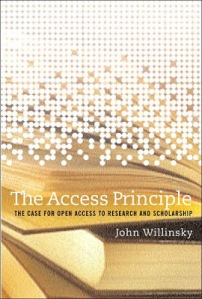
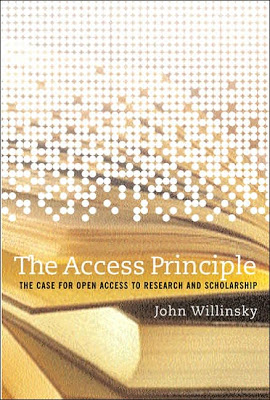
WillinskyAlmost all the research that is typically done at the University is publicly funded, through the Government of India via various ministries, or by other public funds. Should the results of such research not be made available to as many as possible? These questions are central to a book that I reviewed in Current Science (Bangalore) some years ago,  “The Access Principle. The Case for Open Access to Research and Scholarship” by John Willinsky. Parts of the review are excerpted below.

At the heart of the book is a simple idea, that ‘a commitment to scholarly work carries with it the responsibility to circulate that work as widely as possible’. This is in part so that knowledge that is created can be disseminated in a manner that the largest numbers of people have unfettered access to it, but there is more to it than just that…

The issues that Willinsky deals with have wider ramifications. For instance, who ‘owns’ knowledge? The scholar who creates it through research, or the funding agency that funded it directly or indirectly, or the commercial publishing house who owns the journal where the research was reported? And how best can it be used for public good, while ensuring that all involved parties do not go unrewarded or unrecognized?

The […] digital revolution is upon us all in a way that demands that such issues be thought about afresh since the modes of preservation of information and the modes of dissemination of knowledge have changed radically in our lifetime. For one thing, most journals of any quality are now online. Furthermore, many of them are ‘open access’, namely the articles they carry can be viewed without a subscription. However, the majority of academic journals have been in existence for a long time now and date back to the pre- digital era. The digitization of this legacy is a related issue, and the manner of the digitization and its consequent costs is relevant.

But issues are more complex in an era of impact factors and journal citations. The most prestigious journals, at least in terms of their perceived rankings, like Nature and Science are neither open access nor are they purely digital. It will be a long time before their influence will wane, so it is important to understand the totality of the access problem.

Today it is commonplace that the majority of scholars in any part of the world access academic information primarily in an electronic manner, and not through the pages of a printed journal. This revolution is similar to that wrought by Gutenberg, who through the printed page freed humankind from the purely oral tradition by offering mass producible books that anyone (with enough money!) could obtain, keep, learn from, and use to advantage.

And it is the complex nature of this revolution that ‘The Access Principle’ addresses through its extensive research. The 13 chapters of the book examine issues ranging from the history to what is copyright, the politics and the economics. Willinsky, like many of us, believes that openness is ‘better’ in an abstract way – at the end of the day its not clear from which quarter the fundamental advances are going to come, and so its best not to deny anyone the requisite opportunities. The more people who have access to knowledge, the more one can maximize the probability of any one of them using some part of it in a fundamental and future altering manner.

The first journals appeared only in the 1600s. The Philosophical Transactions of the Royal Society grew out of the publication of the correspondence between the members of the society thanks to the efforts and foresight of Oldenburg. Despite the reputation for secrecy that surrounds his name, one of the earliest articles was a letter from Newton on ‘the theory of light and colours’. Newton appears to have held the opinion that public exposition of his research was both a duty and a privilege, and in that sense, scientific journals offered an intermediate space between the public book and the private letter.

But journals offer more than just exposure. The process of peer review, the validation, and with time, the prestige of publication – and the vanity – have all contributed to making the dissemination of science a fairly substantial business. And in the details of how this business is run lie some of the more contentious problems of the open access paradigm. Willinsky is quick to emphasize that open is not free – someone, somewhere has to invest in providing access. He lists 10 flavours of open access to underscore this point. For instance, scholars can post articles on their homepages, submit them to e-print archives, or pay a journal to allow open access to their articles. Journals, on the other hand, can subsidize access (as many Indian journals, notably those of the Indian Academy of Sciences, do), use their print versions to subsidize the online versions, allow delayed or partial open access, have a subsidy model in place, and so on. A cooperative movement such as JSTOR has played a very important role in developing tools to digitize old journals in a manner so as to make their content digitally searchable, and the access they allow is not free, but by having a flexible policy as regards revenue, they enable access in a significant manner.

The different chapters of the book are devoted to a variety of issues such as copyright and its consequences, the role of scholarly bodies and their publishing models and imperatives, the economics of open access, the role that this can play in development, and so on. The digital revolution holds within itself considerable promise. Universities, colleges and schools that did not build up physical libraries can, given enough resources, build up essentially a complete repository of the knowledge generated by humankind since whenever. Anecdotal evidence on this count is abundant and genuine, particularly in countries like India where the public investment in libraries is limited.

As a scholar who has devoted the better part of two decades to such matters, Willinsky argues the case for increased openness in scholarly publications with vigour and with wisdom, and without oversimplifying the issues at hand. The commitment to the cause is most evident in his chapter on Rights, where he proposes that access to knowledge is a fundamental human right, one that is closely related to the ability to defend other rights. The argument is tenuous but offers an interesting perspective on the ability of increased access to knowledge to have an impact beyond the areas envisioned by the creators of that knowledge. To some extent, the Right to Information Act in India has had a very similar effect – information on one aspect of public life can have consequences on other aspects.

In the end, the most compelling aspect of this book is the simplicity of the basic argument. Scholars should see that their work reaches the largest number of people and should make all efforts to ensure this. This is their dharma. Academic administrators should see that scholarly work is supported in a manner so as to have this wide reach. And this is their karma. In the long run, inclusivity is clearly more in the public interest than exclusion in any form, especially in a globalized world, and the Open Access movement can help us along this path.

The karma of the University administration can be fulfilled with just a little effort. Along with the Gapps crew, we are setting the subdomain archive.uohyd.ac.in where scholars can upload their working papers, conference papers as well as their near final preprints in a UoH Archive which is an OAR (Open Access Repository). This is simple enough to operate- anyone with an @uohyd.ac.in account can upload a document which can then be accessed by anyone, inside the University or across the Universe…

The scholarly world is a-changing. This week, October 21 to  27 is International Open Access Week 2013. Celebrate! Upload a paper onto the UoH Archive!

PS: For the moment, send contributions to qohe571tigi@post.wordpress.com as an attachment. Watch this space for updates…
Maths Teacher of the Year

skOne of the first posts on this blog was about our colleague Prof. S Kumaresan in the School of Mathematics and his involvement with MTTS, the MATHEMATICS TRAINING AND TALENT SEARCH PROGRAMME. The aims of MTTS (and thats largely Prof. Kumaresan) are

  • To teach mathematics in an interactive way rather than the usual passive presentation. To promote active learning, the teachers usually ask questions and try to develop the theory based on the answers and typical examples. At every level the participants are encouraged to explore, guess and formulate definitions and results.
  • To promote independent thinking in mathematics.
  • To provide a platform for the talented students so that they can interact with their peers and experts in the field. This serves two purposes: i) the participants come to know where they stand academically and what they have to do to bring out their full potential and ii) they establish a rapport with other participants and teachers which help them shape their career in mathematics.

At that time, I had written that “The work of Prof. Kumaresan in this arena, in encouraging the growth of competence in our mathematics community, will go a long way in ensuring that although the road ahead may be a bit rocky and steep, there will be mathematicians to help us along the way…”

UntitledThe Indian National Science Academy, New Delhi, has been thinking of how to recognize such contributions. A few years ago they instituted the INSA Teachers Awards. The award aims to recognize and honour teachers who have provided guidance and inspired students to take up careers in Science and Technology. 

We are very proud that Prof. Kumaresan is one of the Awardees for the year 2013. And even more proud that the INSA has recognized the value of teachers who, as they put it, have shown consistent and high level of teaching. Their hope that Prof. Kumaresan will continue to nurture talent in the coming years is sure to be borne out. Bravo!

Turbulence

Tsunami_by_hokusai_19th_centuryThe other day, at a book release at our neighbouring Central University, MANUU,  I heard the chief guest quote Allama Iqbal. Apparently (or so I gathered) when his son was setting off for higher studies in London, the great poet said to him: … خدا تجھے کسی طوفان سے آشنا کر دے کے تیرے باہر کی موجوں میں اضطراب نہیں  (Khuda tujhe kisi toofan se ashna kar de, ke tere bahr ki mojon mein iztirab naheen).

I’ve looked for translations, and while none of them captures the nuance of the Urdu, the closest I could find is  May God grant you a stormThe voyage of your life is on too placid an ocean…

Reddy_WaveLiterally, though the verse reads in translation, “May God bless you with some storm, because the waves in your ocean (of self) are devoid of agitation (turmoil)”. There is the resonance with Shakespeare, when Brutus talks of the “tide in the affairs of men.
Which, taken at the flood, leads on to fortune; […] And we must take the current when it serves“, as well as the famous Chinese curse, May you live in interesting times! 

The appositeness of the advice is something I have had occasion to reflect upon, as we pass through these interesting times. We at the UoH have such great privileges- our campus, its freedoms, its autonomy- and one cannot but feel that we should be doing something more. More what, one might well ask, so to turn the question around, is what we do enough? Just enough, barely enough or well enough? These are questions for which there are many answers, so all things considered, I think it is preferable that we have the occasional iztirab, a little anxiety, a little uneasiness. A state when we are not too comfortable is more conducive to self-examination, and thereby one hopes, to more discussion, creativity, and thereby to evolution.

But not too much discomfort, though! In the fluid case, in some ways the most interesting situation is that of intermittency, when there is smooth flow much of the time, interrupted by staccato bursts of turbulence. As much as we need the iztirab to evolve, we also need some undisturbed period to think, and to consolidate… But that is not a luxury one can always be assured of! There are enough forces at work and play both inside the University and outside it, that make this an ongoing challenge.

The images of the turbulent waves above are by artists whose work has been very inspirational: the iconic and familiar print by Hokusai and closer to home, the wave by Krishna Reddy, the great printmaker who lives in New York and who taught for many years at NYU.

Scenes from a collaboration

Department of Theatre arts, University of HyderabadAn exciting and ongoing partnership project between our Department of Theatre Arts in the  S N School of Arts & Communication and the Wimbledon College  of Arts at the University of the Arts, London is on Scenography in a digital age: a comparative study of the impact of new media on contemporary Indian and British performance practice.

Bringing together  nine people, four from their side and five from ours, this project is a great opportunity for all of us, particularly the two students involved. The project leader from the Indian side is Professor B. Anandhakrishnan, Dean of the SN School who says the prime objective of the project is to  develop a trans-national, inter-disciplinary discourse that will enhance understanding of contemporary performance culture in India and the UK. And, incidentally, a cross-fertilization of ideas: the image above is of the props from a scenography workshop at the UoH, done on the campus by one of the Wimbledon college students.

1240571_10151548566851367_1380240523_nThis partnership will investigate the impact of ‘new media’ on performance in India and the UK. It brings together two recognize centers of excellence to create a cross cultural research platform at the interface of fine art and theatre. In the UK, lines between these two approaches to performance have already been breached as new technologies blur the boundaries between established traditions. Increasingly in India, plays and fine art installations use video and digital projections that merge the theatrical and the experiential under the umbrella of performance. This project seeks to conceptualise and understand how these new mise-en-scenes are affecting traditional ways of making and viewing performance in our respective nations.

Rustom Bharucha  (in his book Theatre and the World, 1993) argued at the end of the twentieth century, ‘[at] this point in time, one can say that technology has not yet co-opted the ‘visionary’ possibilities of seeing assumed by our spectators…’ . Does this still hold true at the beginning of the twenty first century?

Describing the viewing habits of European and American audiences, Arnold Aronson (in The Power of Space in Virtual World in Performance Design) says, “The increasing ubiquity of the World Wide Web and its particular visual aesthetic is what most spectators associate with performative imagery’’.    

Using the ‘scenographic’ as a frame of reference, a broad term that encompasses all the elements that contribute to the composition of performance, this joint research will compare how digitalisation and electronic media have been absorbed into our respective performance cultures and begin to develop a set of criteria with which to analyse and respond to these changes. By sharing perspectives on this new materiality of performance, this partnership will contribute to a better understanding of the way each culture views the other and, in the long term, build capacity in our institutions through the development of joint masters and new PhD programmes.

OLYMPUS DIGITAL CAMERAThe project is for 18 months and during this period there will be four seminars and a series of practice sessions focussing on digital arts and scenography. Two events will be organised by both the institutions. The first is going on now, from the 9th  to 16th September 2013 at Wimbledon. Two of our students will be staying back at Wimbledon to work with colleagues there.

Great opportunities here, thanks to the UKIERI– this project is one of the select ones funded by them as a Thematic Partnership. And congratulations to the SN School on being Wimbledon champions!