 This is just culled from any number of sources and is both a tribute to the SPIC-MACAY organization as well as a means of sharing. 14th August night, from 8:30 onwards at the DST Auditorium on the HCU campus, there will be an amazing array of talent performing Indian classical music and dance. Shri T. N. Seshagopalan (Carnatic Vocal), Shri Kalakrishna (Andhra Natyam & Perini Tandavam), Pt. Ronu Majumdar (Bansuri), Hyderabad Brothers -Shri Seshachari & Shri Raghavachari (Carnatic Vocal), Pt. Sanjeev Abhayankar (Hindustani Vocal Concert), Lalgudi G J R Krishnan & Smt. Vijayalakshmi (Duet Violin Concert). What more can one want?!
From the SPIC-MACAY Facebook page, more info:
 SPIC MACAY is celebrating Virasat 2011 across the country, with performances of several art forms organized in educational institutions.
The special and unique feature of Hyderabad Virasat 2011 is the second edition of the overnight concert ‘Yamini’, which will commence at 8:30 pm on 14 Aug and will continue until the break of dawn on 15 Aug at DST Auditorium, University of Hyderabad, Gachibowli, Hyderabad. It is a significant coincidence that we would be going onto a tryst with soulful music through the stroke of the midnight hour which broke the shackles of long British Raj over our motherland. We would be celebrating our Independence in the real way.
Yamini promises to be an enthralling night with performances by maestros of Indian Classical Music and Dance. Yamini meaning ‘Night’, is the night that descends on gently, slowly, to the mellifluous notes of music and the gentle rhythm of the artistes’ feet. It is the night when the clouds above, part to reveal the star spangled banner of the dark skies. It is the night when the lush green campus of the University of Hyderabad, will sport their best hospitality for the patrons of art. When Yamini is on, you wake up to your inner self and dissolve in the shower of music and dance. From Malkauns to Bhairavi, from dusk to dawn, the night of revelation prevails.
The overnight is an eclectic mix of Indian Classical Music performances on a single dais. Organised by SPIC MACAY- University of Hyderabad Sub-Chapter, it is open to all.
The five artists performing are:
Shri T. N. Seshagopalan (Carnatic Vocal)
Pt. Ronu Majumdar (Bansuri)
Pt. Sanjeev Abhayankar (Hindustani Vocal)
Shri Kalakrishna (Andhra Natyam & Perini Tandavam)
Shri Lalgudi G J R Krishnan & Smt. Vijayalakshmi (Duet Violin Concert)
Yamini traces her journey from night to dawn, let us welcome the overnight with our presence. Let us see the truest movements of our life in nutshell. Let us get enveloped by the colour of music over our daily existence. Let us sit on the boat of moon, and while we undertake the great journey from night to dawn, let music be our guide.
We assure you, that these five stars will elevate your senses to different realm. SPIC MACAY invites you to an evening of spiritual ecstasy.
Come and watch the stars with us…
Author: Ram Ramaswamy
World Indigenous Day
 August 9 has been declared the International Day of the World’s Indigenous People by the United Nations. It is a good time to celebrate our own, and to recognize that history has been less than kind to them. The Hindi Department organized a meeting yesterday afternoon, with a lecture on The Nomadic and Denotified Tribes: Their Literature and Situation by Shri Laxman Gaikwad, the noted Marathi writer and Sahitya Akademi awardee.
 The literature of Adivasi peoples has been made available to a wider audience in the past few years by great writers such as Mahashweta Devi, and the work of Ganesh Devy and the organization Bhasha. The richness of these primarily oral traditions can only be partly captured in translation, so we are witness to the loss of these languages virtually on a day by day basis. My colleague at the JNU, Anvita Abbi who studies the Andamanese languages met and interviewed the last speaker of the Great Andamanese language. This is dramatic, of course, but the statistics is startling- a report in the Hindu says “With 196 of its languages listed as endangered, India tops the UNESCO’s list of countries having the maximum number of dialects on the verge of extinction”.
The Denotified and Nomadic Tribes have other problems as well. Branded by the British as criminals, they are still to be reliably integrated into our society- indeed, in some sense they got their Independence only 5 years after the rest of us did in 1947. The Wikipedia entry says “Denotified tribes are the tribes that were originally listed under the Criminal Tribes Act of 1871, as Criminal Tribes and ‘addicted to the systematic commission of non-bailable offences.’ Once a tribe became “notified” as criminal, all its members were required to register with the local magistrate, failing which they would be charged with a crime under the Indian Penal Code. The Criminal Tribes Act of 1952 repealed the notification, i.e. ‘de-notified’ the tribal communities. This act, however, was replaced by a series of Habitual Offenders Acts, that asked police to investigate a suspect’s criminal tendencies and whether his occupation is “conducive to settled way of life.” The denotified tribes were reclassified as habitual offenders in 1959. The creation of these categories should be seen in the context of colonialism. The British authorities listed them separately by creating a category of castes or tribes labelled as criminal.”
Vestiges of this attitude remain with us to this day.
The University can take some initiatives in the study and preservation of these cultures of ours. In particular, it would be very welcome if we recorded and maintained as much of these languages as we can, both as a record of the oral traditions as well as a way of keeping the memory of some traditions. Of course it is not just these languages that are under threat. I must confess that I was taken by surprise and could not put together a coherent set of opening remarks in Hindi…
Bhimayana@ HCU
T he Ambedkar Memorial celebrations on the 5th of August (Bandh willing!) will feature a number of events related to Bhimrao Ambedkar. Professor Sukhadeo Thorat, Chairman ICSSR and ex Chairman of the University Grants Commission will deliver a lecture on Socially Inclusive Growth in India at 2:00 pm in the DST Auditorium on the HCU campus.
Earlier that day, we will have an art exhibition (at 10:00 am) and a symposium, Folklore: Towards altering the Margins with speakers such as G Shyamala (Anveshi), G Aloysiyus and Raghavan Payannad. And after the talk by Prof. Thorat, there will be the release of Bhimayana by S Anand of Navayana, with others such as Fawad Tamkanat, Gaddar, Durgabai Vyam, and a Dappu performance by Lelle Suresh and troupe. Be there- this is too good to miss!
More on Bhimayana, here. More on Fawad, here. More on here, here.
The TOI carried news of the release and other functions: Graphic novel on Ambedkar released.
Tilak Award
 The Lokmanya Tilak Award for 2011 recognizes the contributions of our former vice chancellor, Dr Kota Harinarayana to the progress of society, and the nation. August 1 marks the death anniversary of Tilak and the award was bestowed on Dr Harinarayana in Pune yesterday. Previous recipients of the award which was instituted in 1983 include Prime Ministers Atal Behari Vajpayee and Indira Gandhi.
 Dr Kota Harinarayana was our VC between 2002 and 2005, and he is credited with the successful design of the LCA (light combat aircraft). As I learned from another blog, all LCA tail numbers start with KH in his honour. That’s another and very high award indeed!
Alladi Uma
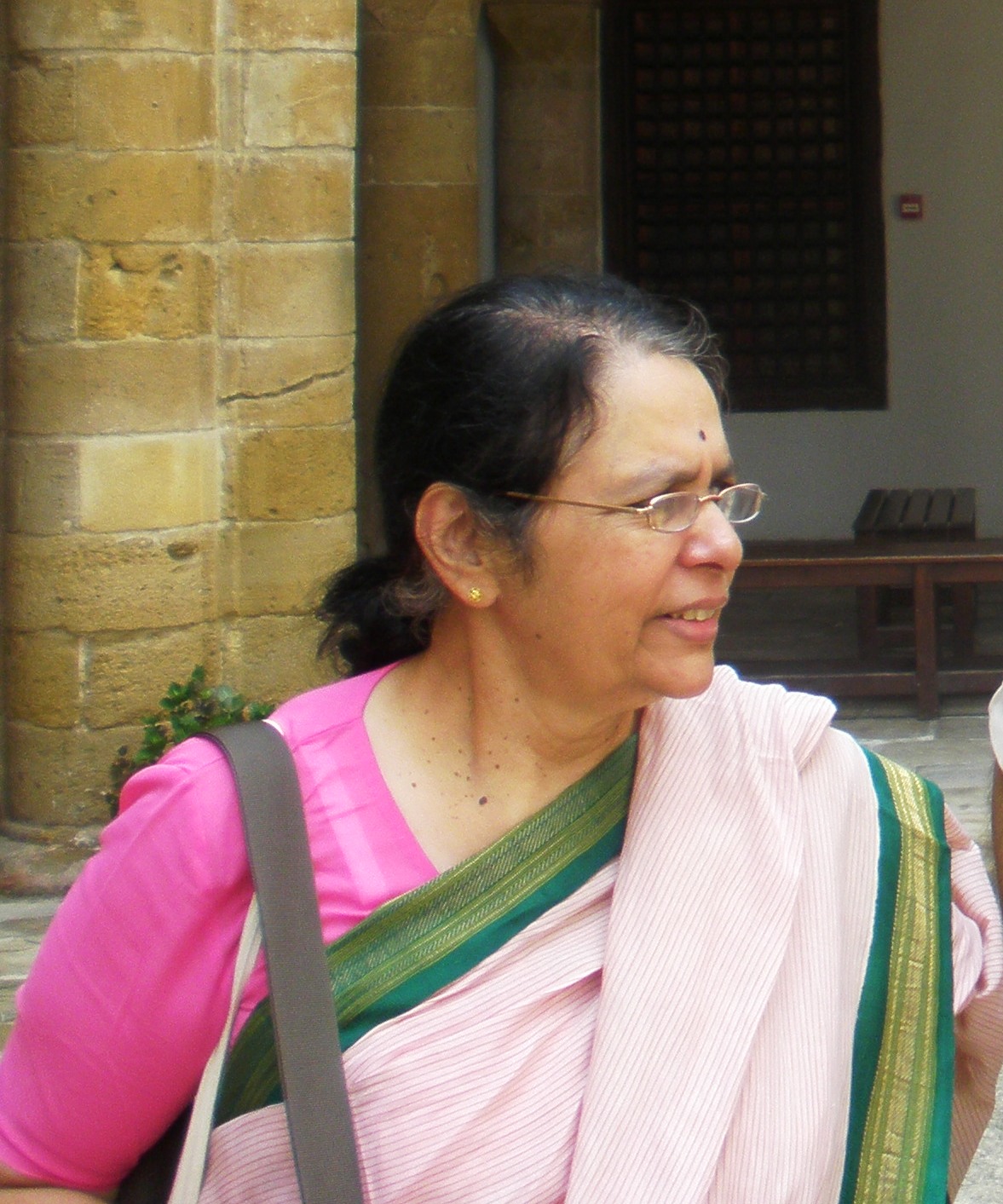
 Our colleague Alladi Uma retires from the University after a distinguished career of 20 or so years at the end of July 2011. Although this is just about two months since I joined the University, I have known of Uma’s work for some time now, particularly in the area of translation.
On the occasion of her retirement, her student (and colleague in the English Department) Sindhu Menon writes: Professor Alladi Uma joined the University of Hyderabad in 1991, after serving Sri Padmavati Mahila Viswavidyalayam and Osmania University for five years. She has opted to retire from our University at the end of this month having served the University with distinction for 20 years.
The hallmark of Prof. Alladi Uma’s work has consistently been the very rare combination of a questioning, dynamic perspective and an impeccable ‘traditional’ scholarship. She was largely instrumental in making “Indian Writing in English” a mandatory course. She was also responsible for arguing a case for two mandatory American Literature courses when the syllabus was heavily British literature centred. She was mainly responsible for making the Ph. D., courses Pass/Fail courses, rather than the traditional grueling grading system. She organized one of the first workshops on American literature syllabuses for teachers across the country. More recently she jointly co-ordinated a seminar on “Dalits and English”, a seminar that is perceived as a landmark event in the history of the Department
It is truly impossible to retain a comfortable complacency about any subject after one has listened to Prof. Uma’s inevitably perceptive, radical and demanding insights on it. This, in turn has generated work which refuses to be second-hand and bears the stamp of originality among her students, research scholars and all those who look to her for her unique brand of incisive and insightful critique. No wonder she was an extremely popular teacher and a much sought after Supervisor. She has inspired hundreds of students in her career spanning over 25 years. She has so far supervised 27 students. She is a rare example of an ‘other-oriented’ teacher who takes genuine pleasure in having communicated a fresh viewpoint to a class, in seeing the improved and self reliant work of a student she has inspired and in the manifestation in not just arid discussion but in actual social practice of the ideas she had set in circulation. She was always innovative in the courses she taught. Some of the Optional Courses she offered such as “What’s in a genre,” “In-discipline,” “Why teach these texts?,“ “Reading Dalit Reading Black” and “Women Writing Writing Women” bear testimony to this.
As a scholar she has significantly contributed to the areas of African American literature, Indian Writing in English, Women’s Studies, Translation and Dalit Studies. Prof Uma literally stands out therefore as one of a very limited number of teachers who are distinguished equally as scholars and as teachers in the true sense of the term.
 One does not often have the chance to encounter an HOD who gets work done with the greatest of efficiency, but never for a second allows bureaucracy to make her forget the human element. Awe for her achievements and efficiency never deterred anyone—student, non-teaching staff or colleague– from approaching her if there was a genuine problem, as it has been repeatedly proved that such problems once brought to her notice were treated as her own individual concerns till they had been solved. She has held important administrative positions—she was the first woman to have held the position of the Head of the Department of English at the University of Hyderabad. She has also served more recently as Chief Proctor of the University. Teacher, scholar, activist and friend –qualities that need to be praised and admired equally–as all of these she held together simultaneously. But this remarkable achievement has been the signature tune of Prof. Uma’s work and bears testimony to her commitment and integrity. As a member of the School Board, the Academic Council and the Court, she was very forthright in her comments. She had always expressed her views fearlessly, even if some of them were unpalatable to the administration.
It will be hard to replace someone who has meant so much to her Department and the University. We wish her all the very best for the task she has carved for herself in the years to come.
The University will miss Prof. Uma, but we also know that she is close at hand, and always available to mentor, counsel, and help.
UoH-Physics-TIFR
 Physics is one major link between UoH and TIFR… Come 1 August, the Tata Institute of Fundamental Research will join us in organizing a conference on MODERN OPTICS. Its many homecomings, most importantly that of Prof. Girish Agarwal who was one of the earliest faculty members in the School of Physics at HCU, who had been Dean and steered the School for many years before he left for the Physical Research Laboratory, Ahmedabad, and then in 2006 to the Oklahoma State University in Stillwater, Oklahoma, where he is presently Noble Foundation Chair and Regents Professor of Physics.

As Homi Bhabha Chair at TIFR, he will be spending a few days with us at HCU and will deliver a Distinguished Lecture on the 4th of August on Quantum Interference between Independent Photons. The abstract of the talk: Historically the observation of interference by Thomas Young established the wave nature of light and the founders of quantum mechanics like de Broglie and Schroedinger were motivated by the interference of light to arrive at the wave equation for quantum particles like electrons. With the advent of quantum theory of light by Planck, Dirac pondered over how the interference would arise with single photons. Contrary to the common belief, I show how interference between independent quantum particles is possible. This new possibility has strict quantum character and has applications in diverse areas such as generation of entanglement between independent systems remote or otherwise and in general in quantum state engineering.
The meeting that starts at 10:00 on the 1st of August (Monday) focuses on the Future of Optical Sciences in India.
Speakers from HCU include Subhash Chaturvadi, Nirmal Viswanathan, D Narayana Rao and Subhasis Dutta Gupta, while those from TIFR are M Krishnamurthy, S Mujumdar, and A Venugopal. In addition, the conference brings together a number of leading physicists from institutions such as IPR Gandhinagar, IIA Bangalore, BARC, CAT Indore, IMSc Chennai, and others.
Nina Saxena Excellence in Technology Award 2011
The Nina Saxena Excellence in Technology Award is an India-wide award to encourage and promote, technical innovation. This year, our colleague Dr S Maqbool Ahmed is part of the CHACE team that has been shortlisted for the prize.
The award commemorates the spirit and memory of IIT Kharagpur alumna Dr. Nina Saxena who passed away tragically in 2005. Conferred every year at the IIT Foundation Day, this award is made possible by contributions from IIT Kharagpur Alumni to remember Dr. Saxena’s desire and drive for technical excellence, during her short but illustrious life. (For details, see the site http://www.iitfoundation.org/?p=77)
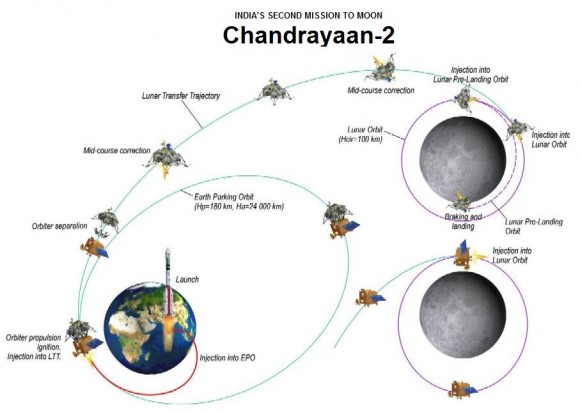
Dr Ahmed was the the team leader of that payload on the Moon Impact Probe Mission of Chandrayaan project. Quoting from Rajesh Kochchar’s blog, “The impact probe MIP which deposited Indian national flag on the Moon also carried a scientific payload, nick-named CHACE, comprising a mass spectrometer. During the 25 minutes of fall on to the lunar surface, CHACE obtained data confirming the presence of water vapour in the Moon’s atmosphere on the sunlit side.”
There is more to the story, and that can be read elsewhere. This brief post is to give our heartiest congratulations to Dr Maqbool Ahmed!
Ratna Sadasyata

Shortly after I took over the Vice Chancellorship last month our respected and eminent colleague Nataraja Ramakrishna passed away. One of my earliest and sad tasks on behalf of the University community was to lay a wreath at his feet then…
Dr Nataraja Ramakrishna was one of the founding members of our University’s Sarojini Naidu School of Arts and Communication. As the first appointed Professor of the Dance Department of the School, he methodically structured the entire dance curriculum and developed a pedagogic practice for teaching dance at the post-graduate level. Through the introduction of the doctoral programme in dance in 1991, he helped systematize the study of dance and brought in new research perspectives. As many as 9 PhDs were completed under his supervision. His association with the Department continued into his final years.
There was cause to celebrate his career once again last Friday. Padmasree Bharatakalaprapoorna Dr. Nataraj Ramakrishna was posthumously conferred the prestigious Sangeet Natak Akademi Fellowship (referred to as the Akademi Ratna Sadasyata), along with noted vocalist Girija Devi, dhrupad maestro Rahimuddin Dagar, and mridangam exponent T. K. Murthy.

Guru Nataraj Ramakrishna was an eminent dancer, guru, scholar, and musicologist propagating classical dance in Andhra Pradesh for the last 50 years. He was the architect of Andhra Natyam, a dance form he recreated and made popular. He also reconstructed the “Perini Sivatandavam”, the militant male dance tradition of the tenth Century AD (Kakatiya Period). He revived “Navajanardanam” a great prabanda dance tradition that was being performed in Kunti Madhava Temple at Pitapuram in East Godavari District of Andhra Pradesh for the last 400 years.
He choreographed and staged “Sri Venkateswara Kalyanam”, “Kumara Sambhavam”, “Megha Sandesam” and won the Swarna Kalasam at Ujjain for the production of “Kumara Sambhavam”. He wrote over 40 books on Dance, six of which won him awards from the Government of India. His outstanding books are “Dakshinathyula Natyakala Charitra” and “Andhras and the Art of Dance,” a treatise covering a period of 2000 years.
The University of Hyderabad, in recognition of his seminal contribution to dance, conferred an honorary doctorate on him and has instituted the annual Nataraj Ramakrishna Lecture on Art and Culture in the year 2009. Recently, the University became the privileged custodian of many of his worldly possessions, including his Padma award and other honours.
I would like to thank Professor Vinod Pavarala, Dean of the S N School, for most of the above write-up.
Shameful
On Friday night there was an unfortunate and shameful incident in Men’s Hostel E Annexe on our campus. I am ashamed that such a thing happened in our University, and that it happened now.
Posters and photographs of our national leaders that were placed in the corridor were burnt in the middle of the night of 22 July. This is a deplorable act, and one that is simply incomprehensible. Whatever our beliefs and opinions, vandalism has no place in our University.
It is a matter of shame for us all that in the 21st century we have persons on our campus who entertain regressive prejudices. We will spare no efforts to identify and punish the perpetrators, and a Proctorial enquiry is already under way. This is also a criminal matter, and it is therefore being investigated by the police as well.
The University administration appeals to the entire campus community to maintain calm in this hour of crisis.
Please contact the Proctorial Committee if you have any information that can assist them in any way.
Archiving the University
It has often been remarked that we are, as a nation, poor archivists. One of the most eloquent institutional administrators- one who has had a long association with the University of Hyderabad and even now is a member of our Executive Council- is P. Balaram of the Indian Institute of Science, Bangalore. As Editor of the journal Current Science, he has on many occasions shared his experiences with the wider readership on a number of issues. When the IISc celebrated the centenary year of its founding, he wrote a number of essays that touched on its origins.

One of them (Current Science, Vol. 94, 10 January 2008) starts “ A weakness for history and the temptation to retreat into the past, in order to escape the pressures of the present, has drawn my attention to two books which have appeared over the last year or so.” He goes on to discuss the books in relation to the IISc’s history. Later in the editorial, he comments ” In piecing together a documentary record of an institution’s early days I have had tantalizing glimpses of individuals and events.”
In the past few days, I have had some occasion to think about carrying out an exercise to document the campus of the University for a number of reasons. In the process, I (re)discovered an early booklet titled “Ideas Competition for the Design of the Master Plan of the University Campus”.
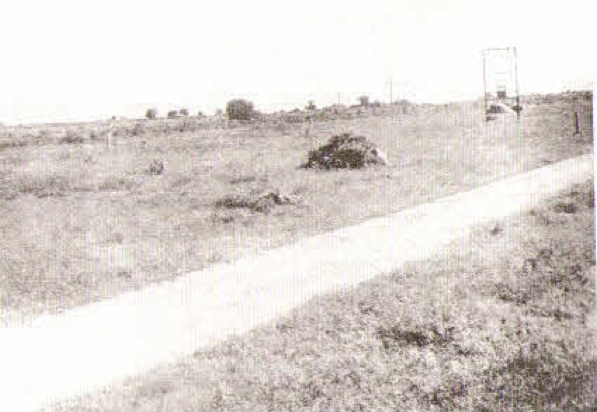 The two photographs in this post are both from that booklet (a copy of which is in my office, and a copy can be made available) which details a very comprehensive idea of what the founding Vice Chancellor and his team of planners had thought of the University and its role.
At that time, the total area earmarked for us was a little over 2324 acres, and in the 37 years since then, we have gradually seen the extent of the land reduce. In addition to the physical extent, there has also been a reduction in the diversity of the fauna, an increase on the various pressures on the land, a possible increase in the floral diversity as a large number of alien species have been introduced, and of course, development.
It is essential that we document this change, and our approaching 40th anniversary in 2014 seems to be a good time by which we should do this. There are records to be looked at, archival photographs to be collected, a history to be written. Many of the key persons are still with us on the campus, or at any rate accessible. In addition, it would be a good idea to document the environment, the geology, the flora, fauna, and the social history- a way to see what we were, what we are, and give us all an idea of what we can become.
Some- indeed most- of this material should form the basis of the University Archives, both physical and digital. And some of this could be the basis of a book on the University – something that is sorely needed, and would be a good way to celebrate our 40 years. This way, we could lay our own master plan for how we reach our own future milestones, the golden jubilee in 2024… and our centenary in 2074.