The Shame of it…

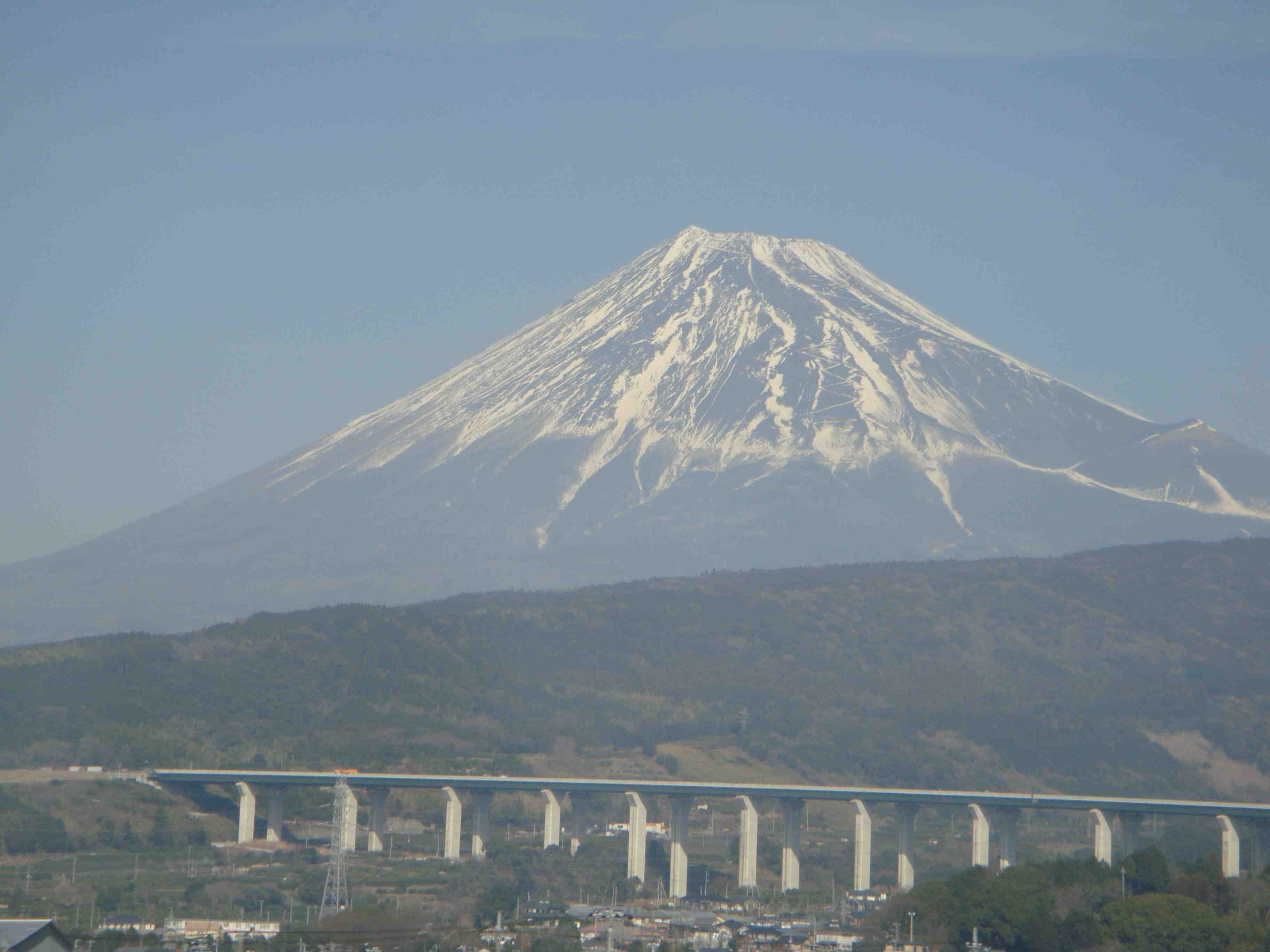
Two youths ensnare deer, kill it, split the meat to consume some and sell [the] rest.  To have to read this in The Hindu recently, the article being accompanied by a gruesome photograph… not at all like that on the left, and on Ugadi, was sad.

Some points. The crime has been investigated by the  anti-poaching squad of the Forest Department. The University will let the law take its course and allow civil authorities to take whatever action that is appropriate. According to the squad officials, the spotted deer was trapped, killed and the meat eaten in part and sold in part.  A case will be booked against the perpetrators under the Wildlife Protection Act of 1972, and they face a three year jail term and a fine of Rs 25,000.

Too little.  The spotted deer, Chital, is a species protected under the Wildlife Protection Act. So when the Hindu says The sprawling university campus with lots of green cover has a presence of wild life, the irony is not lost on us-  who knows how much will last and for how long.

There is an urgent need for us in the University community to take steps to ensure that this act does not go unpunished, especially since the perpetrators are from within. This is the most difficult part of it… When those who live in this wonderful campus and partake of an environment that others can only envy from afar, how can we tolerate such actions that destroy the environment in this most dastardly manner. Clearly also, this is just the first time that the duo have been apprehended, and surely not that first time that they have caught and killed deer- it seems that the remaining meat was stored in the home refrigerator. If indeed it was just the duo- from what little one can glean from the newspapers, there may have been more persons involved.

I know that many of you care deeply about the campus and its environment. Please act.

Outright killing of a wild animal is one thing, but we also kill other animals slowly. The vanishing wildlife on our campus is evidence of either neglect not so benign, or of our introducing other species that change the balance. Feral dogs and cats, for instance. And, of course, seeing animals on campus these past few days that provide “rides” has not been much fun, I must confess. I don’t really see the need for this in a campus festival, and particularly in as environmentally sensitive a campus as ours. Or is this just an illusion that we care? My heart says NO! but my head says maybe…

Another act of poaching that should not go unnoticed. A research scholar has been nabbed for identity theft, stealing debit/credit card numbers and pins, and using this to make online purchases. Read all about it, again in today’s  The Hindu. And this also has points of irony- we have just put together a one-year diploma course in Cyber Security, to be launched shortly…

Sadly, this is us.

The Art of Giving

Some of the English dailies in Hyderabad carried a small news item on the 9th of March, the significance of which far exceeded the space they gave to the story. The Times of India said Malladi Subamma, a city-based writer and feminist donated Rs 36 lakh to Centre for Women’s Studies, University of Hyderabad, on the occasion of Women’s Day on Thursday. The contribution was made towards construction of a new building for the centre located on HCU campus.

A rationalist and humanist, Subamma, has been elected to head the AP Rationalist Association several times. She also has about 110 books and 500 articles on women’s issues to her credit. She has acted in films too. Rekha Pandey, coordinator of the centre, said, “It is not that she comes from a very rich business class family but that she could take this decision speaks volumes about her commitment to the cause of women.

while The Hindu‘s headline (the accompanying photograph dates from The Hindu also, but from a few years ago) was

MALLADI SUBAMMA DONATES RS. 36 LAKH

Well-known social worker and women’s activist Malladi Subamma took the lead and donated Rs. 36 lakh for the Centre for Women’s Studies, University of Hyderabad (UoH), on Thursday. The cheque worth Rs. 36 lakh was handed over by Ms. Subamma to Vice-Chancellor, UoH, Professor Ramakrishna Ramaswamy. The donation is towards building a centre, which will be named after her and will be dedicated to teaching and research on women.

“We value the contribution a lot for the fact that this donation has come out of the personal savings of Ms. Malladi Subamma which she created by selling all her property and jewellery.”

And thereby hangs a tale.

What is remarkable about the donation is the spirit with which it was given, a personal gift out of her savings, for supporting teaching and research in a public University. This is extremely rare in the Indian context, at least at this level. Smaller donations are common enough, and very large endowments are also common, especially from corporate houses or alumni donors, but to have a citizen of Hyderabad donate such a large amount, to a University with which her association was tangential at best, can only be described as an act of pure generosity.

Her act should also help us reflect on the role of the University in civil life. While we are a central university, we are also embedded in the matrix of Hyderabad. As much as we need the city to interact with us, to recognize the value we bring to it, we also need to contribute to the intellectual life of the city and help it to grow in ways that Hyderabad may not have realized. More participation by our teachers and students in urban matters, outreach by way of lectures, events, continuing education… There is no limit to the spheres in which we can link with the city, and I believe that we will also then see more of the citizenry contributing to our growth and development, like Malladi Subbamma, and also perhaps in other ways.

And then, in addition to being the University of Hyderabad, we can also learn to be a University for Hyderabad…

Flattery

The sincerest form is imitation, it is said [1]. But even that sincerity has its limits, particularly when it comes to academic matters, when inspiration can quickly become plagiarism. Our University does not yet have an official policy on plagiarism, but we soon shall, I hope. And one that is designed for us, not just something copied from some other place…

Yesterday I took part in a meeting at the UGC on plagiarism in the university system and how to address it. In preparation for the discussion, I had been reading up on the guidelines issued by a number of institutions, mainly in the US, as well as some discussion on the matter in scholarly articles. It is clearly something that is problematic, especially since the legal issues can be unclear.

The basic point is simple enough to state. Plagiarism, as various dictionaries will tell you, is essentially the wrongful appropriation of another author’s language, thoughts, ideas, or expressions, and the representation of them as one’s own original work. What is complex arises from the difficulty of making a 0/1 test for most of the concepts contained in that definition.

Part of the difficulties we have with plagiarism is that the action is unethical, immoral, wrongful, but as of now, not illegal (in the strict sense of the word) as, for example, stealing some material goods might be. Trash or not, who steals my purse may be punished by law, but who steals my words and thoughts may suffer our collective displeasure, but most often not much more than that. The loss of reputation is one thing, but the loss of revenue is quite another- and there are instances in the recent past of plagiarists who have had to suffer one or both as a consequence of being detected.

In a University context, there are a couple of issues that need to be discussed and clarified. We are, as an institution, committed to the creation of knowledge. This knowledge often comes from standing on the shoulders of giants [2], by incremental growth. And also by recognizing what is the intellectual legacy we inherit, and the debt we owe to our intellectual forebears. This debt comes to the front in three principal arenas:

  • Research papers and monographs,
  • Dissertations and theses, and
  • Term papers and assignments.
Plagiarism is extant in all these areas, and our University is not immune to the disease. To what extent can be debated, and what we should do about it is clear in principle, but less clear in practice. The lack of a policy on plagiarism- or indeed on other ethical issues that are relevant in the University context- is an impediment, but that alone should not be taken as licence for incorrect action…

Nevertheless, there are some general issues that we need to discuss, among which are

  • The distinction between copyright infringement and plagiarism
  • What is “common knowledge” and how to cite/not cite that
  • What constitutes self-plagiarism
  • What is the role of the institution in educating its constituents: students as well as teachers.
A zero-tolerance policy has its drawbacks: after all, not every piece of writing should be viewed as a potential case of plagiarism, and one should reserve punitive actions for demonstrable violations of an implicit honour code. So the onus, in some sense, is on us. In giving or reserving attribution, we first need to clearly enunciate what is acceptable and what is not. And then help the University community to uphold these values.
To briefly touch upon the points of discussion, copyright infringement- say the commercial showing of a movie without obtaining permission or paying a licence fee- is punishable by law. Plagiarism attempts to pass off another’s work as ones own: not quite the same thing… Common knowledge is just that- one need not throw in citations to well-known notions or ideas so long as one is not passing off something as one’s own when it is not- it can become tediously gratuitous to cite every concept contained in a text. To whit the examples at the top of the post… Plagiarising oneself is a fairly common failing, and many academics do find themselves repeating ideas, and sometimes whole sentences, especially the better crafted ones. But repeating whole paragraphs or sections is a no-no, as is dual publication, the publishing of a given paper in more than one place. And even if one does not repeat entire sentences or paragraphs, this type of duplication of work, publishing similar papers with small tweaks is common enough.
On the matter of University responsibility, the potential for moral instruction is there of course, but given the fact of our being a largely graduate University, the opportunities are not many. Making a thorough discussion of the major issues a mandatory part of the research methodology course is one option, but I believe that informal discussions starting early- when new students arrive in the University for instance- would also not be out of place. Given the emphasis on rote learning that we are led to believe is the “proper” way of learning at the school level, one has this step of the process to unlearn in a graduate environment.
Term papers that are a “cut and paste” job are unacceptable, of course. Dissertations or theses that have substantial bits of copying or plagiarism are routinely rejected, but here detection is the key. If the INFLIBNET Shodh Ganga project or VIDYANIDHI take off and it becomes mandatory for all M Phil and Ph D theses to be posted on the net, such detection will become easier- and will deter any potential plagiarist. And on the matter of research papers, while the penalties are quite severe- ranging from a blacklisting of the authors to a withdrawal of the paper, the issues of culpability are more blurred. Today’s research papers often result from collaborations that can be large- it is not uncommon to have over a hundred authors on some papers in experimental physics, while four or five is quite common in experimental biology- some problems can be attacked only with a diverse combination of talents and skills. In such circumstances, when only a few of the collaborators will actually write the paper in question, the equal culpability of all those listed in the authorship is difficult to sustain. Some journals go to the extent of specifying author contributions, but even this has its limitations.
In the end, a Mosaic law may be the simplest to enunciate, as yet another commandment… Thou shalt not copy another person’s work and pass it off as your own!

And then leave it to individual conscience to uphold … or break. With the assurance that the affected institutions will also step in to uphold what they believe to be the necessary norms.

___________________

[1] Charles Caleb Colton, in “Lacon. Or, Many things in few words” (1820).

[2] Isaac Newton, in a letter to Robert Hooke, 1676.

Awards for Life

Three of our colleagues in the School of Life Sciences have been recognized by the DBT (the Department of BioTechnology). Sharmishta Banerjee and Ravi Kumar Gutti  of the Department of Biochemistry have been given the 2011 Innovative Young Biotechnologist Award while Niyaz Ahmed Associate Professor in the Department of Biotechnology has been given the National Bioscience Award.

Here is something I found on his website: Dr Niyaz Ahmed graduated in Veterinary Medicine in 1995 and obtained further degrees in Animal Biotechnology (MS) and  Molecular Medicine (PhD). He joined the Centre for DNA Fingerprinting and Diagnostics – Hyderabad, as a tenured  Faculty Member (Staff Scientist) in 1998 and since then contributed a significant body of applied research in the area  of infectious disease biology and genetics. Amidst his busy research career Niyaz is an ardent supporter of the PLoS  lead contemporary approach to Open Science, Open Access to Science and Open Evaluation of Science. He is a  Section Editor (Microbiology and Genomics) of PLoS ONE and has overseen/handled peer review of dozens of  landmark articles there. Dr Ahmed is the co- founder of the ISOGEM, a scientific society headquartered at Sassari, Italy and serves as its General Secretary.  

Congratulations!

Aotearoa


Aotearoa is Maori for the land of the long white cloud, New Zealand. I’m on a week’s visit here courtesy the UGC, to see their eight Universities: The University of Auckland, AUT (the Auckland University of Technology), Waikato, Massey, Victoria, Canterbury, Lincoln and Otago.

The long white clouds  have been playing hide-and-seek until the last few days of the trip. Many days looked more like  the picture on the right, a set of dark grey clouds that seemed to follow the delegation wherever we went. However, this was briefly graced by an unexpected rainbow one evening…

It has largely been a week of discovery- I have known less about New Zealand than is warranted.  Especially Otago- the University we visited on the final day. The southernmost University in the world, this is also NZ’s oldest university, very research intensive. The first people I met immediately asked after our School of Chemistry and our Centre for the Study of Indian Diaspora!

The manner in which universities here are funded is largely indirect: the Government essentially fully funds the students who are then charged whatever it takes to give them an education. There are some advantages to this scheme- the entitlements become clearer- and the Universities have more flexibility in what they can do. In addition there are other direct funds, of course, but by funding students directly, this makes sure that the responsibility for education is shared.

Small is beautiful might well be this country’s byline, but even so, visiting 8 universities in 5 days makes for a rather rushed visit. Nevertheless NZ, for a population of 4 million people has 8 universities, while we with 1200 million people, should by that scaling, have 2400. In reality we have only about 600 in all- central, state, private and deemed. So there are many miles to go, and much to learn from others.

Sometimes the unexpected. In Victoria University in Wellington, the Faculty of Humanities and Social Sciences includes, among other disciplines, Art History, Film, Theatre and Media Studies, Nursing, Midwifery and Health, History, Philosophy and International Relations, Linguistics… Asian Studies, Literary Translation and even a University Press! The coexistence of all these areas under one umbrella is not as uneasy as one might imagine, at least that was the view presented… But even allowing for some latitude, our ideas of trying to federate the different centres that exist at the UoH should be viewed as an effort that is not without precedent or parallel.

One area that all the Universities highlighted was their efforts to include Maori into the mainstream of all efforts- academic and cultural- within the institution. Preserving the Maori language is one area where we can learn how modern tools can be used to keep traditions and cultures alive. This is a language without a script like many of ours, and seeing the loss of stories, traditions and culture if the language falls out of use has motivated all NZ universities to set up departments of Maori Studies. Our efforts at UoH have had similar foci in the Centre for Endangered Languages and Mother Tongue Studies and in the Centre for Dalit and Adivasi Studies and Translation. Perhaps there is something that we can learn from them, and they can learn from us in this area…

One phrase that kept recurring in conversations across the islands was that this was a country that “punched above its weight”. Certainly, that comes through- in fact this week’s The Economist points out that NZ has as many diplomats and diplomatic missions as India does, being about  1/300th as many in population, and some similar fraction in terms of area. Their Universities have a similarly large international presence, more than the numbers would warrant. I know these are not quite the right comparisons, and some things scale well while others do not, but it does seem that we do not always punch above or even at our weight. Mostly below, and even when we don’t need to.

The common colonial past  is reflected in the names. On the drive from the airport into Auckland city, one could see a sign for Khyber Pass Road, and Wellington has a suburb named Khandallah, with Bombay Street… There is an Indian diaspora that dates from the 1860’s and more recent migrations, of course.  There’s clearly a wealth of opportunities here for some serious academic engagement…

The Hex

I have been struck by the fact that there are relatively few places where students (or anyone, for that matter) can sit on the UoH campus outside an office, classroom, or seminar hall. I know that there is Gopes or the Shop.Com, or any number of rocks where people congregate… but still.  A campus should have places where people can meet- to discuss, interact, debate… any number of things that one has all the time for in these years, and less time for afterwards… Anyone who has been anywhere near JNU knows of Ganga Dhaba and how it has given aspiring debaters a chance to cut their ideological teeth…

The central hexagon (or is that a depiction of benzene??)  in the garden in front of the Science Complex has been gussied up over the past few days: the garden has been cleared, the stones have got fixed and cemented into a low wall, the access steps have been fixed, etc.  This is mostly to encourage people to use the park,  to hang out. I hope that the space can be used imaginatively- say by the inventive theatre groups that we have on campus.  Or for music.  And if you have suggestions of what else is needed in this regard- either here or elsewhere on the campus, do let me know and hopefully we can make this happen.

Okazaki fragments

In 1989-90, I lived for a year in Okazaki (岡崎市) a small Japanese town in Aichi Prefecture. Close to Nagoya, this city is home to the Institute of Molecular Science (and the National Institute for Basic Biology) where I was a visitor for a year. After having spent many years in the US as a student and postdoc, this was my first sabbatical abroad, and in a very new and different alien environment…

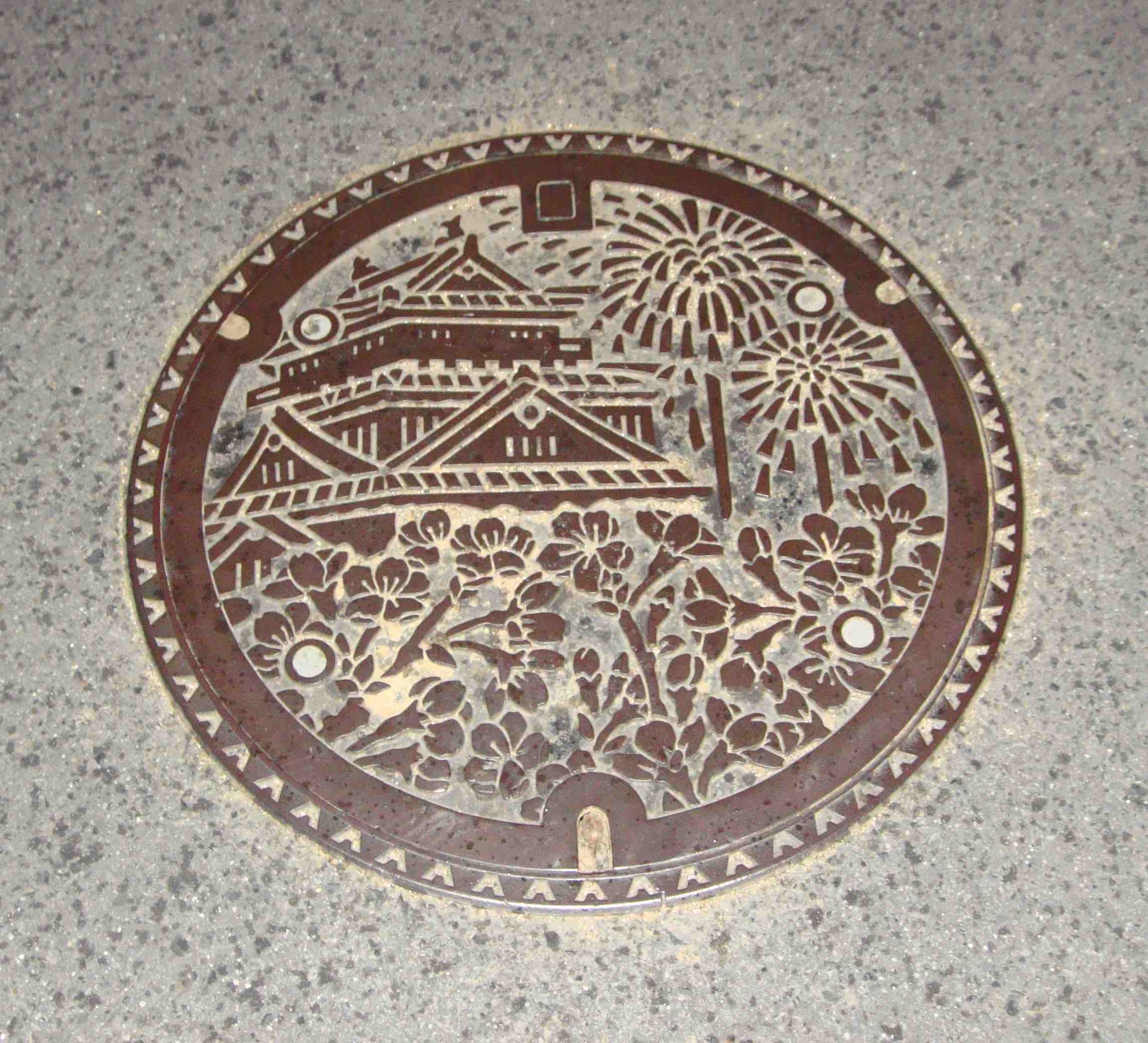
It turned out to be my year of magical living, a year of discovery and rediscovery. Among other things a time of learning an assortment of things that included, in no particular order, large scale molecular dynamics, eating properly with chopsticks (or even more properly, hashi), biking, appreciating calligraphy, ukiyo-e and the Japanese approach to aesthetics. This is pretty much what the gaijin do, so the list goes on. But perhaps above all I learned to appreciate the importance of paying attention to detail. Years later, when I went back for a visit, I could not resist taking a photograph of the manhole covers that depict their firework festival in July, something that the city is justifiably famous for!

This experience, that year abroad, made a deep impression on me… Okazaki, as it happens, is where Ieyasu the first of the Tokugawa Shoguns was born in 1543. From the time he took charge Japan was under the control of the Tokugawas until the Meiji Restoration in the 1860’s, three centuries when there was no contact with much of the outside world.

Japan still carries the baggage of that period in so many ways, particularly in attitudes and customs. A recent lecture by M S Valiathan at the Andhra Pradesh Akademi of Sciences meeting in December 2011 brought back some thoughts of Okazaki, with its schoolchildren looking like they might have stepped out of a Prussian academy of the mid-1800’s when many Japanese went to Europe to learn the culture and bring it back to Japan. It got transmuted into something different of course, but also it has stayed in a peculiar time warp.

Valiathan who was speaking of planning for growth and development in the Indian context recalled Maeda Masana, one of the architects of Kogyo Iken, Japan’s ten year Plan. Maeda had spent time in Paris, returning to Japan in 1878. The basic point that Professor Valiathan made- and why he was quoting Maeda- is that when asking as to what the most important component in the efforts of the government in building up our industries. It can be neither capital nor laws and regulations, because both are dead things in themselves and totally ineffective. The spirit or willingness sets both capital and regulations in motion….If we assign to these three factors with respect to their effectiveness, spirit or willingness should be assigned five parts, laws and regulations four, and capital no more than one part.

It’s tempting to look at our own situation and ask where and if this analysis is at all relevant. Comparisons can be odious, but still… one hopes that the spirit and the willingness is there in the ongoing efforts at development in the country, particularly on the academic front, since that concerns us all. And given the amount of money that is invested in the higher education sector and that remains unspent at the end of each of our five year plans, the cynical view that here capital is assigned five parts out of ten, laws and regulation two, and spirit and willingness no more than three… But that may not be too harsh an indictment of a system that seems to believe that pumping in a lot of money without an underlying infrastructure will yield dividends…

The biologists among you will, of course, know that Okazaki fragments are really small bits of DNA that are produced in the cell nucleus during replication… My choice of the title for this post was prompted by a set of rambling thoughts on a wonderfully cool winter Sunday of kite flying near the Golconda fort that brought back some disjointed memories of another time, another place.