The Secret Life of Plant Biologists

It is always a pleasure to bring to the notice of the wider UoH community that a colleague has been honoured for his excellence in research: Professor A S Raghavendra of the Department of Plant Sciences has been named a Corresponding Member of the American Society of Plant Biologists.

The award will be formally presented during the opening session of Plant Biology 2012, ASPB’s annual meeting in July in Austin, Texas. First given in 1932, the Corresponding Membership Award honors up to three distinguished plant biologists residing outside the United States with life membership in the ASPB, a professional scientific society, headquartered in Rockville, Maryland, devoted to the advancement of the plant sciences worldwide. 

With a membership of some 4,500 plant scientists from throughout the United States and more than 50 other nations, the Society publishes two of the most widely cited plant science journals: The Plant Cell and Plant Physiology. 

The citation reads: Agepati Srinivasa Raghavendra (University of Hyderabad, India) is nominated for pioneering work in photosynthetic carbon metabolism and stomatal guard cell function. Agepati also has introduced innovative techniques for the rapid isolation of highly active mesophyll protoplasts from pea and Arabidopsis, monitoring cytosolic pH by fluorescent dyes, and developing a reconstituted system of isolated mitochondria and peroxisomes.

One more feather in the cap of the Department of Plant Sciences… Bravo!

Chemistry in the time of civil conflict

I’m just back from the University of Jaffna, Sri Lanka,  where I had the privilege to deliver a lecture in honour of Professor Sivapathasuntharam Mageswaran, founder of the Chemistry Department at the University. Both UoH and the University of Jaffna were set up around the same time- both children of the mid 1970’s but with very different trajectories… Within a decade, the UoJ was in a battleground- a very real one, with the kind of attrition that is any administrator’s nightmare. Faculty and students left in droves, alternately displaced by one side or the other. Many buildings were destroyed. More than that.

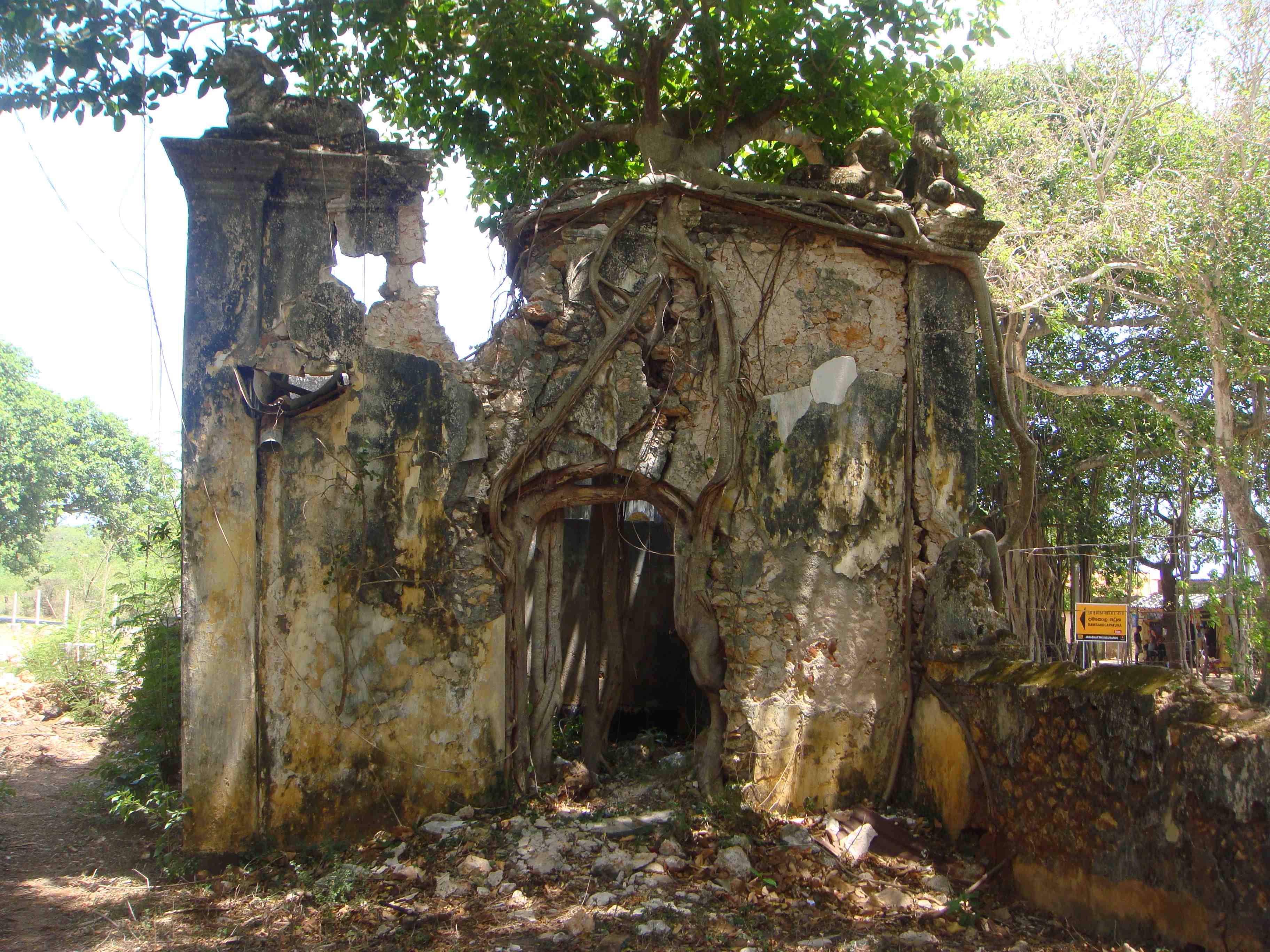
Through two decades or more, Professor Mageswaran steered his Department – that was for much of the time just about three persons- through many battles. Any visitor to Jaffna will be struck by the presence of so much detritus of the civil war, the wastage of three decades of civil conflict, the rebuilding of such a large fraction of the city, reclaiming it, from the debris of war as much as from the ravages of time: Nature conquers what she can, and fast, as the image on the left, from Keerimalai, testifies…

One casualty was his own health: at the age of 56, he was struck down, but not before the department he had formed was firmly rooted. Today, it seems healthy, with about a dozen teachers, a firm plan of starting a Ph D programme soon, and a future that has promise. But the memories of the difficult days stay. My hosts there live, for instance, with a daily reminder of the war that was. In the house that they rebuilt, they left the one wall with bullet and shrapnel holes intact. And those days are indeed never very far away- an old machine gun and unexploded grenade was found in the tailor’s shop opposite their home only last week- clearly left over from twenty or more years ago, but still… It was impossible not to be impressed by the dedication of the University staff. Like most people in the peninsula, the University was caught in the middle of all the violence, but the resilience that they showed in finding the strength to keep going, to continue to teach and educate (especially when it was not clear what horror the next minute might well bring) is commendable.

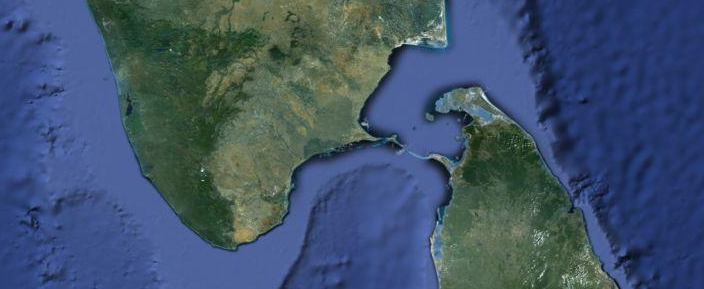
India is both near and far. A short distance across the Palk Strait, but the ferry service has stopped, so it really does take a journey. The Sri Lankan undergraduate programmes are largely of four years duration, so there is a mismatch of sorts. Given the fact that our own system is evolving, this may be less of an issue than it seems, but it is odd that we do not have closer academic links as well.

Especially given our shared history- everywhere one goes, one is never far from a stupa. As  it happens, I was also there on the Poson Poya, the full moon day in June, anniversary of when Mihinda and Sanghamitra brought Buddhism to this country. The crowds at Mihintale and Anuradhapura- especially around the Sri Maha Bodhi, the tree that they planted in 288 BCE- are yet another aspect of the old and near connection. But more is needed, especially from the viewpoint of Universities. And the more is in collaborations, exchanges and  academic sharing of expertise, given our historical, geographical and cultural proximity.

Night Thoughts

… the race is not to the swift, nor the battle to the strong, neither yet bread to the wise, nor yet riches to men of understanding, nor yet favour to men of skill; but time and chance happeneth to them all. 

I came to the University of Hyderabad on the 1st of June 2011. Today, particularly,  it is almost impossible to not reflect on the year gone by and think of the roads taken…

My one persistent sense of the year past is that things have moved rather slowly, and that time has flowed in different ways. Tempo Larghetto – somewhere between Adagio and Lento, rather than Allegro!  Time has flowed rather differently this past year,  not quite backwards, but many things seemed to take more time than I had originally thought they might. So instead of a stocktaking this is really more a time to think of what could or should have been. And what still needs doing, follow through, and follow up. Frost comes to mind again, what with those lonely, dark, and deep woods. And the miles to go.

The title of the post, lest it be misunderstood, are really more the Night Thoughts of a Novitiate Vice Chancellor,  along the lines of Night-Thoughts of a Classical Physicist (the novel by Russell McCormmach, but that has more of a sense of angst than I feel) or the poem by Edward Young, from which they both take their name, although that has even more angst than that…

At the end of a year, the view that I have of our University is in many ways not very different from the one that I started with- we are indeed a University with the Potential for Excellence- except that we are now beyond the stage of having our potential recognized, the potential has to be translated into a realization on so many fronts. Some of the Ten Simple Rules (for surviving in a harsh environment) that I wrote about last are germane, most of all the need for endurance. The race here is not to the swift, it is to the true… and to those who stay the course.

Ten Simple Rules

Sometimes it is possible to distill wisdom into a set of byte-sized rules. Or so we have been thinking since long, the tradition going back, in some sense, to Moses. Among the most quotable of these (though the number is not ten) is Polonius’ advice to Laertes, perhaps the most singable, Paul Simon’s 50 ways… And surely, there are others.

In recent times, the Editors of the journal PLoS Computational Biology (thats the logo of their linking page) have been bringing out a number of such lists, among which are variously Ten Simple Rules forStarting a Company,  Getting Involved in Your Scientific Community, Teaching Bioinformatics at the High School Level, Developing a Short Bioinformatics Training Course,  Getting Help from Online Scientific Communities, Building and Maintaining a Scientific Reputation,  Providing a Scientific Web Resource, Getting Ahead as a Computational Biologist in Academia,  Editing Wikipedia,  Organizing a Virtual Conference—Anywhere, Chairing a Scientific Session,  Choosing between Industry and Academia,  Combine Teaching and Research,  Organizing a Scientific Meeting, Aspiring Scientists in a Low-Income Country,  Graduate Students,  Doing Your Best Research, According to Hamming,  Good Poster Presentation,  Making Good Oral Presentations, Successful Collaboration, Selecting a Postdoctoral Position, Reviewers, Getting Grants, Getting Published… The list will, we are told, go on.

I was recently at a meeting of the Department of Science and Technology’s Ramanujan Fellows, a group of gifted young scientists who have recently (in the last five years or less) returned to work in India after postdoctoral positions abroad. Most of them had spent a fair amount of time away from the country and had, to varying extents, become unfamiliar with how things work (or don’t) here. I was invited to share some experiences of a career in India with them, an assignment I had accepted somewhat hesitantly because hindsight is always 20/20, and often its not easy to share the travails of the path, which can seem rosier than it was. In the event, I didn’t wish to slip into anecdotage and thought I would share some of these Ten Rules, especially because I felt a resonance with them (the rules, that is). Those I chose to highlight in the talk were

  • Ten Simple Rules for Doing Your Best Research, According to Hamming by T C Erren, P Cullen, M Erren, P E Bourne, PLoS Comp. Biol., 2007
  • Ten Simple Rules for Building and Maintaining a Scientific Reputation by P. E. Bourne + V. Barbour, PLoS Comp. Biol., 2011, and
  • Ten Simple Rules for Aspiring Scientists in a Low-Income Country by E Moreno +J-M Gutierrez, PLoS Comp. Biol. 2008
The last of these hit a chord, especially in connection with the second. The mathematician (and computer scientist) Richard Hamming’s list is justly famous, and one that is worth recalling anytime. Anyhow, I picked and chose from this menu to come up with my ten simple rules for surviving in a harsh environment (which is what I subtitled my presentation). Here they are, with a short annotation (though I was much more discursive when I gave the talk, of course).
  1. Understand your Country, its social mores, its needs. We live in a complex country, and to succeed in science, its important to be socially at ease here.
  2. You Need Courage to Make the Best of Your Working Conditions. Power cuts, water shortages, poor infrastructure… Courage and a sense of humour will keep you going.
  3. Develop Endurance. Things do work differently here. Typically very slowly. And strange things can play a role in making things work (thats about as circumspect as one can get) so you need to be resilient…
  4. Work Hard and Effectively, and on Important Problems in Your Field. What’s the point, otherwise?
  5. Leave Your Door Open: Collaborate Locally and Internationally as well. This one is very important. Given the relatively few people in any field of enquiry, its almost a given that for most of us to survive, its essential to be open to others’ ideas and to be willing to collaborate. Closer is better, of course, but its also important to be internationally connected as well…
  6. Commit Yourself to the Education of Young Scientists. We really need more and more scientists in the country, and the only way its going to happen is if we see that more are created… The only way to do it!
  7. Write Research Grants and Publish in International Journals. Doing science is, in many ways, an international enterprise, and we need to keep international standards and benchmarks. And writing fundable research grant proposals, getting published in standard journals is one way of keeping a check on what we do.
  8. Do Not Ignore People. Thats why we do science in any case… There has to be a source of inspiration, and that can often come from others.
  9. Do Your Share for the Community: Teaching, Mentoring, INSPIRE-ing, whatever. It is important to give back, not just by transmitting information, but by guiding, sharing (through the INSPIRE programme is what I meant above, but more generally, of course).
  10. Appreciate Being a Scientist: A lot of people have put their faith in us. There are so few scientists in the country, and the investment is so large- to be a working scientist is a privilege. To be funded to do things that we find so enjoyable- it is not given to many, and its good to occasionally remember that…


Sweet!

Hearty congratulations to our colleague P. Ramu Sridhar of the School of Chemistry, who has been awarded the INSA Young Scientist Medal for the year 2012.  He earned his PhD at  the  Indian Institute of  Science in the area of Synthetic Organic Chemistry, post-docced at Purdue and at Ohio State, joining the UoH in  2007. He has been working on carbohydrate chemistry, specifically in Glycotherapeutics and Total synthesis of Natural Products.

Sridhar has been recognised for his excellent work in other ways as well: as a student he got the  best thesis award  and the Guha research Medal  at the Indian Institute of Science, Bangalore, and last year he was selected as a young Associate of Indian Academy of Science, Bangalore.

From his website I gather that his research “involves the synthesis of carbohydrates, glyco-amino acids and oligosaccharides.” He has been working with carbohydrates for several years, developing “new techniques for the synthesis of glcycosyl amines and sugar amino acids. Most of these molecules are new and their biological applications are still under investigation.”

Working on sugars clearly brings sweet rewards… Well done!

Sacred Groves

The practice of demarcating portions of forests as “off limits” for all human intervention has a long history in our country, and indeed across the world. This traditional form of conservation, of declaring some space as “sacred”  has been increasingly recognized as a very effective means of preserving biodiversity, particularly as the pressure on land use increases and urbanization spreads.

Sources list about 750 known sacred groves in Andhra Pradesh, and this has been extensively documented by the  World Wide Fund and the AP state office of Sacred and Protected Groves.  Each of the  23 districts  have some, ranging from 2 in Adilabad to 133 in  Chittoor. Hyderabad had 10 of which essentially nothing remains, and this includes the “protection to vegetation given by temples, mosques and idgahs, [as well as] churches in these districts. About 134 species of medicinal rare and endemic plants are reported from these sacred sites“.

Sanctuaries and such sacred groves are really the last refuge of wildlife as well.  Coexistence is difficult: we humans tend to view any interference by other animals as a threat, unless of course we see them as food instead. And we really don’t think that other animals have rights, at least not in the way we think of “Human Rights”. Anyhow, whether animals have rights or not, a very tricky question that generations of philosophers and lawyers (among others) have grappled with,  one way in which we can at least try to see that our campus retains some of the biodiversity that it is famed for is that we set out to protect it using some ancient techniques in addition to the modern.

Some of you were at the meeting we held in DST the other day, on the campus master plan, and saw first hand what the pressures on the land were, and what little usable land is really all that is left. We have to ensure that the land that is there is for generations to come, to be able to accommodate the numbers of students we plan to have at the University in the future, and to keep the biodiversity there is now without letting it dwindle…

The three lakes on campus and the land surrounding them are prime candidates for our own modern day sacred areas. Given the importance of water and the role it is going to play in the coming times, there is no doubt we should conserve and preserve this very vital resource. And the sheet rock. There are large tracts of the campus that are covered with wonderful rock formations, many of which we need to keep in their pristine form, both for their sheer physical beauty as well as the biodiversity they sustain.

Our sacred groves, our  पवित्र वन.

Earth Day @ UoH

Mark the day, 22 April (Sunday). Its Earth Day.

Mark the venue: School of Humanities Auditorium, University of Hyderabad

Mark the time: 5:00 PM

The UoH Film Club  will screen the  first One Day on Earth Motion Picture. …This one was shot on location on 10 October 2010 (10/10/10) across the planet by documentary filmmakers, students, and other inspired citizens will record the human experience over a 24-hour period and contribute their voice to the second annual global day of media creation called One Day on Earth. Together, we will create a shared archive and a film.

This is a unique effort to share the human experience across borders, by showcasing the amazing diversity, conflict, tragedy, and triumph that occurs in one day. We invite you to join our international community of thousands of filmmakers, hundreds of schools, and dozens of non-profits, and contribute to this unique global mosaic. One Day on Earth is a community that not only watches, but participates.

The above quotes are from the ODOE website where you can find more information about the film, but do come watch on 22/4/12 at 5:00. The event is brought to you by the UoH Film Club.

On Being the Right Size…

…was a brilliant essay by JBS Haldane that came to mind when a colleague in Germany sent a link to a conference to be held later this year, sponsored by the Volkswagen Foundation.

Limits to Growth Revisited is a Volkswagen Foundation Winter School that will be held in Hanover, Germany from November 24 to December 1.

What caught my eye- apart from the fact that the person who sent the link is a good friend of UoH, was that the meeting was not limited to any particular discipline, and was thus really and truly open to all.

Here is what they say on the site: The buzzword of our time, “sustainability”, is closely related to a book published 40 years ago, in 1972: “The Limits to Growth” written by an MIT project team involving Donella and Dennis Meadows. Using computer models in an attempt to quantify various aspects of the future, “Limits to Growth” has shaped new modes of thinking. The book became a bestseller and is still frequently cited when it comes to analyzing growth related to finite resources.

It seems that since then few things have changed. Stagnant growth in some countries, exponential growth in others, finite resources, and an unbroken depletion of the environment still pose pressing questions and should be issues of great concern for everyone. Again the various developments in different societies call for new matching modes of thinking that promise a secure future for everyone. Major questions are: What is smart or good growth? What are the limits of the future? Why are so many findings of the report still unresolved? Will there be solutions? And which ones could that be?

As objectives, they list:  In order to give fresh impetus to the debate, the Volkswagen Foundation aims to foster new thinking and the development of different models in all areas related to the “Limits to Growth” study at the crossroads of natural and social sciences. The Winter School “Limits to Growth Revisited” is directed specifically at 60 highly talented young scholars from related disciplines. The Foundation intends to grant this selected group of academics the opportunity to create networks with scholars from other research communities.

And finally,   The Volkswagen Foundation invites applications from young scholars of all related disciplines who wish to attend the Winter School and are dedicated to working together and giving significant input for and during the Limits to Growth conference.

I hope that some of the UoH fraternity will find the subject of the school sufficiently interesting, and will apply for participation. The last date is April 30.

Mee Kosam: UoH Podcasts

In an effort to take some instruction out of the classroom- both for the teacher and the taught- Vasuki Belavadi of the SN School’s Department of  Communication has set up our new Podcast site, uohpodcast.in.

The About Us page says: UOH PODCASTS features audio and video content from University of Hyderabad, India’s premier central university. It provides you with access to audios/videos of excellent public lectures by eminent personalities, interviews, comments by experts on various issues & tutorials. Some podcasts featured on this website are also from Bol Hyderabad 90.4 FM, the university’s campus radio station. Content on this site is being updated regularly. All content on this website is free for download.

These podcasts can be listened/ watched either online or downloaded to your computer/ mobiles/ mp3 / video players. You can also listen to them on iTunes.

One one page there is listed, as of now, a set of interviews with some recent eminent visitors- Robert Kanigel, Leela Samson, and David Shulman and Radhika Hegde, but this is just a representative fraction of the really exciting speakers we have had in the last few months… Clearly we need more.

In addition, there is a set of 5 minute long lessons, Spoken Telugu. Put together by Vasuki along with Pawan Kumar Pammi of the Telugu Department and a group of enthusiastic RJ’s at BOL FM, these bit sized instructional programs are an engaging way to learn the language. So far I have managed to learn to count along with Dipu and Ashwathi.   Their charming promo for “Your Daily cup of Telugu” made me listen, not once, but at least padi times- Feel left out amongst your Telugu friends? Want to learn spoken Telugu? This series of podcasts will be a fun, intuitive way of learning spoken Telugu. The best podcasts on the internet to learn the language as it’s really spoken. Authentic.

Clearly this is site we’d like to build up, other lectures, other languages, anything you’d like to learn or just listen to… In the end, this is really for you- the University community, and more generally, for everyone, so please write in to the podcast team,  at admin@uohpodcasts.in and let them know what you would like to hear.

Also check out Vasuki’s Blog to learn how to make a podcast! Apart from a zillion other things in communicating. Great byline, Learn to Learn!

Finding your Mojo

The other day when discussing the general state of affairs with a group of colleagues, I was talking about one of the main problems confronting a University that is growing older, namely finding relevance in the face of that endemic cynicism that comes with age.

Call it what you will – Finding your mojo, finding your groove, its about getting back something that was once there, a remembrance of things past, the way we were.

Apropos of which, a festival like the one we just experienced, last week’s SUKOON was, in many ways, refreshing. Although I felt it was poorly timed (it was too hot during the days, and many campus children had Board examinations) it was a good opportunity for students to get together and participate in group events, compete, interact. There were small things that could have been done differently, and  maybe next time around they will, but all in all, such an event focuses the vibrancy and vitality of our student life.

That said, there is a need for us at the UoH to find our mojo once again. Seriously, the urban dictionary will tell you that the word means “Self-confidence, Self-assuredness. As in `basis for belief in ones self in a situation’.” And more, but thats enough for now- its really the vibrancy and vitality  that this University had in plenty at one point in time. Maybe its just that we were younger then, or smaller, or just plain newer. But given the fact that our students change every so often, there should be a freshness that comes with this sense of renewal, something that should keep us on our toes and evolving.

And, of course,  it had best come from within.  But some things are, however, not for the asking, so one does need to make an effort. I, for one, am sure that it is there…