Keeping one's Temper

Of the several meanings of the word temper when used as a noun, here are eight that I picked up from the Free Dictionary:

tem·per, n.

  1. A state of mind or emotions; disposition: an even temper.
  2. Calmness of mind or emotions; composure: lose one’s temper.
  3. A tendency to become easily angry or irritable: a quick temper.
  4. An outburst of rage: a fit of temper.
  5. A characteristic general quality; tone: heroes who exemplified the medieval temper; the politicized temper of the 1930s.
  6. The condition of being tempered.
  7. The degree of hardness and elasticity of a metal, chiefly steel, achieved by tempering.
  8. A modifying substance or agent added to something else.
  9. [Archaic] A middle course between extremes; a mean.

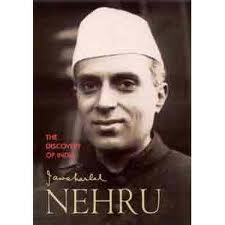
The fifth in the list is what Jawaharlal Nehru had in mind when he defined scientific temper  in his  Discovery of India (1946), as “a way of life, a process of thinking, a method of acting and associating with our fellow men“.

The immediate reason for writing about this is a letter I recieved from NISCAIR, the National Institute of Science Communication and Information Resources, approaching us (the University) to endorse the Palampur Statement, a resolution adopted at the International Conference on Science Communication for Scientific Temper in January 2012.

That scientific temper has not much, per se, to do with science or science communication is (or should be) self-evident so it is a little unusual that NISCAIR should be the only organization that is taking initiative in this matter. Several years ago, I was asked to speak at the release of the National Book Trust’s Angels, Devils and Science: A Collection of Articles on Scientific Temper by  Pushpa Bhargava and Chandana Chakrabarti, both prominent residents of Hyderabad. Prof. Bhargava, founder Director of CCMB and member of the National Knowledge Commission is an indefatigable spokesman for the scientific approach in all aspects of life, and with Chandana Chakrabarti, he has written a number of articles in the popular press, many of which are collected in that book.

The blurb that one can read on the NBT’s website says ” India is one of the ten most scientifically and technologically advanced countries in the world. Interestingly, it is also the only country where commitment to scientific temper is enshrined in the Constitution as a duty of its citizens. Juxtaposing the advancement in modern science with serious lack of scientific temper, the articles in the book make a plea that many superstitious beliefs still prevalent in society are founded on unscientific grounds. Arguing for the urgent need to promote scientific temper as a social asset, the book discusses the importance of scientific temper and its role in the country’s socio-economic as well as scientific & technological advancement. The book is a major contribution in understanding the importance of science and scientific temper.”

So given the importance,  what is the Palampur Statement? Its a fairly long and comprehensive document that delves into, among other things, the changing world order, the current state of science and technology, the spread of fundamentalism, and so on. It has to be read- even cursorily would be enough- to get a true sense of its potential impact in our lives. One fragment that summarizes the main gist of it goes: the thought structure of a common citizen is constituted by scientific as well as extra-scientific spaces. These two mutually exclusive spaces co-exist peacefully. Act of invocation of one or the other is a function of social, political or cultural calling. Those who consider spreading Scientific Temper as their fundamental duty must aim at enlarging the scientific spaces.

And it concludes: We call upon the people of India to be the vanguard of the scientific temper. This is a statement I endorse.

Anandibai's Quilt

On the third floor of the Kelkar Museum in Pune, in the corner of the room where articles of clothing are displayed, is a quilt. Presented to the museum by ‘Wrangler’ Paranjape, this quilt is possibly the only physical article known to have been in the possession of the remarkable Anandibai Joshee (1865-87).

The image on the right is from a photograph I took a few years ago when a friend told me about its existence. The description provided at the display says that the quilt was a community effort by Anandibai’s friends to mark her return to India. As one can see, it contains scraps of cloth that must have formed part of everyday objects and clothing- it was difficult to not be moved- one irregular piece has mirrorwork , while another contains the name of her husband, embroidered in what must surely be her hand. I have not been able to find much about this in what has been written about Anandibai’s life, both in the popular press as well as in scholarly journals. As things go, maybe quilts are not that important.

But as one of the first Indian woman to be trained in western science, her story is iconic and inspirational, and in its own way as remarkable and as tragic as that of Ramanujan. She was the first Indian woman to get a medical degree, in the Women’s Medical College of Pennsylvania. Upon her return to India where she hoped to practice, she died of tuberculosis at the age of 22.

Commenting on her life, the sociologist Meera Kosambi writes: Anandibai Joshee was a true pioneer…. she was the first Indian woman to qualify as a medical doctor. She was also the first Maharashtrian woman to leave these shores for higher studies abroad, at the young age of eighteen.

In March 1886, when she received an American medical degree, she was barely twenty-one — an astonishing achievement in an era that refused even simple literacy to most Indian women! Anandibai chose a medical career because she wanted to serve other women who had inadequate health care. She defended this choice publicly and against heavy odds. Her personal life, too, was a continuous struggle on many fronts. Given the dramatic and eventful nature of her life, it is difficult to believe that she died so tragically young, just before her twenty- second birthday. [She was] an intelligent woman who was dispassionately perceptive of herself and her society — one who had independent views on contemporary gender issues. She was fearless in pointing out the obstacles to women’s education in India, and yet was firmly anchored to an Indian cultural and nationalistic identity. Anandibai was not merely India’s first woman doctor: she was also a feminist and a nationalist at a time when women were a rarity in the public sphere. And though she was not a scientist in the proper sense of the term, Anandibai wrote and researched in the field of public health/ epidemiology while still a medical student.

As has often been underscored, there are multiple identities that each of us carries, and Anandibai’s life, short though it was, was a patchwork quilt, not unlike that with which this post begins. Married young, she learned to read and write, not just Marathi, but 6 other languages including English. She she had a child at the age of 14 and upon losing that child due to inadequate healthcare, she decided to become a doctor. A letter written by her in 1883 gives a glimpse into her determination and strength of character. It is not unlike letters that reach similar offices even today…

Dear Sir, she says, I beg to ask, if upon any terms pecuniarily consistent with my means, I may be allowed to enter the Women’s Medical College of Pa. for a thorough course of study. I have with me seventy dollars, and my husband expects to send me twenty dollars per month less the cost of sending.

I was eighteen years of age last March.

I am not quoting the entire letter which can be seen in the archives of Drexel University, in their collection on Women Physicians, but the arguments she makes find an echo even today!

Though I may not meet in all points, the requirements for entering College, I trust that as my case is exceptional and peculiar your people will be merciful & obliging. My health is good, and this, with that determination which has brought me to your country against the combined opposition of my friends & caste ought to go along way towards helping me to carry out the purpose for which I came i.e. is to render to my poor suffering country women the true medical aid they so sadly stand in need of, and which they would rather die for than accept at the hands of a male physician. The voice of humanity is with me and I must not fail. My soul is moved to help the many who cannot help themselves and I feel sure that the God who has me in his care will influence the many that can and should share in this good work to lend me such aid and assistance as I may need. I ask nothing for myself, individually, but all that is necessary to fit me for my work. I humbly crave at the door of your College, or any other that shall give me admittance.

I’ve included a piece on Anandibai’s in Lilavati’s Daughters, a collection of essays on and by women scientists that I co-edited some years ago. Her story while sad and complex is compelling, and a perpetual testimony to the value of higher education, and to the importance of a higher cause.

A very special milestone

19/07/12. On this day, for the first time in the history of the Department of Economics at the University of Hyderabad (and possibly a first in the University), a visually challenged candidate, Ms. B. Madhuri Smitha, successfully defended her Ph. D. thesis in Economics. One of her two thesis supervisors, Dr Naresh K Sharma (the other is Dr B Kamaiah) writes:

Though denied of the great faculty of vision (Ms. Madhuri Smitha has total loss of vision) by nature, she is well endowed, by the same nature’s benevolence, with abundant intelligence and a will to achieve her own targets. Incidentally, this first feat (in Economics at HCU) by a visually challenged person, is achieved by a women candidate. In addition to her own great perseverance and hard work, she was supported with equally great dedication by her mother in this work and also backing of her father. She has completed her Ph. D. work while working as a faculty member at the Koti Women’s College ( a constituent college of OU).

It is always humbling to see such courage and determination, and always an inspiration. Thank you, Dr Smitha, and from the entire University community, our heartiest congratulations and best wishes!

Her graduation photograph is on Facebook.

… very Heaven!

My Independence Day speech, 2012:

Members of the University family, students, faculty, officers, staff, colleagues. Greeting on the occasion of our 66th Independence Day.

Every year this day we look to a new year of our Independence with renewed hope. Hope for a better future for our children and ourselves.

During the last few days, seeing the physical beauty of our campus- its greenery and its lakes- I have repeatedly been drawn to a fragment of a poem by Wordsworth, written at the time of the French Revolution- a time of hope and expectations. The poem captures the idealism of a time, and one that is good to recall today, particularly given the large number of young people here.

Oh! pleasant exercise of hope and joy!
For mighty were the auxiliars which then stood
Upon our side, we who were strong in love!
Bliss was it in that dawn to be alive,
But to be young was very heaven! Oh! times,
In which the meagre, stale, forbidding ways
Of custom, law, and statute, took at once
The attraction of a country in romance!

Our freedom has brought us huge possibilities, but it has also come with a huge responsibilities. And huge challenges. One responsibility that I am especially sensitive to comes from our privileged position on a campus of such beauty, in a University where the major part of ones day is devoted to intellectual pursuit. We are blessed to be in this learning environment, blessed that we can enjoy the several freedoms we have. Blessed, one can say, to be allowed to do the things that we care so deeply about.

But with this privilege comes responsibility, in particular, the responsibility to contribute at the highest level that we can. As members of the University family, we represent a vanishingly small fraction of the population of this country that has this privilege. The privilege of being educated, of having the resources that we do, of being able to think what we can, how we can, and when we can. The investment that our country has made in us, both implicitly and explicitly is tremendous, and the hope they have that we will deliver is also ever present, and something we need to acknowledge. The country has invested in itself by investing in us, it has invested in its future by investing in us now. The important thing is that we do the very best that we can to keep the faith, and that we strive to deliver our very best- in any field of intellectual endeavour.

This is not always easy. We live, regrettably, in interesting times. Each day brings new and unexpected challenges, particularly on matters that relate to governance and policy. The past year has seen our fortunes fluctuate, especially on matters relating to funding. The economic downturn has meant that the funds that will be made available through the UGC for the 12th plan will not match the promises that were made, but nevertheless it should be possible for the University to consolidate, to improve the infrastructure and to strengthen our various academic programs. The lower funding levels, though, come with the need for sacrifice. Well, if not quite sacrifice, this comes with the need for fiscal discipline and a leanness in spending. We have to make our funds stretch to help us reach the goals of excellence that we aim for, we need to spend wisely, and to use our grants well.

While new infrastructure will slowly become available, it is also true that what we have built up over the last 40 or so years is now in sore need of maintenance. It is our collective responsibility to ensure that the facilities that have been developed be kept functional. Likewise this campus of ours- blessed are we that live here, but more blessed are those who can preserve it! I have, over the past year, been particularly sensitive to matters relating to the environment, to water, and to the campus fauna and flora. With the Hyderabad Metro Rail, we have undertaken a massive tree plantation drive, and with the GHMC, an ambitious plan to improve the water bodies on campus, to increase their number as well as their carrying capacity. This will, I hope, serve us well in the future. Similarly, our recent drives to clear the campus, manage the waste and build a sustainable program for its ongoing maintenance are in this same direction. It needs all of sections of the University to participate, and I look forward to your contributions in this endeavor.

This campus is ours. Ours to enjoy, ours to nurture, ours to nourish. We need to know it well- this is the only way in which we can know well what it needs. Walking through it- as we did earlier this year, and will do again this afternoon- is one way. Caring about it and caring for it, is another. Beyond the slogan, “Mana Campus, Mana Hridayam” we need to develop a sense of ownership of this campus.

Our university- while being central- is also an integral part of our local environment. I have often stressed that we are not just a University of Hyderabad, we are a University for Hyderabad… I hope that we will see more efforts in the coming year to integrate us in the city. Our campus radio station is a year old today- this is a very important way in which we reach out to the communities that sustain us, and an important way in which we can give back to those that sustain us. But there are other ways in which we can and should integrate. We need to have more engagement with the city, with issues that are current and relevant, with discussion and debate. Some of our campus events have been shared with the city, music, theatre, lectures, but we need more.

Let me close with reiterating what I said last year, that we need to carve out a set of freedoms for ourselves. In particular, we need to hold dear to the freedom to excel. Too often, we perform to the levels set by others and achieve goals set by governments. As academics, we know that the best standards are internal, set by the disciplines themselves. We need the freedom to pursue such ideals, without fear or favour, without interference from anybody else. Be Excellent!

Once again my greetings on the occasion of Independence Day to all of you. Jai Hind!
BhK

Professor Bhadriraju Krishnamurti, third vice-chancellor of our University passed away on the 11th of August, last Saturday. I had met him once last year, an evening of pleasant conversation and gentle wit. It was clear that even long after retirement he thought often about our University and various matters concerning its well being.

One colleague who was very deeply affected by the news of his passing is Probal Dasgupta who is presently at the ISI Kolkata and was earlier in the CALTS, the Centre for Applied Linguistics and Translation Studies that Prof. Krishnamurti had founded.  I asked him if I could adapt what he had written in his mail for this blog post.

The news of Professor Bhadriraju Krishnamurti’s passing which reached me on the 11th of August first shocked me – he had been aging gracefully and one had expected him to last a lot longer than eighty-four – and then, on reflection, also drove home a social fact. I began to feel that the University of Hyderabad community, which he worked so hard to shape seriously and durably, may have reached a point in its trajectory that makes it hard to see just what his contributions were all about. So let me throw in a few personal comments, for what they are worth, hoping that this might help some of you to achieve some clarity about what the man did for us. Before I start, since I no longer work for UoH, I suppose I need to tell many of you that I worked there from 1989 to 2006; time flies.

I first met BhK – as he encouraged many of us to call him – in 1980 at an international conference in the Osmania area of Hyderabad; at that stage few of us had heard of HCU. I had just finished my PhD at New York University. I was happy to find that he and I, across the generation gap, shared an enthusiasm – we both felt it was important to use Indian languages in official life, in the public space, in higher education, and to incubate cutting edge research especially in the humanities and social sciences. When we began to exchange thoughts we were not just crossing a generation divide; BhK was also going out of his way to befriend a younger person across turf boundaries – he and my mentor in linguistics had crossed swords a couple of times. By ‘friend’ I emphatically don’t mean just a chatting companion (though he was that too, and a good conversationist). He was a well-wisher willing and able to translate words into action. It was BhK who went out of his way to give me a break in the 80s. I was just one example; he often went way beyond the call of duty to support non-conventional scholars. BhK always did his best to ensure working conditions for them that were as optimal as one might expect, given the overall institutional circumstances in our country – and he expected these scholars to walk the extra mile to improve these circumstances for others. BhK was a rare combination – he was as committed to institution building as he was to scholarship itself.

I can vouch for the fact that BhK worked both privately and publicly to create an interpersonal ethos that would foster excellence and the democratic virtues, but that he did not believe in an opposition between merit and social justice.  His appreciation of excellence never lapsed into elitism; he also never made the opposite mistake of pushing the appearance of democracy to the point of suffocating the quest for intellectual and cultural excellence.  His willingness to cross boundaries was evident for instance in the fact that despite his life-long support for a centrist form of politics he was explicitly appreciative of writings emanating from the radical left. Again, I’m talking about actions, not just words: BhK was the Vice-Chancellor who expanded the scope of reservations in the admission process of the University of Hyderabad to help the democratic conversation to flourish. Some day, writers capable of eliciting serious public attention will give him credit for this social achievement which grew directly out of his academic convictions.

This is not the place to comment on BhK as an academic in any detail. I’ll just finish by telling you an anecdote.  BhK and I were travelling to Calcutta to speak at a Suniti Kumar Chatterji centenary seminar. Chatterji (1890-1976) was arguably the greatest Indian linguist in modern times. On the way, BhK said, “Probal, there is a question I have been wanting to ask you.  Those laws of sound change that were stated in Chatterji’s 1926 book – they still stand, don’t they?”  I reflected for a moment and said, “Yes, they stand.”  He simply said, “That is what I wanted to know.”  The point BhK was driving home, in his own quiet way, was that we who are working today should repeatedly ask ourselves:  Are we writing anything, today, with enough rigour to make it likely that commentators 64 years hence will still cheer for what we are writing today?

Thanks Probal. And thank you, BhK.

Green, Greener. Blue, Bluer.

This post is about the various initiatives that are currently under way to make our campus bluer and greener than it has been. Given the fact that when we got our campus in 1974 it was, to put it mildly, bleak the change in these forty odd years has been quite phenomenal. I recall visiting here first in 1980 when there was little more than the CIL building and the sheds… It has taken considerable effort of a large set of dedicated people to transform it to what we see today, the lakes, the patches of dense woods, the blue and the green.

There is a tree planting drive being undertaken by the Hyderabad Metro at this time- 40K trees all over the campus, with a promise to take care of the entire project including maintenance of the saplings, providing tree guards and fertilizer for the next 6 months. Earlier major efforts of this kind have been undertaken, most notably the  Energy Plantation Project (1985-1992) that was sponsored by the Department of Nonconventional Energy Sources (DNES). The idea was that the trees would be harvested periodically for biomass. That did not happen, and as a result we have large green tracts. The trees are not ideally suited for the region, though, so in the coming year we will see how to systematically replant some of these areas with indigenous flora.

The photographs in this post are through the kind courtesy of Prof. M N V Prasad- the dry scrub that was, the Bignoniaceae in bloom, the plantation drive in 1986- and these should give you an idea of the scale of the work that was involved, and comparatively how much easier we have it today…

The lakes are another issue, again being newcomers, at least at the sizes they are now. Peacock Lake, Buffalo Lake (or Gundla Kunta, its other name), as well as a number of unnamed but large water bodies that dot the campus are all in need of three things: Cleaning, Desilting, Strengthening. Sewage from the hostels and other buildings flows freely into all the lakes- the illegal canteens being among the worse culprits. Mercifully the Engineering branch is looking into some of this, but we need more action. The lakes are also getting deepened, thanks to the GHMC Commissioner and his recognition of the University’s efforts, and there is a concerted move to strengthen the check-dams and bunds on the campus.

You will all have seen the visible results of the campus cleanliness drive. Please help in the afforestation as well as in water preservation. Several students have come forth and offered their help. The NSS coordinator, Dr Srinivasa Rao as well. The efforts of Profs. Sachi Mohanty, A C Narayana and others need to be both acknowledged and bolstered, to make the campus green greener and the blue bluer!

PS: Suggestions and photographs welcome.

Anugunj :: अनुगूँज

Prof. K K Mishra of our Department of Anthropology is presently away from the University, serving as the Director of the Indira Gandhi Rashtriya Manav Sangrahalaya in Bhopal (and also as the Director General of the Anthropological Survey of India, in Kolkata).

This week, he has brought an exhibition to the Salar Jung Museum,  Anugunj, that explores the various creation myths that occur in our diverse indigenous cultures. Hyderabad is in good company- the exhibition that is permanently housed in Bhopal has earlier traveled to Mumbai and to Delhi. I had the privilege of seeing it today, and it was, in a word, stunning.

The Indira Gandhi Rashtriya Manav Sangrahalaya was founded with the aim of preserving and documenting the disappearing traditions and life-skills as well as with a view to revive as many of them as possible. It aimed at presenting a chronicle of human evolution but with an awareness of the pitfall that threatened a past oriented approach. The museum is spread over 200 acres with an undulating terrain has many open-air exhibitions. The travelling exhibition Anugunj is a component of [their] permanent exhibition and consists mainly of photographs of the exhibits from there. However, it also has fibre replicas of some huge terracotta works as well as smaller versions of the original objects in iron, bronze and terracotta created by the same artists.

Mythology, besides being the ancient cousin of culture is also a chronicle of its highs and low. Hence a basic understanding of the myths is necessary for knowing a culture. This brings out the importance of this exhibition as well as the reason for its popularity.  

In addition to being visually very attractive, this exhibit that occupies a large new room on the third floor of the Salar Jung museum and which has been curated by Shampa Shah (of the IGRMS) explores the creation of the world, various trades and various tribes in a variety of media- painting, terracotta, and metalwork. Being a traveling show, many of the exhibits are photographs or reproductions, but still. It was great to see a large painting by Durgabai Vyam who had come to the UoH last year. Also a terracotta sculpture by the phenomenal- and tragic- tribal artist,   Jangarh Singh Shyam.

The exhibition is on for the next three weeks, and given the range of arts on display- from Ao Naga to Saora to Bhil- this is well worth a visit to the Salar Jung Museum. And if things work out, we should be able to catch a glimpse of it on our own campus too…

Suddenly, this summer…

Ashwin Kumar, student of our IMSc programme has been spending two months at the University of Alberta. He is, however, one of a growing number of undergraduates who use the summer months to get a taste of research. And, incidentally to see the world…

Prof. K P N Murthy has been one of the biggest champions of the cause. He has nurtured the Junior Science Club of the UoH, and has also personally mentored a large number of students each summer (OK, so the suddenly in the post title is misleading). Later this year, when the semester begins, he plans to have a two-day meeting of all the students who did summer internships when they will present the work they through talks and/or posters. The event will be at the CIS where he is also the present Director. He writes that a large number of of students in IMSc and MSc have gone to various places on summer internship. Also many of our own students have done their summer internship in our university itself. For example I had some four students from IMSc and one student from M Sc as summer fellows.

He is not alone. We had a very large number of students from other institutions come here under the Inter-Academy Summer Fellowships- the largest number after those who chose to go to the IISc, as a matter of fact. Many many thanks to the many faculty members who mentored them!

Meanwhile, the news from the University of Alberta where a classroom was set abuzz with inquisitive conversation and questions this week at the first-ever University of Alberta Research Internship Poster Symposium.

“It’s an awesome experience,” said Ashwin Kumar, an undergraduate chemistry student from India’s University of Hyderabad who is working in a UAlberta research lab analyzing protein interactions with BRCA1—the Breast Cancer Type 1 susceptibility gene—to better understand the make-up of breast and ovarian cancer cells. “This is the first time I’ve been abroad and it’s my first research experience ever. It’s really exciting.”

Harshavardhan Reddy Pinninty, a student in the IMSc Physics programme was at Lindau, Germany at the annual meeting of Nobel laureates, where he has been having a great time. His FB status says it all: A lifetime opportunity :).

There are many others- some that I heard of (via Kedar Kulkarni) are  Raghu Pradeep Narayanan who was at Purdue, Abhay Jith at MIT. And its not just the Science students- a number of our students in the social sciences have also spent their summer usefully.  Achyut Kulkarni was at IIT, Milan George Jacob at CDS Trivandrum, Syed Mohib Ali at the Centre for Civil Society, Aabha Sharma at IIT-Madras, Sai Madhurika at RBI Chennai and Kedar Kulkarni was also at the University of Alberta. I am sure this list is way incomplete!

In any case it will be good to hear what all these students have been up to this summer. The experience promises to be- if anything- humbling.

Deconstructing Mass

A day after the announcement at CERN of the experiment confirming the (probable) existence of the Higgs boson, the Indian Express carried an article by Payal Ganguly that was provocatively titled UoH Professor looks beyond the God particle. A discursive interview with Professor Bindu Bambah of the School of Physics, the article tried to explain to the lay public what the excitement was all about.

This post is not to recap all that, but merely to point to those sources and some others wherein one can hopefully understand why the discovery is such a big deal. Its not just that there is mass at the end of the tunnel, its also a staggering scientific and engineering feat, and as Prof. Bambah says, a “vindication of scientific method and thinking.”

Her own research is, of course, connected with experiments at CERN. As she describes in the IE article, In 1988-1990, I worked on the electron positron collider, which was a low-energy version of the present LHC. That was when India was taking baby steps in the European Organization for Nuclear Research (CERN). Today we have a huge presence there, with participation in major experiments, contribution of significant money, and much opportunity for additional work, looking beyond this particular set of experiments.

Given the fact that several colleagues in the School of Physics work on particle physics, we should have a public lecture at the University on the discovery as soon as term begins later this month to learn more of what images on the left mean. Really. Meanwhile, my son sent me this link (one of many such, I am sure) that is accessible to a wider audience, from the PhD Comics site, The Higgs Boson explained. And recognising the general interest, there was even an episode of The Big Fight on “Will Science be able to define God?” on NDTV…

But speaking of comics, there is a raging discussion on the font used by CERN in their power-point presentation. Strong opinions are being voiced on what font to use, or more to the point, to not use… Comic sans MS being deemed stylistically inappropriate for such gravitas. Even if much of this discussion is on Twitter… Anyhow, I am also certain that there is some space for levity here, in spite of the gravity of it all, so let me take this opportunity to announce a clerihew competition on this theme. Send your entries by email, or comment on this post. To start things off, here is mine:

Said Peter Higgs

While munching figs,

I think it odd

To call my particle God.

Professor Bambah (the title of this post is a nod to her joint position in the Centre for Womens Studes at UoH) will judge the competition and decide the winner, unless she sends an entry in too…

IMBY


The Urban Dictionary will tell you that NIMBY is an acronym for Not In My BackYard, to describe the attitude of those who will want to benefit from the advantages of a particular action, but who find that the disadvantages are suddenly unacceptable. The usual situation where nimbyism is typically decried is in an urban setting- opposing a road or a shopping mall coming up too close to ones home, for instance. Of course things are not always a clear case of either/or, so there can be both good and bad connotations to being nimbyistic.

By extension, IMBY describes the opposite attitude. Which would, of course, be acceptable in many situations, especially when there is a clear idea of the greater public good. Regrettably though, and this is the subject of the present post, when it comes to the matter of waste disposal on our campus, imbyism is simply unacceptable. The photographs here are of various sites in and around the central part, behind the Science complex, and near the School of Humanities. More could have been taken, and some of them would illustrate that even less desirable stance: IMNBY or In My Neighbour’s BackYard!

Many of you will have noticed that there is a concerted effort being undertaken to “clean-up” the campus. The quotes are there to underscore the fact that it is not an effort to prettify  the campus in some very artificial way- as superficially attractive as a manicured campus might be, it is not the way our UoH campus is. However, with the dense undergrowth that has been uncared for for many years, the foliage has covered a multitude of sins, mostly that of the way in which we dispose of our waste. Everywhere one can see discarded bottles- both plastic and glass, styrofoam packaging, all manner of trash and garbage. A catalogue of what we throw away would reveal a little too much of ourselves… and I will not go into that. But it can all be seen and sometimes the close proximity of a garbage can makes it all the more tragic.

One spot that worried me a great deal is the pool that has formed behind Gopes, one that is dangerously close to a water source. Waste management on the campus is a joint responsibility – if the system is to work in any manner at all, it needs constant supervision. Drains need to be kept flowing, so trash needs to be segregated and disposed of properly… while making sure that blockages are removed periodically. There is no other solution- we need to work together on this, and on a continual basis.

In the end, it is our campus. Emphasis on our. And keeping it clean and safe is something that all of us should want. So while it is nice to have slogans- Clean Campus, Green Campus or Mana Campus, Mana Hridayam and all that- its essential to go beyond them and see that public spaces on the campus stay unpolluted. That would be the best way we can make the campus habitable for all its denizens, the flora and the fauna, in addition to us…